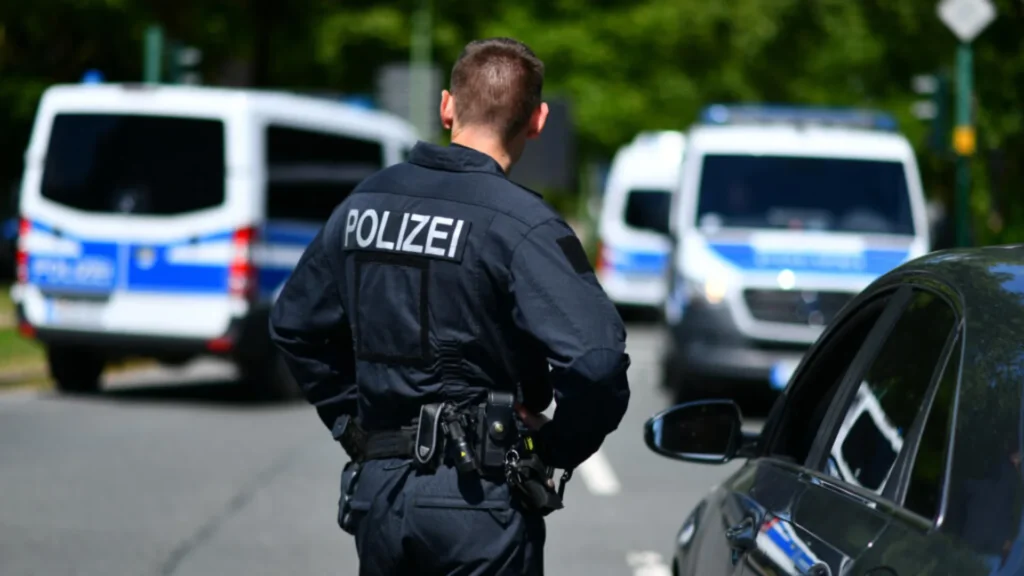
German authorities have arrested a 33-year-old Ukrainian national accused of conducting surveillance against a defence company in Bavaria, raising fresh concerns about foreign espionage and possible sabotage targeting Germany’s expanding arms industry.
The arrest of the suspect was made on August 2 in Thuringia, reported by Bavarian police, although the alleged espionage was done in the premises of an unidentified manufacturer of defence equipment in southern Germany. German authorities informed about this case on Thursday, August 6, where they said the suspect was arrested after he filmed the premises in order to commit sabotage. The investigation did not reveal whether or not there was any act of sabotage done yet. Prosecutors have not disclosed the name of the defence manufacturer, the alleged foreign intelligence agency and the state acting on its behalf yet.
German police said there were strong suspicions that the Ukrainian national had carried out
“taking footage of a Bavarian arms manufacturer in preparation for acts of sabotage.”
The authorities also described him as a
“so-called ‘low-level agent’ on behalf of an intelligence service of a foreign power.”
The wording suggests that investigators believe the suspect’s role was operational rather than strategic. A low-level agent would typically be expected to perform basic tasks such as photographing facilities, identifying security arrangements, observing personnel movements or collecting publicly unavailable information. Such assignments can be used as the first stage of a wider sabotage or intelligence operation.
What German authorities allege
Based on the initial report issued by the German police and the prosecution, the suspect reportedly took photos or filmed a Bavarian arms manufacturer in June. The motive of the taking the photos is purportedly the preparation for carrying out sabotage acts, even though the form of sabotage has not yet been identified by the authorities. It is important to note that there are no reports that the individual managed to enter any restricted area or take any classified papers or damage any equipment. The main accusation made in the case seems to involve reconnoitering: identifying and photographing a defence facility which may be targeted in the future. This is an important distinction from the point of view of both law and journalism. In this particular case, the authorities only suspect some criminal activity, i.e. preparation for carrying out sabotage and gathering of intelligence, while the accused individual has not yet been convicted. The identity of the individual is not known to the public.
The arrest reportedly took place in Thuringia, while the suspected surveillance was linked to Bavaria. That geographic separation may indicate that investigators were tracking the suspect’s movements beyond the location of the alleged target, although German authorities have not explained the circumstances of the arrest.
A German court has ordered or upheld his detention pending further investigation. Pre-trial detention does not amount to a conviction; it normally reflects judicial concerns about the seriousness of the allegations, the risk of flight, the possibility of evidence being destroyed or the danger that further offences could be committed.
Foreign power remains unnamed
Most of all, the political issue in this case is related to the identity of the foreign intelligence service whose employee allegedly committed the spying. In particular, the German police mentioned the fact that the suspect works for the intelligence service of the “foreign power” but avoided the mentioning of such countries as Russia, Belarus, China, etc. This detention was made in the context of several German warnings regarding Russian espionage and sabotage in Germany that are targeted at defence firms and enterprises producing weapons for Ukraine. However, based on the publicly available information from August 6, there are no grounds to speak about the involvement of the Russian secret services in this incident.
Thus, one should refrain from claiming that the case is a clear example of Russian espionage. In addition, it should be noted that the nationality of the suspect does not prove the participation of the Ukrainian government.
The cautious wording by German authorities may reflect the early stage of the investigation or a deliberate decision to protect intelligence sources and methods. In espionage cases, prosecutors often disclose only the minimum information necessary to confirm an arrest while withholding details that could compromise surveillance operations, inform accomplices or reveal the suspected foreign service’s methods.
No public response from the Ukrainian or Russian governments was reported in the initial accounts. A government statement from Kyiv would be particularly relevant because Ukrainian nationals have appeared in several European investigations involving suspected Russian recruitment. Nevertheless, nationality alone cannot be treated as evidence of state responsibility.
Defence sector under pressure
The arrest highlights the security risks facing Germany’s defence industry as European governments increase military production and expand support for Ukraine. Defence companies are now responsible not only for manufacturing weapons but also for maintaining supply chains, protecting production schedules and safeguarding information about military assistance.
German defense companies have become vulnerable since they are related to the equipment, such as artillery, armored cars, munitions, drones and others, that have been supplied to Ukraine. Information about the production facilities, schedules of delivery, technical details and high-level managers may be used for espionage, sabotage and intimidating operations. The German domestic intelligence agency, the Federal Office for the Protection of the Constitution, has informed defense companies about threats associated with espionage, sabotage and attacks from foreign countries.
There were reports in April that the agency has urged the defense industry to raise their standards of security and protection from intelligence operations. The reports were not limited to conventional espionage operations only. The security officers have paid particular attention to physical surveillance, cyber attacks, drone operations, recruiting people online, spreading disinformation and targeting people involved in defense production.
A July report said German intelligence had warned that Russian-linked activity could target defence firms, supply chains and company executives. The warning reportedly reflected concern that foreign intelligence services may seek to move from gathering information to disrupting production or threatening individuals involved in military support for Ukraine.eco.
The alleged Bavarian operation fits that broader pattern. Filming a facility may appear relatively unsophisticated, but images of gates, cameras, fences, loading areas, vehicle routes and employee access points can provide useful information to a hostile service. Low-level reconnaissance can also test how quickly a company notices suspicious activity and how effectively police respond.
Part of a wider espionage pattern
This is the latest development after several others in Germany with regard to the spying on targets of military interest. In July, there was the arrest of a 37-year-old man from Moldova, who was charged with flying a drone over the location of a German weapons producer. The prosecutors have claimed that the individual had made security sensitive pictures and videos about national defence and sent them to some organisation or banned group abroad. This incident is not related to the arrest of the Ukrainian citizen, but the fact that a drone had been employed in this case shows how simple it is nowadays to gather images near the military sites.
In March, German authorities also announced the arrest of two people in a case involving suspected Russian espionage. A Ukrainian national was arrested in Spain and a Romanian national in Germany. Prosecutors alleged that the Ukrainian suspect had spied on a person in Germany connected with a company supplying drones and components to Ukraine.
A second national from Ukraine was arrested in Germany in May in connection with suspected spying for Russia. German prosecutors noted that an arrest warrant was imposed by the court in this case, which also concerned intelligence activities in favor of Russia. In January, the Federal Public Prosecutor’s Office of Germany reported the arrest of a German-Ukrainian citizen named Ilona W. She was suspected of intelligence activities in favor of a foreign state according to section 99 of the German Criminal Code. It does not mean that all suspected Ukrainians are members of the same network. It demonstrates, though, the reasons why German counterintelligence services investigate recruitment channels and information on facilities assisting Ukraine.
The significance of “low-level agents”
The reference to a low-level agent is central to understanding the nature of the alleged operation. Foreign intelligence services do not always rely on trained officers or diplomatic personnel. They can recruit individuals who are offered money or instructions through encrypted messaging platforms and who may have no formal intelligence background.
They can be tasked with doing things such as photographing, observing, surveying and delivering equipment. Their low level of knowledge would benefit the larger plan if they were to get arrested. In addition, they may also receive little information about the overall objective of the data they are collecting. German and European authorities have consistently noted that Russia and foreign nations recruit people over the Internet who will do small jobs for them. An individual can be contacted via social media sites, messenger services and through criminal organizations in order to get him to do some basic photography and delivery work for money. Thus, the involvement of a Ukrainian individual in this case in Bavaria may be a result of recruitment and not his nationality.
Security and political implications
The case is likely to intensify pressure on German defence companies to improve physical security. Traditional measures such as perimeter fencing and guards may no longer be sufficient if hostile actors use drones, covert cameras, satellite imagery, cyber tools and recruited observers.
Companies may also face demands to protect senior employees and reduce the public disclosure of sensitive information. Intelligence agencies have reportedly warned that corporate executives, engineers and logistics managers can become targets because of their access to production and supply-chain details.
From a political standpoint, the arrest will serve to further fuel discussions in Germany regarding what level of action should be taken against foreign meddling. While Germany has supported Ukraine by providing it with military hardware, it has not wanted to escalate directly against Russia. Every new case of espionage and sabotage will serve to raise concerns that the conflict is spilling into Germany’s backyard. It is vital, however, for the officials not to make any accusations prematurely and to ensure that the issue passes the scrutiny of the courts. Calling the activity “Russian-sponsored” without naming the intelligence service involved might damage the validity of the case and cause diplomatic issues. The choice of words during the statement serves to demonstrate that fact.