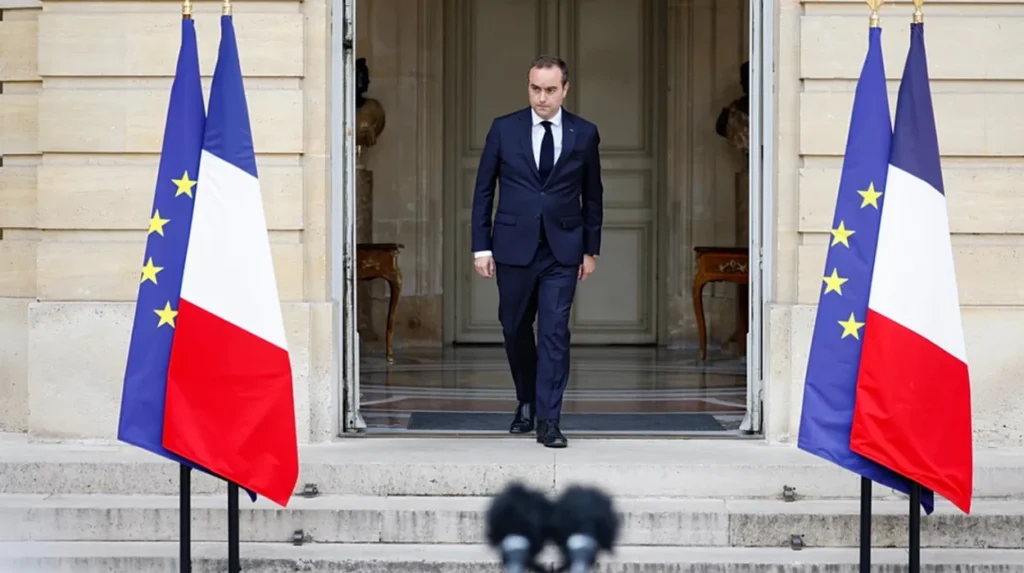
France has moved to sharply widen its screening of foreign takeovers in strategic industries, deepening a policy shift that treats control over sensitive firms as a matter of national security rather than a purely market-based transaction. In a decree issued by Prime Minister Sébastien Lecornu’s office, non-European investors seeking to buy 10% or more of shares in French companies operating in sensitive sectors will now face mandatory government authorisation, even when those companies are listed outside France or on another EU marketreuters+2
It is much more than just procedural change; it reduces the trigger point for state intervention in cases that might endanger the public order, public security, or national defense. What it amounts to in reality is that Paris is stating its intention to secure its strategic companies well before any foreign investor gains a blocking or influential stake in them.
Protéger nos entreprises stratégiques, c’est protéger notre souveraineté.
— Sébastien Lecornu (@SebLecornu) August 2, 2026
Dans un contexte géopolitique marqué par de fortes tensions, nous renforçons le contrôle des investissements étrangers dans les secteurs sensibles.
Désormais, toute prise de participation d’au moins 10 %…
Why France is acting now
The justification of the move takes place in the context of international politics of tensions, broader fears about the sovereignty of the economy, and the fear of the opportunistic takeover of the companies that have something to do with defense, infrastructure, and advanced technology. Lecornu’s Office presented the decree as a reaction on the necessity of the protection of the strategic assets of France, especially now, when the foreign capital moves fast and buys out the companies which technology and infrastructure may be used for national security purposes.
This explains the evolution of the foreign direct investment regime of France. What seemed to be initially just a simple system of screening has now become much broader as a result of reduction of the threshold to 10% of the certain listed companies even before 2024. The new decree broadens this logic into more cross-border cases and tries to solve the problem of the loophole related to the listed abroad companies. It should be noted that the French move is quite similar to the tendency of other European countries, which see the foreign investments in the perspective of resilience, supply chain security, and strategic autonomy.
What the decree changes
Under the new rules, any non-European investor planning to acquire 10% or more of a publicly traded French company in a sensitive sector must obtain authorisation from the French Finance Ministry. The rule applies regardless of whether the company is listed in France or abroad, making the regime harder to evade through offshore or alternate-market listings.
Within ten days of receiving an application, the finance ministry will have to take a decision as to whether a further in-depth review is required of the proposed transaction. This reduced timeframe for taking the decision seems to indicate the desire of the authorities to act swiftly, in the early stages of the transaction, before expectations are set in stone or strategic considerations make it costlier to back down. However, the regulation is part of a wider legal framework which already provides for screening where a foreign investor gains control, acquires a portion of the company, or obtains the voting rights threshold in a French legal entity. The permanent threshold of 10% for non-EU and non-EEA investors in listed French companies was already provided for.2021-2025.
Sectors under scrutiny
France’s screening regime does not apply to ordinary commercial activity. It targets sectors that the state considers sensitive because of their connection to defence, public order, security, essential infrastructure, or critical technologies. The list is broad and increasingly aligned with modern strategic priorities rather than only classic military industries.
Strategic industries covered
The sectors now under close review include defence, cybersecurity, artificial intelligence, semiconductors, quantum technology, robotics and space operations. The rules also extend to goods with both civilian and military uses, meaning that dual-use technology can attract review even if it serves civilian markets in normal times.
Infrastructure and services
The screening system also captures essential infrastructure and services in energy, water, transport, telecommunications and healthcare. France has also identified food security, political and general-interest news media, critical raw materials, low-carbon technologies, energy storage and biotechnology as part of the national interest perimeter.2021-2025.
That breadth matters because it shows how the state defines “sensitive” not just by military relevance, but by economic and societal dependence. A foreign stake in a cloud provider, a water operator, a semiconductor supplier or a biotech company may now be treated with similar caution if the company’s function touches national resilience.2021-2025.
The 10% threshold in context
The key number in the decree is 10%. Investors have long followed the threshold of 25% of the voting rights of a company as the critical indicator for attracting the government’s attention in France. But the threshold has been decreasing gradually over the years for investors who come from other than the European Union or European Economic Area and companies that operate in the regulated markets. 2021-2025.
In fact, the previous move has already impacted the behaviour of investors by compelling them to obtain authorization way earlier during the process. By the new decree, this approach will apply to the foreign investors that target sensitive French companies and operate outside of the territory of France. The result for foreign investors is obvious; a minority stake can no longer be considered as a minor one politically and/or from the perspective of security. A minority stake that would be regarded as a portfolio investment in other situations will require a national security clearance in certain sectors.
What France says it wants
The French state’s stance is defensive, but not in the sense of rejecting foreign capital altogether. Rather, it is trying to separate ordinary investment from investment that could create strategic exposure. The ministry’s review mechanism exists to assess whether a transaction could affect public order, public security or national defence, and the new decree reinforces that mandate.
This was described by the French government as essential “Against the backdrop” of geopolitical tensions, whereas Lecornu’s spokesperson has said that any attempt by non-European buyers to go beyond the 10% threshold will have to be authorized by the state. This reflects the primary logic behind the policy: in an increasingly uncertain world, ownership alone becomes the lever. The government position is also informed by past experience. France has had many years of fine-tuning its own system of foreign investment regulation, issuing recommendations, listing sectors and developing a framework for screening. This particular move is indicative of the belief that past safeguards are now inadequate for the modern deals environment.
Why this matters for business
For global investors, the decree increases uncertainty around timing, execution and valuation in French strategic sectors. Deals that once looked straightforward may now require early regulatory mapping, a longer approval timeline and possibly changes in governance rights, board representation or shareholder agreements.
It also gives France a stronger bargaining position. Even when a transaction is allowed, the state can influence how it is structured, and the mere possibility of review may deter some bidders from pursuing sensitive targets at all. That can protect domestic assets, but it may also reduce the pool of capital available to firms that need funding for growth or restructuring.
For listed companies, especially those with international share registers, the message is that ownership thresholds matter more than ever. The regime is no longer concerned only with outright takeovers; it is concerned with influence, access and strategic intent.
Broader policy implications
This French move is a clear display of economic sovereignty. It indicates that the state is willing to act early and decisively in cases where foreign investment is involved in strategic sectors at the expense of a tighter investment climate. It will probably be well received by the security hawks and those interested in industrial policy, but reviewed by investors and free market opponents. It can serve as a model for other European governments planning to modernize their review processes as well. In light of the growing strategic competition in the technological, energy and logistics sectors, the difference between national security and industrial policy is becoming increasingly unclear.