In a surprising turn of events that reflects the political turmoil of Britain, Prime Minister Keir Starmer stepped down from his office at Downing Street on Monday, June 22, 2026, barely two years after leading his party to an electoral landslide. This step follows the seventh change in the country’s prime minister following the 2016 Brexit vote, reflecting a decade of constant changes in leadership and political uncertainty.
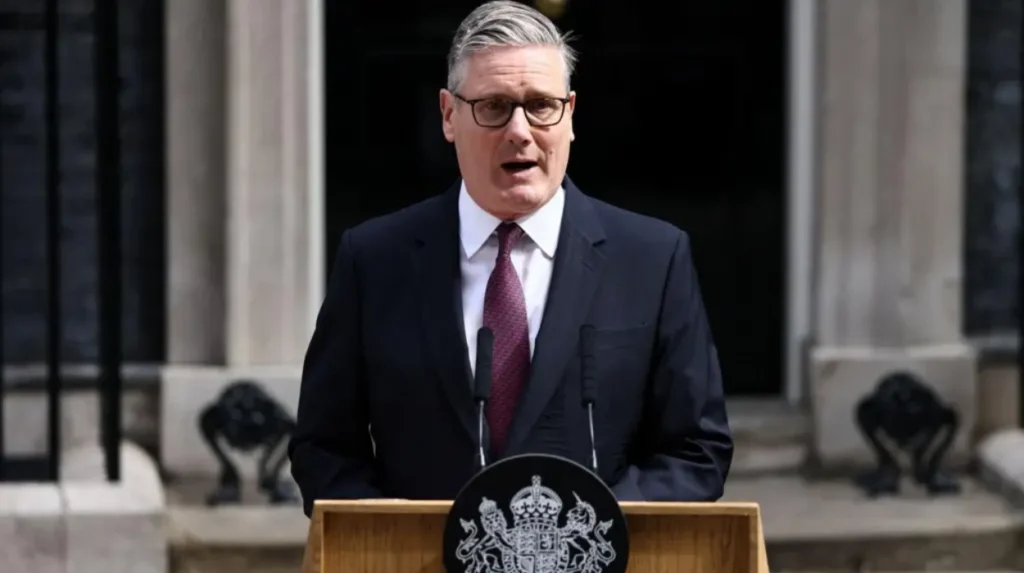
As Starmer stood outside the historic residence of the UK’s prime ministers at 10 Downing Street, tears welled up in his eyes as he delivered one of the most moving resignation speeches in the modern political era. At the age of 56, the leader of the opposition Labour Party succumbed to the mounting pressure from within after his rival, Andy Burnham, won an unexpected victory against Reform UK in the Makerfield by-election.
The Pivotal Makerfield By-Election That Changed Everything
Starmer’s resignation was sparked by the Makerfield by-election that took place on June 18, 2026. It involved veteran Labour Party member Andy Burnham winning a landslide victory against his opponent in the contest. Burnham managed to clinch 24,927 votes accounting for 54.8% of the votes, while Robert Kenyon of the Reform UK party polled 15,696 votes which is 35 percent of the votes cast. This gave Andy Burnham a majority of 9,231 votes.
This electoral triumph secured Burnham’s seat in the House of Commons, clearing the path for his bid to unseat Starmer as prime minister and Labour leader. The victory transformed Burnham from a regional mayor into a legitimate contender for the premiership, with political analysts immediately recognizing the significance of his triumph.
“Greater Manchester mayor’s victory in Makerfield clears path for bid to unseat Starmer as prime minister,”
confirmed Al Jazeera’s initial report on the by-election outcome.
Burnham was already famous all around Britain for being the “King of the North” after serving as the mayor of Greater Manchester for nine years and later quitting this position to join parliament. At the age of 56, he was a seasoned member of the Labour Party, making him the leading candidate to fill the position left by Starmer.
Starmer’s Emotional Resignation Statement and Key Quotations
This statement of resignation alone became an iconic moment for British political reporting, as Starmer’s emotive style of presenting the statement grabbed the attention of millions of viewers around the United Kingdom and the world. In front of Downing Street, the prime minister made known his gratitude to his staff, despite the challenging situation that made him resign.
“I will resign,” Starmer stated directly to journalists gathered outside Number 10, his voice carrying the weight of a leader who had fallen from the heights of electoral triumph to the depths of party rebellion. The statement’s simplicity masked the complexity of political forces that had conspired to end his premiership prematurely.
In a moment that resonated deeply with observers, Starmer described the experience of serving as prime minister as deeply meaningful despite its brevity.
“That is why I will resign as leader of the Labour Party,”
he explained, connecting his departure from both roles in a single declaration that eliminated ambiguity about his intentions.
The emotional toll of the announcement was unmistakable, with television cameras capturing Starmer fighting tears as he delivered his statement.
“Sir Keir fought back tears as he announced his resignation as prime minister. Sir Keir, who described being prime minister as the ‘proudest moment of my life’ appeared visibly emotional,”
reported The Independent’s video coverage of the resignation speech.
Starmer’s acknowledgment of his diminished standing within Labour came with remarkable candor.
“I am not in the optimal position to guide Labour into the forthcoming general election,”
he admitted, recognizing that his plummeting popularity had compromised his ability to lead the party through what would inevitably be a challenging electoral period.
His final words of gratitude to the civil servants and staff who had served alongside him underscored the personal dimension of the resignation.
“I want to thank the brilliant Number 10 staff and our country’s extraordinary Civil Service,”
Starmer said, offering a rare moment of appreciation for the institutional support that had enabled his premiership despite its troubled conclusion.
The Likely Successor: Andy Burnham’s Rise to Power
Political analysts instantly realized that Andy Burnham was going to be the most likely replacement of Starmer because of the Makerfield win which made him a front runner in the race for the party’s leadership. It seemed that Burnham had an open path to becoming Prime Minister as he was coming back to parliament having spent some time wondering about what to do next politically speaking.
The by-election results demonstrated Burnham’s electoral strength, with media coverage noting that
“His majority is larger than Labour’s 2024 general election landslide”
in the same constituency, according to The New Statesman’s analysis.
The statistical analysis served to emphasize the importance of what Burnham had accomplished and implied that he was someone who could be attractive as a future prime minister, who could bring together Labour’s divided supporters. The title “King of the North” given to Burnham referred to the fact that he had strong associations in northern England, which had been important to the Labour Party’s success in 2024. The nine years as mayor of Greater Manchester had prepared Burnham for the office of the prime minister.
Political insiders suggested Burnham could
“seamlessly transition into Labour leader and PM role,”
with CNBC’s reporting indicating his favorability as Starmer’s replacement.
The Decade of Leadership Instability: Seven Prime Ministers Since Brexit
The departure of Starmer is yet another episode of the unusual political turbulence in Britain that started with the Brexit referendum held in 2016. Indeed, the string of prime ministers starting from 2016 reflects a trend of leader transitions in the country, which led to political turbulence. David Cameron, who was the prime minister between 2010 and 2016, left office right after the Brexit referendum took place. In other words, he started the tradition of replacing leaders because of political turbulence. The next prime minister, Theresa May, who ruled from 2016 to 2019, left her position due to political turbulence over Brexit implementation.
The most disastrous period occurred under Liz Truss when her tenure spanned a period of just 44 days in the latter half of 2022, making her the briefest-serving prime minister in British history apart from times of war. The tenure of Rishi Sunak, from October 2022 to July 2024, saw him lose the general election to the Labour Party of Starmer. With a tenure of less than two years, Starmer is now one of six prime ministers of Britain in a decade who have left prematurely.
With Burnham expected to assume the role, Britain will have had seven prime ministers since the Brexit vote, a statistic that CBS News highlighted in their analysis:
“The United Kingdom has had six leaders in less than 10 years, and it could be headed for a seventh as British Prime Minister Kier Starmer faces growing pressure to step down.”
Plummeting Popularity: The Most Dramatic Collapse in British History
The reason why Starmer decided to resign was a deeper problem of unpopularity that had already put him into a difficult position. From the analysis of statistical data, it is possible to say that Starmer experienced the largest decrease in popularity of all British prime ministers, with his approval ratings declining from a positive level to a very low negative one in such a short time period as a few months of his tenure as a prime minister. Thus, already in five months after the 2024 elections, Starmer’s popularity ratings fell from +5 percent to -30 percent, resulting in a 35 percent change in an extremely short time period. In 2026, only 24 percent of respondents approved of Starmer’s work as a prime minister, whereas 50 percent of them did not.
The depth of public dissatisfaction became evident in broader polling data. Sixty-four percent of UK adults said they did not think Starmer would remain prime minister until the next general election, demonstrating that his resignation appeared inevitable to most of the British public long before the official announcement. His approval rating had plummeted to minus 50 percent by 2026, a catastrophic figure that no prime minister could sustain.
Internal Party Pressure: 80 Labour MPs Urge Resignation
This announcement came about in the wake of increased pressure from within Starmer’s own Labour Party, which involved cabinet members raising questions about his leadership. As far back as earlier May 2026, as many as 70 Labour MPs had been urging him either to resign or give a timeframe in which he would do so, thereby indicating dissatisfaction with his leadership style. This pressure had further grown when about 80 Labour MPs called upon him to resign due to their poor performance during the local elections, showing their decreasing appeal among the voters. There were cabinet members who had asked him to give a timeframe for his resignation.
Days of substantial pressure from Labour MPs, including cabinet members, ultimately proved decisive in forcing Starmer’s hand. The mounting rebellion within his own party made it impossible for him to continue, as the fundamental requirement of any prime minister—loyalty from their parliamentary party—had evaporated.
Economic Headwinds Complicate Leadership Transition
The resignation occurred amid significant economic challenges that would complicate any successor’s immediate task. The UK economy faced renewed headwinds with GDP growth expected to slow to 0.7 percent in 2026, down from 1.3 percent in 2025, according to KPMG’s economic analysis. Pressures from a fresh energy price shock were pushing up inflation, which was expected to peak at 3.6 percent in September 2026, well above the Bank of England’s 2 percent target.
These economic conditions meant that whichever politician succeeded Starmer would confront significant challenges posed by the UK economy and volatile international context, with the new prime minister needing to address slowing growth, rising inflation, and fiscal worries that persisted throughout 2026.
The Caretaker Prime Minister and Timeline for New Leadership
The care-taker Prime Minister Starmer shall continue to hold the post of Prime Minister until a new Labour leader is selected in the coming weeks, ensuring the constitutional continuity that needs to be maintained during the transitional period. He has informed the King about his resignation, completing the formal procedure of a Prime Minister leaving his post. It is unclear when the selection of a new Labour leader shall take place, but according to political observers, the new leader shall be expected to emerge before Parliament resumes its proceedings in September 2026.
Britain’s Political Instability Enters New Phase
Starmer’s resignation marks another defining moment in Britain’s decade of political turbulence, with the sequence of leadership changes reflecting deeper structural issues in British politics that extend beyond individual personalities. The Brexit vote’s aftermath created conditions for relentless leadership churn that has disrupted governance and constitutional continuity in ways that will define British politics for years to come.
The transition from Starmer to Burnham represents continuity within Labour but also signals the party’s recognition that its historic 2024 victory had been undermined by internal divisions and plummeting popularity. How Burnham responds to these challenges will determine whether Labour can recover from Starmer’s collapse or whether the pattern of instability will continue into the next decade.