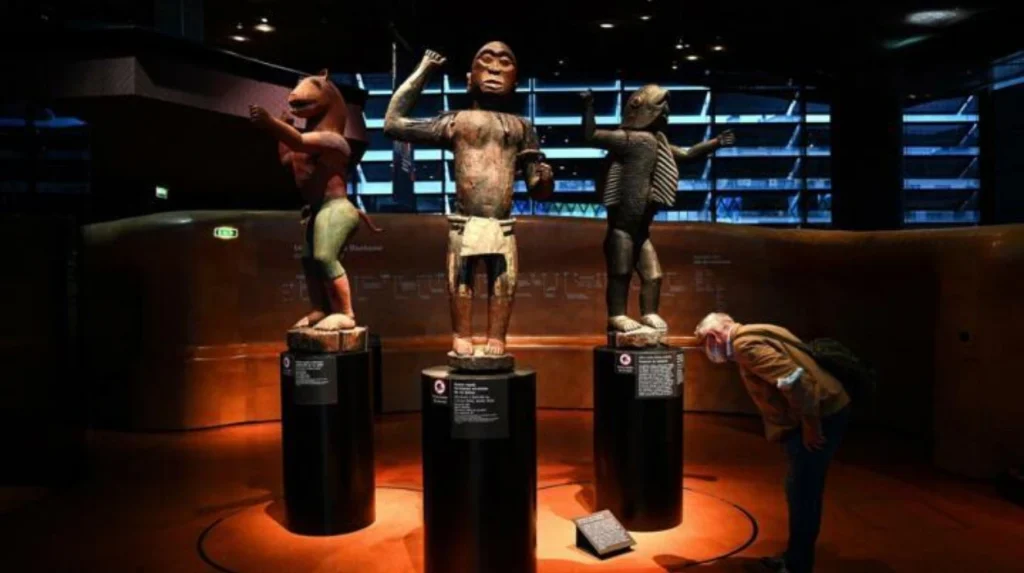
The French Senate on Wednesday adopted a draft legislation aimed at simplifying the restitution of artworks and other cultural artefacts looted during the country’s colonial era. The move is expected to address growing demands from former colonies, including Mali, Algeria, and Benin.
Streamlining Restitution of Colonial-Era Artefacts
The draft bill, passed unanimously by the upper house, will now move to the National Assembly for consideration before becoming law. If enacted, it will allow for the return of artworks and cultural objects acquired by France between 1815 and 1972, a period encompassing much of France’s colonial expansion.
France currently holds tens of thousands of such items in national collections. The process for returning them has historically been slow and cumbersome, as each restitution request required a separate vote in parliament. The new legislation is designed to simplify this process while maintaining transparency and legal oversight.
Macron’s Commitment to African Heritage
President Emmanuel Macron has taken a more proactive approach than his predecessors in acknowledging France’s colonial past. During a 2017 visit to Ouagadougou, Burkina Faso, shortly after taking office, he promised that France would refrain from interfering in its former colonies and would facilitate the return of African cultural heritage within five years.
Since then, restitution has become a centerpiece of Macron’s efforts to reshape France’s relationship with Africa. The president has emphasized that this is not about “emptying French museums,” but rather about recognizing historical truths while promoting cultural diplomacy.
“The idea is not to empty French museums, but to achieve authenticity in France’s response, without denial or repentance, but in recognition of our history,”
said centrist Senator Catherine Morin-Desailly.
Key Restitutions and Ongoing Demands
Several high-profile restitution cases have already taken place. In 2025, France approved the return of a “talking drum” taken from the Ebrie tribe in Ivory Coast by colonial troops in 1916. Other countries, including Algeria, Mali, and Benin, have submitted multiple requests for repatriation of significant artefacts.
France has been under increasing pressure to respond to these demands. According to UNESCO, more than 90,000 cultural objects from Africa remain in European museums, many of which were acquired under colonial rule. France alone holds an estimated 60,000–70,000 artefacts from its former African colonies.
The proposed bill is expected to expedite decisions on these requests, making it easier for African nations to reclaim cultural treasures that hold deep historical and symbolic significance.
Restitution Trends in Europe
France is not alone in facing calls for restitution. Other former colonial powers, such as Belgium, the United Kingdom, and Germany, have begun returning artefacts to African countries, though progress has often been slow.
France has already established legal frameworks for related restitution efforts:
- 2023: Laws allowing the return of items looted from Jewish families during World War II.
- 2023: Legislation permitting the repatriation of human remains from public collections.
The new bill would extend this framework to objects taken during the colonial era, signaling a broader commitment to historical accountability.
Challenges Ahead
While the legislation marks a significant step forward, challenges remain. Many items are deeply integrated into museum collections, and determining provenance can be legally and logistically complex. Additionally, some experts argue that cultural restitution should be accompanied by investment in local museum infrastructure in recipient countries to ensure the artefacts can be preserved and displayed appropriately.
A New Era in Franco-African Cultural Relations
Macron’s initiative reflects a broader push to redefine France’s ties with Africa, emphasizing partnership and cultural recognition over historical denial. If successful, the bill could accelerate the return of hundreds, if not thousands, of artefacts, fostering reconciliation and offering former colonies renewed access to their cultural heritage.