In just 15 years, the UAE’s ruling Al Nahyan family has transformed a desert‑locked food‑import dependency into a global farming empire stretching across four continents. Now a new investigation shows that €71 million of European taxpayer money has quietly helped finance part of that expansion inside the European Union itself. The story is not just about land and money; it is about how sovereign‑wealth power, Gulf‑style food security, and EU subsidy rules now intersect on the same fields.
How did the Al Nahyan‑linked network build such a vast farm empire so fast?
The UAE’s logic is simple: the country imports roughly 90% of its food and has almost no naturally cultivable land, so its political leadership decided to treat foreign farmland as a strategic asset rather than a commercial afterthought. A cross‑border investigation by DeSmog, shared with The Guardian, El Diario and G4Media, found that
“subsidiaries controlled by Abu Dhabi’s royal family collected more than €71 million over six years for farmland it controls in Romania, Italy and Spain.”
Those subsidiaries sit embedded in a wider Gulf‑owned agribusiness network. The Abu Dhabi‑based Al Dahra grew from a food‑security project for the UAE into a multinational food producer with operations in 17 countries and around 400,000 hectares of land, according to a 2022 commercial‑law overview. That means the UAE’s strategy is not only about buying land, but about building integrated supply chains — from grain and animal feed to fruit and dairy — tied to Gulf consumption and export markets.
For French‑style strategists and progressive EU parliamentarians, this pattern rings alarm bells. As one analyst of EU land policy put it:
“We are seeing a familiar pattern: resource‑rich states using capital to lock down agricultural capacity abroad, but this time at a speed and scale that exposes the regulatory gaps in the EU.”
The question is no longer whether Gulf capital can buy European farmland, but whether the EU subsidy system is condoning it.
What does the €71 million in EU subsidies actually cover?
The €71 million figure is not a vague estimate. The investigation examined more than 110 Common Agricultural Policy (CAP) payments between 2019 and 2024 and traced them to companies linked to the Al Nahyan family and Abu Dhabi’s state investment vehicle ADQ. The beneficiaries include:
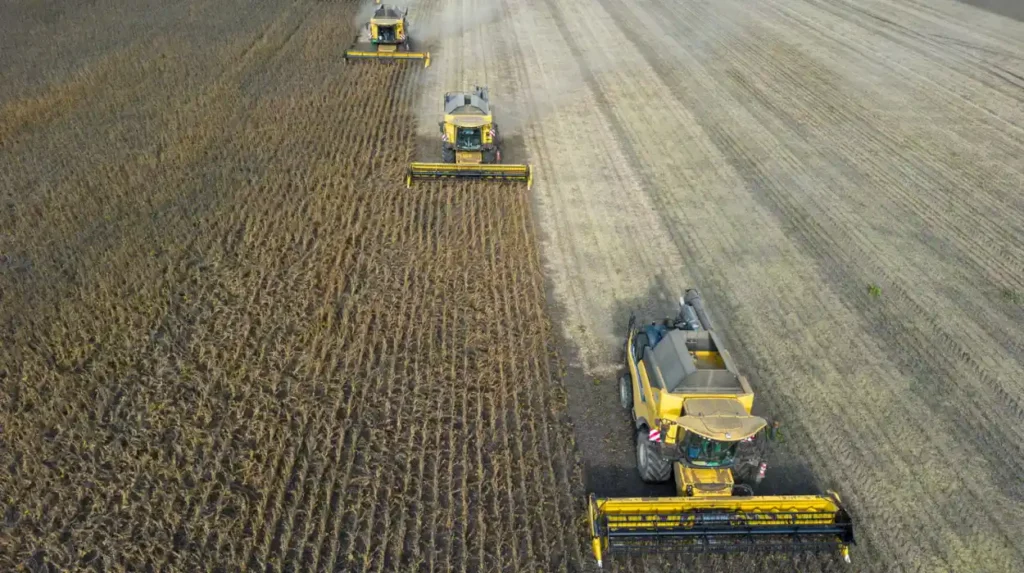
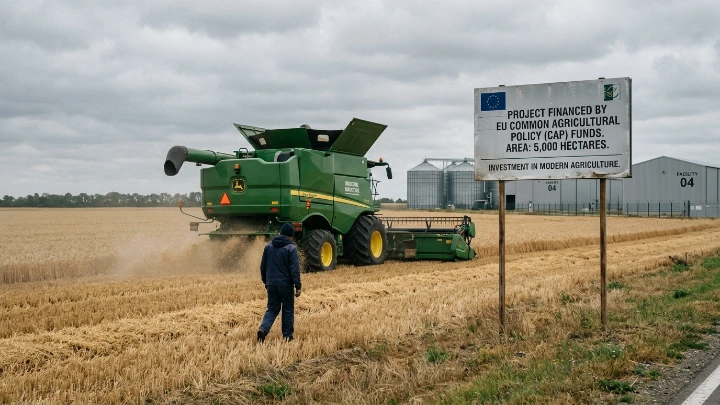
Agricost in Romania, which operates the Insula Mare a Brăilei (Great Brăila Island) on the Danube, one of Europe’s largest consolidated farms.
Al Dahra‑linked Spanish farms, where land has been acquired incrementally since 2012.
Unifrutti Italy and related holdings, part of the broader Gulf‑backed agribusiness footprint in southern Europe.
A 2024 report by the investigative outlet Tridge notes that
“Agricost, which manages 57,000 hectares of EU farmland, received €10.5 million in subsidies in 2024 alone.”
That single payment makes Agricost one of the largest individual CAP beneficiaries in Europe, illustrating how concentrated players can capture a disproportionate share of public funds.
The money comes from the EU’s Common Agricultural Policy, which is designed to support farm incomes, rural development, and food production. Yet, in this case, it is flowing into structures tied to the world’s second‑richest royal family — a fact that many European policymakers openly find uncomfortable.
Is this still ‘food security’, or is it strategic power?
Officially, the UAE frames all of this through the language of food security. A 2007–2008 food‑price crisis exposed the dangers of relying on global markets alone, and the Gulf states, including the UAE, began treating farmland as a geopolitical hedge. The DeSmog investigation explains that
“these subsidies support crops largely destined for export to the Gulf, aligning with the UAE’s food security strategy amid domestic agricultural challenges.”
But the line between food security and strategic power is thin. When the UAE‑linked Al Dahra bought Romania’s Agricost in 2018 for around 200–250 million euros, it took over 56,000 hectares of highly fertile land on the Danube, with irrigation covering about 70% of the area and annual turnover reaching 86 million euros. The deal was structured as a business‑takeover rather than a land‑purchase, since the state retains formal ownership of the island itself, but the commercial control is effectively privatized.
A Romanian agricultural economist, commenting on the deal, said:
“This is not a small‑scale investment; this is a vertical integration of Black Sea grain production into a Gulf‑controlled supply chain. The farmer is no longer the Romanian producer; it is the Abu Dhabi‑based holding company.”
What do EU officials and politicians say?
The €71 million figure has triggered a mix of outrage, denial, and cautious diplomacy. The European Commission has publicly acknowledged it.
“We have taken note of a media investigation alleging the Emirati royal family received tens of millions of euros in European farm subsidies for farmland it controls in the bloc,”
a Commission spokesperson said in May 2026. That statement carefully stops short of admitting wrongdoing, but it does not dispute the core data.
Progressive MEPs, however, have been more direct. A joint statement by members of the Greens/EFA group in the European Parliament warned:
“Scaled‑up foreign‑state‑linked holdings are turning EU land into a commodity for autocratic regimes, while EU taxpayers are effectively subsidising their food‑security ambitions.”
They argued that current CAP rules are too permissive and allow large landowners — including those associated with foreign governments — to capture oversized payments.
Another MEP, specialising in rural affairs, added:
“If the largest beneficiaries of the CAP are connected to Gulf ruling families, then the policy is failing its core mandate of strengthening European farmers and rural communities.”
On the other side, some EU‑backed business federations defend the deals as legitimate foreign direct investment. The European Agri‑Food Council argued:
“These investments bring modern infrastructure, technology and export markets to regions that would otherwise struggle to compete. The issue is not ownership, but regulation.”
What do analysts and civil‑society groups highlight?
Land‑rights and transparency activists are the most critical. The NGO ARC2020, which has long warned about the “sellout of Europe’s farmland”, summarised the case as a warning sign:
“This is a textbook example of how public‑money‑driven land concentration risks turning EU agriculture into a playground for external capital.”
Academic researchers on EU land use have echoed that concern. In a 2024 review of land‑ownership patterns, scholars noted:
“Farmland ownership is increasingly concentrated in the hands of large corporate and foreign‑linked entities, undermining the original redistributive intent of the CAP.”
In the context of the Al Nahyan network, the implication is obvious: public subsidies are being used to finance a global agribusiness empire that is not democratically accountable to European citizens.
Environmental watchdog DeSmog, which led the investigation, put it bluntly:
“The UAE’s ruling al‑Nahyan family is benefiting from tens of millions in European Union subsidies to grow crops destined for the Gulf — a case where food‑security policy clashes with democratic‑accountability and climate‑justice concerns.”
What are the key facts and figures behind the story?
Beyond the headline €71 million, several concrete numbers show the structural shift:
The Al Nahyan‑linked network has received more than €71 million in CAP subsidies between 2019 and 2024, according to the DeSmog investigation.
Those funds relate to over 110 subsidy payments traced to companies and subsidiaries controlled by the Al Nahyans and Abu Dhabi’s ADQ.
Agricost alone manages around 57,000 hectares of EU farmland and received €10.5 million in CAP subsidies in 2024, making it one of Europe’s top‑ranked beneficiaries.
Al Dahra’s broader global footprint includes around 400,000 hectares of land and about 2 billion dollars in annual revenues, illustrating how tightly integrated the UAE‑linked agribusiness is.
Cumulatively, the picture is this: in roughly 15 years, the UAE has gone from zero meaningful cultivable land to a global farm empire of around 960,000 hectares, with €71 million of EU taxpayers’ money helping to pay for the European segment of that project.
What is the real political and ethical question?
The legal answer is clear: the transactions are technically within CAP rules, and foreign ownership is not illegal under EU law. The political and ethical answer is more complicated. A senior EU policy analyst, who asked for anonymity, said:
“We designed the CAP to support farmers in Europe, not to finance the food‑security strategies of Gulf autocracies. The rules have not kept pace with the scale and nature of modern land grabbing.”
That tension lies at the heart of the debate. Is the EU’s agricultural budget being used to:
Stabilise European food production and rural livelihoods? or
Subsidise a sovereign‑wealth‑backed agribusiness empire that exports food to the Gulf while receiving public support in Europe?
The evidence points to both happening at once. The EU Commission has recently proposed capping direct payments at 100,000 euros per year per farmer, partly to reduce disproportionate payouts to large landowners, including foreign investors linked to regimes like the UAE. But critics argue that even that cap will not fully address the power imbalance.
How might this story reshape CAP and land‑use policy?
The disclosure of the €71 million subsidy flow has already fed into ongoing CAP reform debates. A 2025 policy paper from the European Policy Centre noted that
“the EU’s agri‑food sector is a global success story, but that success is being questioned when large foreign‑linked holdings dominate the subsidy landscape.”
MEPs pushing for reform want stricter transparency on land ownership, beneficial‑control disclosures, and explicit barriers to public subsidies flowing into entities directly linked to foreign governments.
A French land‑policy expert, commenting on the UAE case, said:
“We need to treat land as a strategic resource, not just a commodity. If we fail here, we risk watching EU soil become a subsidy‑funded asset for the Gulf’s ruling families.”
Meanwhile, Gulf‑linked farm managers in Europe insist the system is working as intended. A senior manager at Al Dahra in Romania told a business outlet:
“We are investing in modern, efficient agriculture and paying normal taxes. If the EU wants to exclude us, they should change the rules, not rewrite history.”
What should readers take away from this?
More than a decade after the 2007–2008 food crisis, the UAE’s Al Nahyan‑linked network has turned vulnerability into leverage, using capital and EU subsidies to build a global farm empire. The €71 million in CAP money is not a rounding error; it is a policy signal that public‑money systems designed for European farmers can be siphoned into external, sovereign‑linked agribusiness empires.
The story calls for three shifts:
Transparency: clear disclosure of beneficial ownership and political links behind large CAP beneficiaries.
Redistribution: limits on how much subsidy large, foreign‑linked holdings can claim.
Strategic rethinking: EU land should be treated as a core public‑interest asset, not a neutral commodity for the world’s richest families.
As one EU‑based food‑ justice activist put it:
“When the largest EU farm subsidy‑takers are connected to the UAE’s ruling family, the question is not whether the money is legal, but whether it is legitimate.”