France maintains a robust framework for strategic autonomy in defense, energy, and technology, yet the UAE’s Al Nahyan family’s control over vast European farmland—coupled with €71 million in EU subsidies—exposes a glaring vulnerability in agriculture that demands urgent scrutiny. This critical analysis dissects the evidence from recent investigations, official statements, and social media reactions to reveal how Gulf state influence undermines Europe’s food security.
Who Controls Europe’s Largest Farm and How Much Subsidy Have They Received?
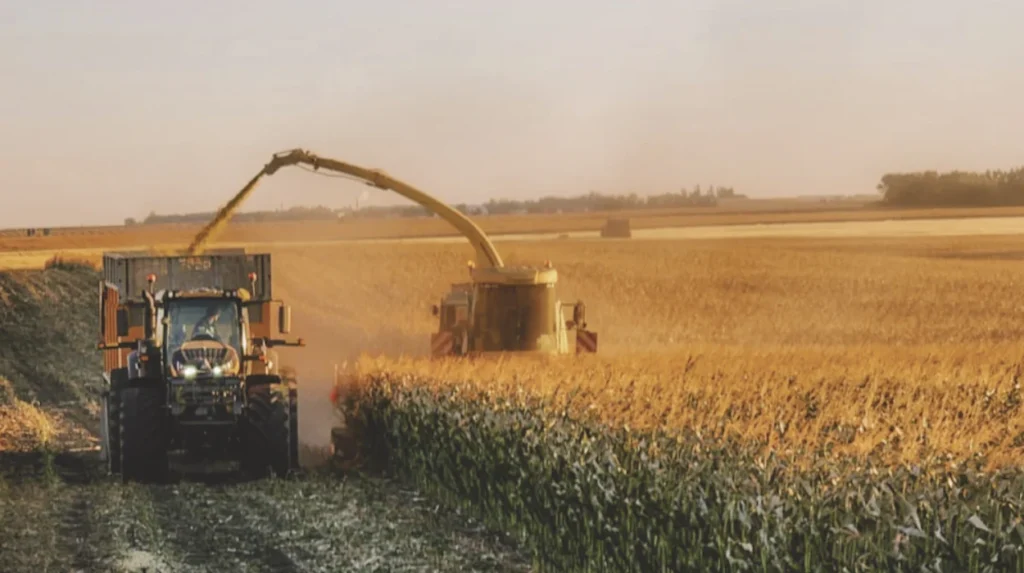
The Al Nahyan family, rulers of Abu Dhabi and among the world’s richest with assets exceeding hundreds of billions, directs ADQ, the UAE sovereign wealth fund central to this operation, which oversees a global agricultural portfolio of 960,000 hectares. Through subsidiaries like Al Dahra, they acquired Agricost in Romania—the EU’s single largest farm at 57,000 hectares, five times the size of Paris—for an estimated €230 million in 2018, alongside operations in Spain (8,000 hectares) and Italy’s fruit farms.
DeSmog broke the story in a collaborative probe that quantified the subsidy haul. [DeSmog – @DeSmog] said in X post,
“NEW Gulf Royal Family Banks Over €70 Million in EU Farming Funds A new investigation with The Guardian, @eldiarioes & G4 Media.”
A DeSmog investigation, partnered with The Guardian, El Diario, and G4Media, analyzed thousands of Common Agricultural Policy (CAP) beneficiaries from 2019-2024, uncovering 110 payments totaling over €71 million ($84 million) to these entities, with Agricost alone receiving €10.5 million in 2024—1,600 times the average EU farm’s payout. This isn’t incidental; crops from these lands feed Gulf markets, exporting EU-subsidized grain and dairy amid Europe’s farmer protests over CAP fairness. EU Commission spokesperson Louise Bogey acknowledged the report, stating:
“We take note of the investigation revealing that the Emirati royal family benefits from subsidies under the CAP.”
Yet, no immediate clawback or review was announced, highlighting regulatory inertia.
Is the UAE’s Farmland Strategy State-Directed and Geopolitically Motivated?
Yes, UAE’s acquisitions form a deliberate food security push, driven by desert scarcity and projected needs for 10 million by 2050, outsourcing production to control 960,000 hectares worldwide. ADQ, chaired by Sheikh Tahnoon bin Zayed Al Nahyan (UAE National Security Advisor and brother to President Mohamed bin Zayed), channels state funds into agribusiness via Al Dahra, founded by the late Sheikh Sultan bin Zayed Al Nahyan. Since 2012, they’ve snapped up grain mills in Greece and Bulgaria, dairy in Serbia, and EU mega-farms without fanfare.
“Right now they control about 960,000 hectares of farmland all over the world. It’s a huge strategic effort to basically outsource their entire food production.”
Analysts note this mirrors Gulf “land grabs” in Africa and South America, but Europe’s subsidies add irony—EU taxpayers fund UAE self-sufficiency while Europe faces import reliance post-Ukraine war. On X (formerly Twitter), Middle East Monitor posted:
“The United Arab Emirates’ ruling Al Nahyan family has benefited from more than €71 million (US $80 million) in European Union farming subsidies…”
sparking debates on neocolonialism. No UAE official statements refute the links, but ADQ’s opacity shields details.
Does France’s Strategic Autonomy Doctrine Apply to Agriculture?
France pioneered “strategic autonomy,” with President Macron repeatedly championing independence in critical sectors, including food. In a 2023 address, Macron warned:
“Europe must not outsource its food supply,”
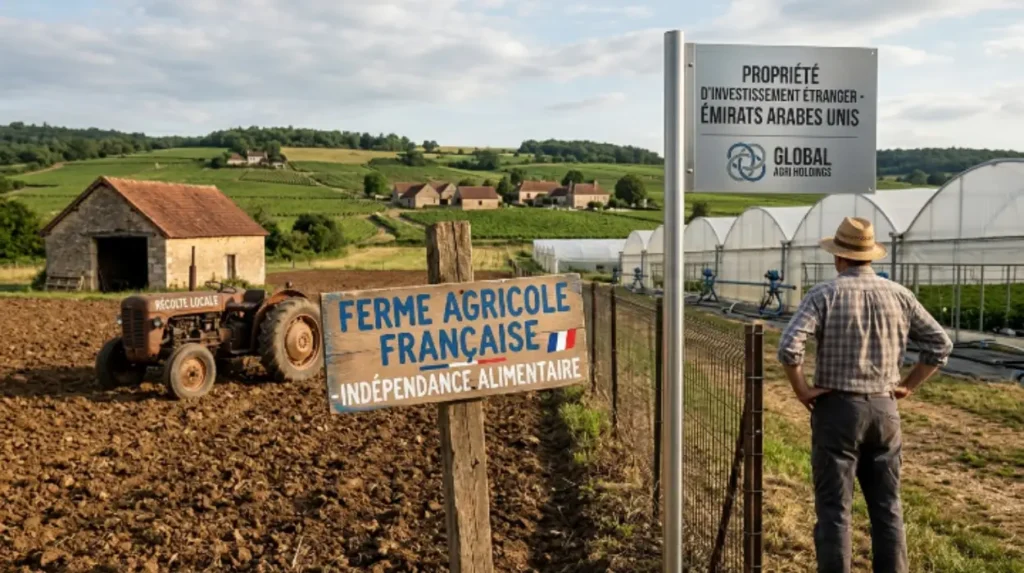
tying CAP to sovereignty amid Green Deal tensions. Yet agriculture evades France’s FDI screening, which mandates reviews for non-EU investors taking >10% in sensitive sectors like energy but excludes land buys. Romania’s 57,000-hectare sale, Spain’s 8,000 hectares, and Italy’s orchards bypassed EU’s 2020 Foreign Investment Screening Regulation, which focuses on listed activities, not farmland.
“Macron stresses that producing is not a taboo, that Europe must not outsource its food supply, and that the Common Agricultural Policy (CAP)…”
MEPs have urged expansion; a 2023 European Parliament briefing called for
“reinforcing ‘European strategic autonomy in food, feed and the agricultural sector overall’ in line with the Green Deal.”
French regulations tightened in 2024 for critical materials but skipped ag land, allowing UAE entry. Macron’s February 2026 warning on EU debt for “strategic sectors” omitted farms, despite France’s 2024 farmer blockades demanding protectionism.
Why Haven’t Investment Screens Caught UAE Acquisitions?
EU and national frameworks prioritize “control” in tech/defense, not passive land ownership; France’s Monetary and Financial Code (Article R.151) triggers at 25% (now 10% for listed firms) but deems farmland non-sensitive. Romania privatized Agricost amid 2010s debt crises without foreign vetoes; Spain and Italy lacked pre-approvals. The EU’s 2016 Transparency Register and CAP rules require beneficiary disclosure, but complex UAE holding chains—Al Dahra to ADQ—obscured ties until DeSmog’s data dive.
“EU taxpayers are subsidizing the world’s second-richest royal family to grow animal feed for the Gulf.”
– LinkedIn post by analyst Ibrahim S.
Stakeholders like Romanian G4Media exposed Agricost’s €10m+ hauls, questioning: why subsidize exports? No MEP has tabled a motion yet, but X reactions amplify calls: Middle East Eye tweeted
“UAE’s ruling al-Nayhan family receives tens of millions in EU farming subsidies.”
Analysts argue UAE leverage—oil, ports—deters scrutiny, unlike Chinese buys.
What Leverage Does UAE Farmland Control Grant Over Europe?
Owning 65,000+ EU hectares (Romania 57k, Spain 8k, Italy unspecified but significant) positions UAE to disrupt supplies; Agricost produces grains for Gulf export, per DeSmog. Amid 2022-2026 grain crises, this creates dependency—UAE could pivot production, hiking EU prices or starving imports. CAP’s €54 billion annual pot (40% EU budget) now funnels to non-EU elites, distorting markets where small French/Romanian farms average €6k/year.
“The investigation spotlights in particular a 10.5-million-euro payment in 2024 to a vast 57,000-hectare farm in Romania known as Agricost.”
Politicians like France’s Jordan Bardella (RN leader) decry foreign land grabs generally, tweeting on similar issues, though not UAE-specific. EU farm commissioner Janusz Wojciechowski faces pressure, but his office “notes” without action. Analysts warn of “Gulf food weaponization,” akin to Russia’s grain blockade.
Should France Lead an EU Farmland Autonomy Overhaul?
Absolutely, as inventor of the doctrine; Macron’s 2023-2026 speeches demand it, yet inaction persists. France could amend FDI decree to include ag land >5,000 ha, mandate CAP subsidy halts for non-EU controllers, and push EU-wide caps. Stakeholders: DeSmog calls for transparency;
“A new investigation by DeSmog, El Diario, and G4Media found that subsidiaries tied to Abu Dhabi’s ruling al-Nahyan family received over €71M ($84M) in EU farm subsidies between 2019-2024.”
Romanian PM Marcel Ciolacu dodged queries, but opposition demands audits. French MEPs like Manon Aubry (LFI) criticize CAP inequities, potentially extending to UAE. Instagram reels amplify:
“UAE’s ruling royal family benefits from more than €71m in EU farming subsidies.”
What Risks Arise from Ignoring This Gulf Influence?
Unchecked, UAE holdings grow—960k global ha signals more EU buys—eroding sovereignty as Europe imports 20% food. Subsidies (€71m vs. €54bn CAP) seem minor (0.13%), but precedent enables others (Qatar, Saudi), fragmenting policy. Geopolitics: UAE’s Sudan role draws sanctions calls, yet subsidies flow.
“This comes amid growing calls for sanctions over Abu Dhabi’s alleged role in the Sudan genocide.”
France risks hypocrisy; Macron’s autonomy rings hollow if UAE siphons farm funds. Analysts predict farmer revolts, supply shocks.
How Can Europe Reclaim Control?
Immediate: Audit CAP via EU Court, clawback non-resident subsidies, screen land sales. Long-term: EU directive mirroring France’s FDI for ag, 5% foreign cap on prime land. Macron could table at 2026 summits, backed by MEPs.
“French President Emmanuel Macron has warned Europe must use a common EU debt capacity to boost investment in strategic sectors…”
Stakeholders urge: G4Media’s investors probe; El Diario notes Spanish inequities. Social media momentum—
“The United Arab Emirates ruling Al Nahyan family has received more than seventy-one million euros… in European Union farming subsidies.”
—pressures action. France leads or loses farmland forever.