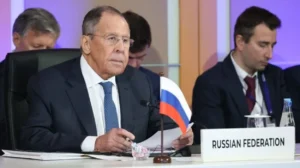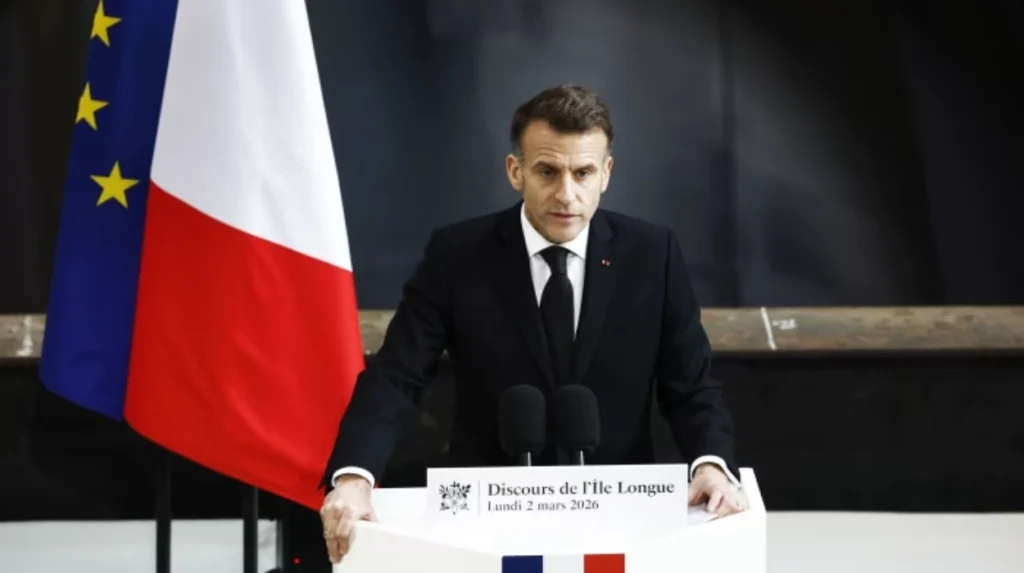
The nuclear sharing scheme by Macron attracts the wrath of Moscow to retaliate at an opportune moment when the Europe is reviewing its long-term security framework in the context of the emerging transatlantic uncertainties. Initially vaguely described in early 2026, the proposal indicates an effort by France to repackage its independent nuclear deterrent as a European resource. As opposed to the current nuclear-sharing policies of NATO under the United States, the French idea is based on sovereign control and provides allied participation via exercises, consultations, and possible deployment structures.
The initiative is based on the discussions which heightened in 2025, as the issues about reliability of the US extended deterrence were rekindled amid election-influenced policy uncertainty in Washington. French officials insisted that the plan was a complementary mechanism and not a substitute, and that the idea of European sovereignty in the defence needed to have credible deterrence capabilities on the continent. This posture is why the nuclear sharing plan of Macron will attract the retaliation of Moscow who cautions that not only is it a military matter but a structural change in the strategic thought process of Europe.
European strategic autonomy debates
The proposal overlaps with the larger European strategic autonomy agenda, which began to gain momentum following energy and security shocks in 2022-2025. France has always been the proponent of the idea that it is better to be less reliant on external security guarantees, and nuclear deterrence is the most delicate form of this desire.
Meanwhile, a number of states in Europe are wary. Even though the countries such as Germany and Poland are interested in a closer security integration, other countries are cautious about escalating and weakening the NATO unity. This has complicated the political environment with Macron nuclear sharing plan attracting Moscow backlash threatening it at least in part because it is a sign of internal European realignment in addition to external punishment.
Distinction from NATO nuclear arrangements
The proposal made by France is quite different to the nuclear-sharing system of NATO where the US weapons are stationed in allied states but on dual-key basis. Paris insists on the absolute operational control of its arsenal, and in lieu thereof proposes the circumstantial deployments and combined exercises.
This differentiation is pivotal. It enables France to maintain its strategy of strategic autonomy and yet bring partners on board. It, however, also creates confusion regarding command hierarchy and the level of escalation, which also adds to the fact that the Macron nuclear sharing plan attracts retaliation on the part of Moscow with a warning.
Russian response and escalation narratives
The nuclear sharing plan of Macron is an initiative that would be retaliated by Moscow with a warning that is mainly because Russia sees the initiative as a Western nuclear infrastructure expansion nearer to their borders. Russian officers such as the Deputy Foreign Minister Alexander Grushko have billed the plan as a destabilising move that would compel Moscow to reconsider its military targeting priorities.
The threat that host nations would become preferred targets is indicative of an old Russian doctrine that directly ties the geography of nuclear deployment to retaliatory planning. This response is in line with prior reactions in 2025, when Moscow denounced initial talks on a European nuclear umbrella, stating that such talks were a source of strategic instability.
Targeting logic and deterrence signaling
The Russian military doctrine focuses on dynamic threats as reasons to attack. Moscow is strengthening deterrence by indicating rather than acting, by hinting that European hosts of French nuclear assets would be added to new targeting lists.
This interaction underlines the logic of the Cold War used to the modern situation. The nuclear sharing plan by Macron attracts the ire of Moscow warning that it would not necessarily lead to deployments, but because the perceived motive changes the strategic balance as perceived by the Russian.
Continuity with 2025 tensions
The escalation narrative also builds on developments from 2025, including increased NATO-Russia aerial encounters and continued tensions linked to the Ukraine conflict. Russian officials had already warned against what they described as “uncontrolled accumulation” of Western military capabilities near their borders.
In that sense, the 2026 reaction is less a sudden shift and more a continuation of an established pattern. Macron’s nuclear sharing plan draws Moscow retaliation warning within an already heightened security environment where incremental changes carry amplified symbolic weight.
European allies and participation dilemmas
The nuclear sharing plan of Macron attracts Moscow backlash by threatening in part due to the fact that it puts European allies in awkward positions regarding participation. The countries to participate in exercises or host deployments have to consider the advantages of stronger deterrence and the threats of being laid bare targets during a possible conflict.
The role of Germany in a bilateral nuclear steering group with France is a major move especially considering the historically conservative attitude of Berlin to nuclear matters. Being engaged in exercises and consultations is the sign of willingness to dive further in terms of integration without making any commitment to permanent basing arrangements.
Political calculations within Europe
Domestic politics are a key determinant of responses. Governments have to reconcile the obligations of alliance with the sensibilities of the people to the nuclear questions, which are still politically controversial in much of Europe.
Eastern European states are more concerned with their immediate security, and are more likely to interpret the proposal in the context of deterrence improvement. Conversely, other countries of Western Europe focus on the risks of escalation and diplomatic options. This rift explains why the nuclear sharing plan by Macron also attracts the wrath of Moscow through her threat and also elicits internal discussions in Europe.
Operational and logistical considerations
In addition to political considerations, implementation is complicated by practical issues. Secure infrastructure, interoperability and defining command protocols are areas that need a lot of coordination. These technical matters are usually given lesser consideration but are vital in deciding whether the plan can transcend beyond theoretical deliberations.
These complexities are manifested by the lack of definite deployment schedules. Although exercises can occur at a relatively fast pace, complete operational integration would take time in terms of political and financial investment.
NATO dynamics and transatlantic implications
The nuclear sharing plan of Macron attracts a Moscow retaliatory response in part due to overlapping with the current deterrence system of NATO. Despite the placement of the initiative as complementary in France, the emergence of a parallel European-based model can only pose a question of unity in the alliance.
The United States has been the backbone of NATO nuclear deterrence. Any feeling that Europe is building another construct might cause tension, although the goal of burden-sharing is not that of replacement.
Managing alliance cohesion
The officials in France have stressed transparency with Washington to tone down fears. The purpose of joint exercises and coordination mechanisms is to make sure that the initiative empowers, not disintegrates, collective defence.
But the scales are tenuous. Moscow is retaliating to Macron nuclear sharing plan with a warning in part due to the fact that it opens a dual-layered deterrence framework, which might complicate the process of strategic messaging and crisis management.
Long-term sustainability questions
Sustaining such an initiative requires political consensus, financial resources, and strategic clarity. Without these elements, the proposal could remain largely symbolic.
At the same time, even symbolic shifts can have real consequences in international security. Perceptions of intent often shape responses as much as concrete actions.
As European capitals continue to debate the merits and risks of deeper nuclear cooperation, the evolving interaction between deterrence ambitions and geopolitical realities suggests that the significance of this initiative will depend less on immediate deployments and more on how it reshapes expectations about Europe’s role in its own defence.