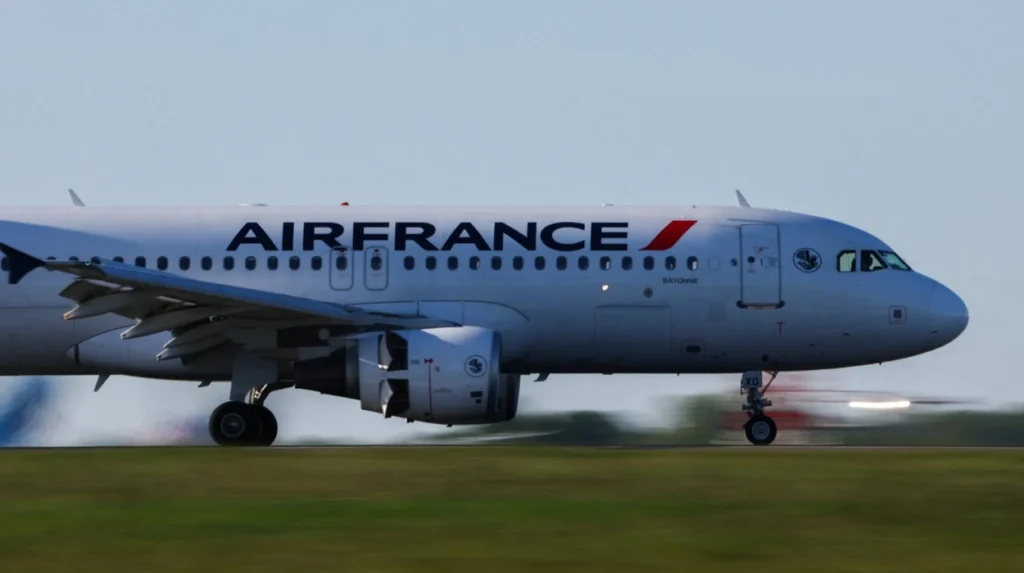
After suffering for more than seventeen years with pain, hopelessness, and hardship through the odds, the appeal court in Paris came out with a groundbreaking judgment on Thursday, May 21, 2026, that is bound to affect the aviation industry and French judicial system in a big way. In its verdict, the court held Air France and Airbus responsible for involuntary manslaughter in the deadly crash of Rio-Paris flight AF 447 that took place in 2009 and resulted in the loss of 228 lives, as they were “totally and solely responsible.”
This decision is quite different from the one made in 2023, where the same allegations against Air France and Airbus were dropped for want of evidence to establish the cause-and-effect relationship. This recent decision, which has taken nine weeks to be passed at the Paris Appeals Court, is considered the most significant case of aviation liability.
The Crash That Shook the World
There was an Air France flight named Air France Flight 447 that was being run by an aircraft called Airbus A330-200 from Rio de Janeiro to Paris and it vanished when passing through a fierce storm on the Atlantic Ocean on June 1, 2009. All 228 passengers aboard were not saved from this unfortunate mishap, which is now the greatest tragedy suffered by Airbus A330 airplanes and also French airlines.
For two years, searches could not locate the wreckage of the plane, which was eventually discovered at the bottom of the ocean in 2011. The analysis of this disaster revealed the presence of many errors and failures, such as icing of the pitot tubes, wrong data on the speed of the plane, and failure of the pilots to understand that their plane was stalled.
For years, the question lingered: could this tragedy have been prevented with better design, clearer procedures, or more rigorous pilot training? The 2026 verdict says unequivocally yes.
The Court’s Verdict: Four Airbus Negligences, One Air France Failure
According to the appeals court in Paris, there were four separate cases of negligence committed by Airbus and one by Air France that were enough to prove criminal culpability according to the French involuntary manslaughter laws. Although the court did not specify all details at the time of the first ruling, it is clear from the information available that Airbus’s negligence was related to design flaws and lack of training material for pilots in stall situations.
The sole instance of negligence in Air France involved the lack of proper crew training and procedures to equip the pilots for the particular situation when the failure of the sensors and the stall were combined together on that particular flight.
Indeed, the wording used by the court was quite clear. The judges ruled that both corporations were “completely and totally responsible for the destruction of the plane and the deaths of the 228 people on board.” The use of such strong wording was intentional because the judges sought to make sure that neither weather nor pilot error could be used as an excuse in this particular case.
Both companies received fines amounting to €225,000 ($366,000), which was the maximum fine allowed by the French law. While the sum is relatively small compared to the annual income of both firms, the criminal conviction alone has significant symbolic meaning.
The 2023 Acquittal and the Appeal That Changed Everything
In April 2023, the French criminal court cleared both Air France and Airbus from charges of involuntary manslaughter. This court stated that mistakes had been made – some technical, others human, but that there was “no certain link of causality” between what the two companies did and the accident. This ruling came under intense criticism from victims’ families who were waiting for justice for almost ten years.
The ruling in 2023 was appealed by the victims’ families and prosecution authorities. The appeal process began in September 2025, sixteen years after the crash, and lasted for nine weeks. This time, much testimony was heard from experts regarding technical flaws in the systems, design of pitot tubes, training manuals for pilots, and psychological processes that took place inside the cockpit during the last four minutes of the flight.
The appeal court’s decision to overturn the acquittal signals a shift in how French courts interpret corporate criminal liability in aviation disasters. The judges determined that the evidence presented during the appeal established a clear enough connection between the companies’ negligence and the crash to meet the threshold for involuntary manslaughter—a notably high bar in French criminal law.
Air France and Airbus Reject Blame
Both firms stood by their claims of innocence in court. As per the Reuters article, Air France and Airbus denied liability in the case of the AF447 plane crash after sixteen years of the incident at the appeal trial held in 2025. The defense for the two firms claimed that the crash was a consequence of an impossible combination of factors including sensor icing, confusion among the pilots, and the stall.
Neither firm offered an official comment following the announcement of the verdict. The lawyers for the two firms revealed that their clients were studying the ruling and considering an appeal to France’s Supreme Court.
The rejection of blame persisted even as the court’s language grew increasingly blunt about corporate responsibility. This stance reflects a broader tension in aviation law: the difficulty of assigning criminal liability to complex organizations where responsibility is diffuse, and disasters typically result from multiple cascading failures rather than a single, identifiable act of negligence.
Victims’ Families: Justice Served, But the Fine Is Symbolic
This decision is a form of vindication for the relatives of the 228 victims, who have been waiting for this moment for about two decades, after having been mourning, advocating, and fighting legally. A number of relatives even came to Paris on May 21st expecting the verdict.
Nevertheless, the imposed €225,000 fine was seen by some of the relatives as just a gesture of symbolism which cannot represent the magnitude of the tragedy. Some relatives were annoyed because the fine constituted only an hour’s profit for each company. The criminal conviction, not the fine, still gives much more satisfaction to most of the relatives.
One family representative, speaking anonymously to BBC News, stated that
“the verdict acknowledges what we have said for 17 years: this disaster was preventable, and the companies that built and operated this plane must take responsibility”.
Another family member told reporters that
“justice is not about money. It is about recognition that 228 lives should not have been lost due to avoidable mistakes”.
The emotional weight of the verdict cannot be overstated. Families attended court sessions regularly since 2023, endured the pain of reliving their loss through testimony, and faced the humiliation of the 2023 acquittal. The 2026 reversal is, for them, a long-overdue acknowledgment that their loved ones were not simply casualties of an unpredictable accident but victims of systemic failures that could have been addressed earlier.
Aviation Industry Implications
The verdict carries significant implications for the global aviation industry. By establishing criminal liability for both an airline and an aircraft manufacturer in the same disaster, the court has set a precedent that may influence future litigation worldwide. Aviation safety experts suggest the decision could accelerate changes in sensor design, pilot training protocols, and corporate accountability standards.
The case highlights the particular vulnerability of modern aircraft to sensor failures and the critical importance of human-machine interface design. The pitot tube icing that triggered the chain of events on AF447 has since been addressed through design improvements, but the court’s ruling suggests that manufacturers may now face criminal charges if they fail to anticipate foreseeable failure modes adequately.
Airbus, in particular, faces scrutiny over whether its training materials sufficiently prepared pilots for stall recovery in high-altitude, automated-flight scenarios. The airline industry may respond by enhancing simulator training for rare but catastrophic scenarios, even if the statistical probability remains low.
Legal Precedent and Future Appeals
Under French law, the Court of Cassation can review the application of legal principles but typically does not reexamine factual findings. Whether Air France and Airbus will appeal remains uncertain. A successful appeal would require demonstrating that the lower court misinterpreted the law or relied on inadmissible evidence—a high burden given the extensive testimony and expert analysis presented during the appeal trial.
If the verdict stands, it will become a reference point for future aviation liability cases, particularly those involving multinational corporations and cross-border disasters. The decision reinforces the principle that corporate entities can face criminal charges when their negligence contributes to mass fatalities, even in technically complex industries where causality is often contested.