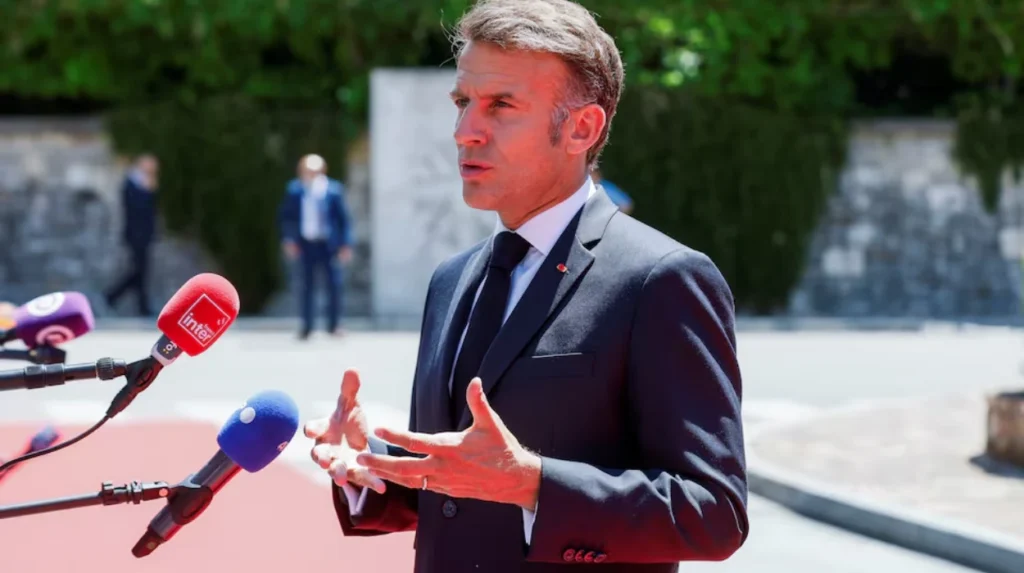
In an initiative which might completely alter the landscape of economic diplomacy across the globe, President of France Emmanuel Macron has stated that he will chair an important videoconference on Thursday, June 11, 2026, that will include the countries from the Group of Seven, alongside China. This videoconference will tackle the problematic aspect of global economic imbalances which has remained unaddressed for too long. This statement has been released through the Élysée Palace in what seems like a very well thought out diplomatic maneuver by France in its role of host of the G7 summit in 2026.
The timing of this initiative could not be more appropriate in light of the current state of the world economy. There have been growing trade disputes; increasing gaps between rich and poor economies have emerged; and it seems that the current methods used to solve problems related to the international economy are insufficient. Indeed, through organizing such an unprecedented video meeting only one day prior to the G7 leaders’ summit, France is putting itself in a mediator position between G7 and China.
The Strategic Context Behind Macron’s Initiative
This video conference did not happen by coincidence, as it was scheduled right before the upcoming G7 leaders’ summit to take place in Evian, eastern France, where economic inequalities would be at the center of talks. The matter of global economic inequalities, which is causing tension in world trade, has become one of the major concerns during France’s term in the chairmanship of the G7 group. Given this particular timing, one may assume that Macron sees this particular video conference as an introductory step that might influence the summit’s overall proceedings and open new avenues of diplomacy between the G7 countries and China.
The most important thing about this initiative is the diplomatic connection that Emmanuel Macron has had with China. Indeed, he visited China from December 3 to December 5, 2025, upon the invitation of President Xi Jinping. During the discussions, both leaders talked extensively about ways of enhancing cooperation economically and overcoming global problems. As a result, in the joint statement released after their talks, there was an emphasis on the necessity of increasing dialogue and macroeconomic coordination as well.
The fact is that Macron always showed his readiness for dialogue with large emerging countries. Thus, in November 2025, he proposed inviting the Chinese president, Xi Jinping, to join the G7 conference that is planned for 2026 in France. This proposal was considered with some of Macron’s allies, but so far, the Chinese president has not been invited to the event yet. The diplomacy itself remains the basis of Macron’s policy.
The Comprehensive Framework of the Video Conference
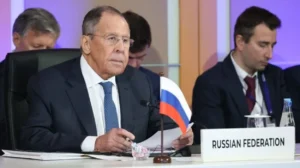
The video conferencing will not be limited only to participants from G7 and China. President Emmanuel Macron of France will preside over a meeting consisting of G7 countries’ delegates, invitees such as Brazil, South Korea, India, Kenya, Egypt, China, as well as the International Monetary Fund. The inclusion of these parties in the conference is an acknowledgment by France of the influence of international economic imbalances on nations at various levels of development.
The involvement of the IMF in the conference makes the event more technically relevant, with its expertise in areas such as balance of payments, trade, and macroeconomic policy cooperation. By doing so, the organizers are indicating that the conference is not merely about political rhetoric; rather, the discussions should be grounded in economic reality and may even lead to practical policies. It is clear that by involving countries such as Brazil, India, and Kenya or Egypt, there are worldwide implications regarding economic imbalance.
France’s Balanced Stance on Economic Responsibility
One thing which is very noticeable about Macron’s strategy is France’s subtle definition of economic responsibility. It does not involve singling out any specific country to be responsible for something; rather, it stresses shared responsibility among the larger economic regions. This was demonstrated by Macron when he met President Xi Jinping of China during his visit to Beijing on December 4, 2025.
The French position articulates that
“each country has its responsibility: China must over-produce, the United States must over-consume, and Europe must under-invest.”
This statement, delivered directly to Xi Jinping, represents a sophisticated acknowledgment that economic imbalances are not the result of unilateral actions but rather emerge from the interaction of different economic policies and behaviors across major regions. By framing the issue in this balanced manner, France seeks to avoid the confrontational approach that has characterized some Western-China economic dialogues while still addressing the fundamental structural issues.
This is a position that differs from those which would portray China as being solely responsible for any imbalance in the economy. However, within this framework, President Macron recognizes that the consumption habits of the U.S., as well as the lack of investments made in Europe, are also contributing factors. In turn, this may enable discussions to be conducted in a less defensive manner.
China’s Renewed Readiness for Engagement
The Élysée Palace’s announcement includes a significant statement about China’s current diplomatic posture. According to the president’s office,
“This conference reflects a renewed readiness from China, the United States, and Europe to engage in synchronized economic initiatives.”
This statement carries substantial weight, suggesting that China has become more willing to participate in multilateral economic dialogue after a period of relative reticence.
The expression of “renewed readiness” suggests that there has been a change in the level of involvement of China in international affairs recently in view of the changing dynamics of the global economic situation. In addition to this, China might have become aware of the economic imbalances prevailing in the world, which are causing an unstable condition, resulting in a negative effect on its own economy due to its status as one of the largest exporters in the world.
What makes the inclusion of the United States in the statement regarding “renewed readiness” so interesting is the complex relationship that has always existed between China and the United States. It would be worthwhile mentioning that there have been many political disputes between the two countries; however, now it seems that both countries have decided to work together for their mutual economic benefits.
The Broader Framework of Economic Governance
Macron’s approach to economic imbalances extends beyond mere trade discussions to encompass broader questions of global economic governance. During his December 2025 meeting in Beijing, Macron urged Xi Jinping to work with G7 countries towards
“rules-based economic governance”
rather than
“the law of the strongest.”
This statement encapsulates France’s vision for international economic relations, emphasizing the importance of established rules, institutions, and norms rather than unilateral power assertions.
The concept of rules-based economic governance has become increasingly important in the face of rising trade tensions and the weakening of traditional international economic institutions. By advocating for this approach, France positions itself as a defender of multilateralism and the international economic order that has facilitated global growth for decades. This stance aligns with broader European interests in maintaining stable trading relationships and predictable economic rules.
The emphasis on rules-based governance also reflects concerns about the potential for economic conflicts to escalate into broader geopolitical tensions. By establishing clear rules and mechanisms for addressing economic imbalances, nations can potentially resolve disputes through dialogue rather than through confrontational measures that could damage the global economy.
The G7’s Non-Hostile Approach to China
Macron’s diplomatic philosophy includes a clear commitment to maintaining constructive relationships with China. In a statement that has resonated through subsequent diplomatic efforts, Macron emphasized that
“the G7 is not hostile towards China”
despite differences over issues such as forced labor and human rights. This position reflects France’s belief that economic cooperation and dialogue can continue even in the presence of political disagreements.
It is this non-confrontational nature of this position that sets it apart from the hostile approach that some countries belonging to the G7 may take towards China. By making sure that the group understands that it is not an anti-China organization, Macron hopes to provide an opportunity for open discussions concerning economics, without being in a defensive state when dealing with China. This would allow France to discuss economic problems in an easier manner, without getting into politics.
However, it is evident that France recognizes there exist differences regarding human rights and labor exploitation. However, the country does not consider it necessary to address all these issues together, hence its belief in separation.
The Summit Agenda and Economic Priorities
This video conference is going to be the preparatory step towards the forthcoming G7 leaders’ meeting to take place the next week in Évian. It is known that global economic problems such as poor growth, imbalances, and deficiencies in governance are among those that will be discussed at the summit. Hence, according to France’s priorities, the summit will likely discuss possible solutions rather than simply state the presence of problems.
Economic imbalances as one of the issues to be discussed at the summit will most probably refer to structural problems related to economic disparities and trade relations between countries. Inviting China to the conference means that France wants to achieve conclusions at the summit that would correspond to the interests of all major economic players.
The inclusion of emerging economies and the IMF in the video conference demonstrates France’s commitment to inclusive economic governance. This approach recognizes that economic imbalances affect nations across different development stages and that effective solutions must incorporate perspectives from a broader range of stakeholders than the traditional G7 framework.
The Significance of This Diplomatic Moment
The current video conference stands out as a milestone in the world’s economic diplomacy. The move by Macron to invite the G7 countries along with China to tackle economic disparities before the upcoming G7 summit is expected to create an important framework through which economic tensions could be resolved by engaging these major economic powers diplomatically.
The balanced way in which France has tried to engage with China in addressing economic imbalances without making specific demands on China alone can prove to be a useful way forward to managing international economic issues. If other countries follow this approach, it can completely change the dynamics of such engagements in the future.
The renewed readiness from China, the United States, and Europe to engage in synchronized economic initiatives, as stated by the Élysée Palace, suggests that this conference could mark the beginning of a more constructive period in international economic relations. If these nations can indeed work together on synchronized economic initiatives, the global economy could benefit from more stable trade flows, reduced tensions, and more effective responses to economic challenges.