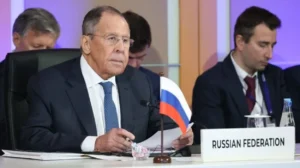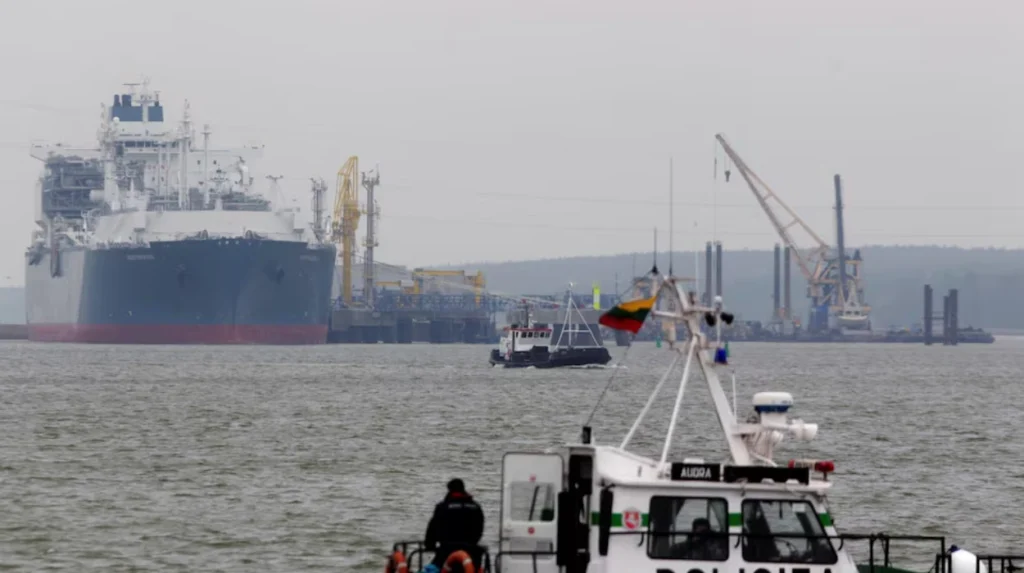
Across Poland and the Baltic states, a silent but determined mobilization is underway. Soldiers, police, and security services have reinforced patrols around energy terminals, power plants, and electricity interconnectors, not in response to an active attack, but to guard against one that might never come—or might come disguised as someone else’s work. This is the heart of a widening security dilemma: Poland and Baltics shield infrastructure, fearing a Russian false-flag strike that could be used to sow discord within NATO and erode Western support for Ukraine.
The scenario presented by the intelligence services and high-ranking officials in Vilnius, Warsaw, and Riga is exact and politically loaded. They state that Moscow might put together a “fake Ukrainian drone” using the components found in Russia and use it to launch attacks on the important structures in the Baltic states or Poland and blame Kyiv for doing so. It won’t be a military victory, however; it will be the aim to create a political rift between European nations, making NATO’s capitals hesitant and tired of Ukraine.
The Threat Architecture: How a False-Flag Operation Could Unfold
The Drone Deception Playbook
At the center of the warnings is a deception tactic that exploits the fog of modern drone warfare. Lithuanian Defence Minister Robertas Kaunas has been explicit about the mechanics.
“We are talking about a potential false-flag operation where a fake Ukrainian drone could be used,”
he said during a press briefing in early August 2026.
“That’s the most realistic current scenario.”
According to Kaunas, Russian military and intelligence agencies have been
“capable of assembling [captured Ukrainian drone components] into a functional device,”
creating a weapon that would appear Ukrainian in origin while being controlled or launched by Russian actors. The goal, he explained, is ambiguity:
“One of the goals is for NATO to waver and decrease support to Ukraine. I can assure this will not happen.”
Lithuanian military intelligence has reportedly told government officials that Moscow is
“considering unconventional kinetic attacks against critical infrastructure in the Baltic region,”
with Ukrainian-made or Ukrainian-mimicking drones as the most likely vector. The assessment does not specify a target, timetable, or operational plan, which officials stress means it should be treated as an intelligence warning about a possible method, not confirmation of an imminent strike.
Why Critical Infrastructure?
The logic of attacks against infrastructures is both symbolic and strategic. The successful attack against a liquefied natural gas (LNG) terminal, pumped-storage hydroelectric power station, or an electricity interconnector will have instant implications regarding energy security, market perceptions, and public fears. In Lithuania, the government has explicitly stated which infrastructure is protected and considered vulnerable: LNG terminal of Klaipėda, the electricity interconnector LitPol Link between Lithuania and Poland near Alytus, transformer substation in Alytus district, and the Kruonis pumped-storage hydroelectric power station.
None of them have been chosen randomly. The Klaipėda LNG terminal is the main hub of gas imports, while LitPol Link represents the physical connection of Baltic states’ energy network with continental Europe – a sign of integration and solidarity within NATO. Such attack would send more signals than just cause damage because it would imply that even the eastern border of NATO is insecure and Ukraine’s war has consequences for Europeans.
The Regional Alarm: Statements from Warsaw to Tallinn
Lithuania: From Intelligence to Public Warning
Lithuania has been the most vocal in articulating the threat. President Gitanas Nausėda said in July 2026 that intelligence indicated Russia might be planning “limited kinetic operations” against critical infrastructure in the Baltic states or Poland, prompting him to order tighter security around energy and transport sites.
Kaunas has since repeated and refined the warning.
“We have data that Russia is considering unconventional kinetic attacks on critical infrastructure in the Baltic region,”
he said.
“It is likely that Russia could use Ukrainian-made drones for this purpose.”
He added that while there is “no direct threat” of an imminent attack, Russia is “analyzing and preparing various scenarios.”
Poland: Preparing for “Critical Months”
The mood in Warsaw is just as sombre. “The Russians are working on another plan; we have reliable information,” Defence Minister Władysław Kosiniak-Kamysz commented when speaking with reporters, explaining that Russia is taking possession of a vast number of Ukrainian drones and might attempt to launch a hybrid attack against NATO or even use the drones in a false flag operation. This is part of hybrid war tactics that include GPS jamming and sabotage. In response to this situation, Poland is considering different measures such as finding an alternate way of importation and the development of nuclear energy in the country. The matter was raised by the foreign minister of the country Radosław Sikorski who explained that Russia can carry out a false flag operation even in its own territory and thus find pretexts for an escalation of actions. Prime Minister Donald Tusk announced that now Poland is ready for various scenarios and these are critical months for Poland.
Latvia and Estonia: Hybrid Signals and Electronic Warfare
Latvian intelligence, as reported in late June 2026, detected preparations for a hybrid attack short of open war, potentially using missiles or drones to
“send a signal: stop supporting Ukraine, or you will have your own problems.”
Estonian officials have echoed these concerns, pointing to provocative Russian activities such as unannounced live-fire exercises near borders and persistent GPS jamming that has disrupted civil aviation and maritime navigation across the Baltic Sea.
Together, these statements form a coherent regional narrative: Moscow is testing the limits of NATO’s resolve through deniable, low-intensity operations that blur the line between accident, sabotage, and aggression.
Precedents and Patterns: From Stray Drones to Sabotage
The current alarms are not emerging in a vacuum. Over the past year, the region has seen a string of incidents that have conditioned both publics and policymakers to expect the unexpected.
- In September 2025, 21 unarmed Russian drones entered Polish airspace, probing NATO’s response mechanisms and raising questions about the alliance’s air-defense readiness.
- Throughout 2026, Ukrainian long-range drones targeting Russian oil infrastructure in the Leningrad region have strayed into Lithuania, Latvia, Estonia, and Finland—incidents that officials attribute in part to Russian electronic warfare redirecting drones mid-flight.
- A misguided Ukrainian-launched drone struck an oil storage facility in Latvia, an incident severe enough to contribute to two high-level resignations, including that of the prime minister.
- In eastern Poland, a rail line was disabled in 2025 in an act widely attributed to sabotage, underscoring the vulnerability of overland logistics.
These events have created a pattern: drones veering off course, infrastructure suffering unexplained damage, and electronic interference complicating civilian operations. In that context, a false-flag strike would not be an isolated shock but the culmination of a long-running campaign of hybrid pressure.
The Strategic Calculus: Why Moscow Might Risk It
Undermining NATO Cohesion
Strategic logic in the case of such a maneuver will primarily lie in politics rather than the military. If the attack were to be presented as one launched by Ukrainians, Russia would hope to drive a wedge between the allies within NATO in regard to their support for Ukraine. Countries that find themselves under political and economic pressure from domestic audiences may have second thoughts about the costs of continued support in the face of Ukraine threatening the lives of their citizens. This point has been made quite explicitly by Kaunas:
“One of the objectives is to make NATO hesitate and reduce its support to Ukraine.”
Creating a Pretext for Escalation
A second possibility is that Russia could stage an incident on its own territory or in a way that allows it to claim a Ukrainian attack on NATO soil, then use that as a pretext for escalation. Sikorski’s warning about a potential false-flag on Russian soil points to this darker scenario: a manufactured provocation that Moscow could use to justify broader strikes, perhaps even against NATO members, under the guise of self-defense or retaliation.
In this reading, the false-flag is not just about blame-shifting; it is about manufacturing a casus belli that could legitimize a more aggressive phase of the conflict.
Domestic Narrative Control
There is also a domestic factor to be considered. In light of increasing concerns by the population of Russia on the issue of fuel shortages, strikes within the territories of Russia, and the cost that the war entails, the Kremlin might try to find an “external victory” or escalate the situation in order to re-establish control and gain domestic support. This could happen in the form of a provocative act in the Baltic states or Poland, under the guise of countering Ukrainian provocation.
The Response: Hardening the Shield
Military and Police Deployments
As a result, Lithuania has resorted to military and police presence for the protection of important infrastructure from mid-June 2026 onwards. The army is helping the Public Security Service in securing the Klaipėda LNG terminal, the LitPol Link gas pipeline, the Alytus transformer substation, and the Kruonis hydroelectric power station. This has been observed in Latvia as well, where increased monitoring and patrolling has taken place at energy and transport infrastructures. In the case of Poland, the threat has been raised in national security committee meetings, and other methods such as identifying alternate routes for imports and nuclear strategy are being studied.
Investment in Resilience
Beyond immediate deployments, the European Union has committed significant resources to bolstering infrastructure resilience. In early 2026, the European Commission announced €113 million under the Connecting Europe Facility to increase the protection of critical energy infrastructure linking the Baltic States with continental Europe. These funds are earmarked for physical protection, cybersecurity, and countering hybrid threats, reflecting a long-term strategy to harden the region against both kinetic and non-kinetic attacks.
The Kremlin’s Denial and the Information War
The threats have been ridiculed as “scare stories” by Moscow. The official view from the Kremlin is that the Baltics are blowing everything out of proportion so as to build up their defenses and gain support for Ukraine from the West. On the other hand, Russia has continuously accused the Baltic states of using their airspace as a launch pad for attacks against Russian soil by Ukrainian forces. This battle of narratives is one of the major fronts of the conflict in itself. Every warning issued by Lithuania or Poland is countered by an accusation from the Russians, adding to the confusion of facts in which the general public has to choose what they would believe in.
What Comes Next: Scenarios and Stakes
No Imminent Threat, But Persistent Risk
Officials across the region are careful to stress that there is no confirmed imminent timing for any attack. Kaunas has said there is “no direct threat,” while Nausėda and others have described the situation as one of preparation and scenario-planning, not immediate crisis.
Yet the risk is persistent. As long as the war in Ukraine continues, and as long as Russia sees value in testing NATO’s cohesion, the possibility of a deniable, low-intensity strike remains on the table. The region’s response—hardening infrastructure, increasing patrols, and investing in resilience—is designed to raise the cost of such an operation and to ensure that, if it occurs, the political fallout does not play into Moscow’s hands.
The Test of Alliance Unity
In essence, there is much more at stake than a single facility or border. This false flag scenario is an opportunity for NATO to demonstrate its cohesion in terms of message, attribution, and not rushing to blame Ukraine in this situation. However, if there is going to be an ambiguity and fear on top of that, then NATO will have serious problems, as it might end up being divided at the very time when it needs to demonstrate cohesion the most. Right now, the Poles and Baltics guard their infrastructure from a potential Russian false flag attack, but this is only half of what they are doing.