The European Union’s latest transfer of €1.4 billion from interest on frozen Russian assets is more than a technical sanctions update; it is a political signal that Brussels intends to keep turning immobilized Russian wealth into sustained wartime support for Ukraine. The decision strengthens an already established EU mechanism, while also sharpening the debate over legality, precedent and Europe’s long-term role in financing Kyiv’s survival.
A new tranche from frozen assets
The European Commission says that the funds sent to the union on August 3 resulted from interest earned from the cash balances that were tied to assets belonging to the Russian central bank, frozen after Russia invaded Ukraine in 2022. While the principal is frozen, the interest and exceptional revenues gained from the assets have been put to use in helping Ukraine within the framework of an EU-allowed system.
According to Reuters, the EU will use the funds to support Ukraine, while the European Commission sees the step as yet another development in a broader structure surrounding the sanctions regime. This is the fifth time such a transfer has occurred, and the recent one involves revenue collected in the first six months of 2026, according to reports connected to the EU. It is reported that the European Commission says that the total of the exceptional revenues made since freezing the Russian assets is around €8 billion.
How the money will be used
The Commission says 95% of the proceeds will go through the Ukraine Loan Cooperation Mechanism (ULCM), while 5% will be channelled through the European Peace Facility (EPF) to address Ukraine’s urgent military and defence requirements.
The ULCM assists in paying back macro-financial assistance and G7 loans, whereas the EPF assists in weapons, equipment, and other defensive necessities. In practical terms, the EU is applying income from frozen assets both to maintain the functionality of the Ukrainian state and to keep its combat readiness alive. Such differentiation is important in terms of the way in which the EU managed to shift from providing emergency assistance to implementing a more complex scheme of financing. Initially, the mechanism had a strong focus on military assistance; according to Reuters, in the first iteration of the system in 2024, 90% of the revenues went directly to an EU-operated military fund, while only 10% to another form of support. The current iteration is more advanced; however, the underlying idea remains the same – Russia’s immobilized assets are being forced to finance the results of Russia’s war.
Why Brussels says it is legal
European officials have been careful to draw a legal line between seizing the assets themselves and using the interest they generate. The Commission and EU Council have argued that the principal remains frozen under sanctions, while the proceeds accrued from cash balances held by central securities depositories do not belong to Russia in the same way and can therefore be redirected to Ukraine. That distinction is central to the EU’s position, because outright confiscation of sovereign assets would raise sharper legal and diplomatic risks.
The framework was formally enabled in May 2024, after EU member states agreed to use the extraordinary profits of immobilized Russian assets for Ukraine’s benefit. In December 2025, the Council also moved to make the immobilization more durable by prohibiting the transfer of frozen Russian central bank assets back to Russia under a separate regulation. Taken together, these steps show a gradual hardening of EU policy from temporary freezing to long-term financial leverage..
Statement from the Commission
European Commission President Ursula von der Leyen put the political message bluntly.
“Russia must pay for the destruction it has caused,”
she said, adding,
“And we are using the proceeds from the immobilised Russian assets to make sure it does.”
She also said,
“We are making a further €1.4 billion of them available to Ukraine. This will support Ukraine’s continued resistance against Russia’s illegal war.”
The wording is important. Brussels is not presenting the transfer as a one-off humanitarian gesture, but as an enforcement mechanism tied directly to Russian responsibility for the war. The Commission’s language turns sanctions into a revenue channel for Ukraine, and that has become one of the EU’s most consequential policy innovations since 2022.
The political logic behind the move
The EU finds itself facing pressure to continue supporting Ukraine amid an ongoing conflict that is expensive and one where some member states have become weary. Through the use of the interest earned from the frozen Russian assets, the union is able to continue supporting the country without completely depending on new funding from its member states. This is why the policy has been deemed attractive from a political standpoint, where governments have to find ways of continuing their support even when dealing with tight budgetary constraints. The policy sends a message to Russia too. The EU would like to send the message that frozen Russian state assets will not remain inactive for years as Ukraine pays the price of war.
Valdis Dombrovskis, the EU Commissioner for Economy and Productivity, described the policy as Europe turning sanctions into tangible support, saying the bloc is
“putting its war chest to work for Ukraine’s survival and recovery.”
That line captures the broader political framing. The EU’s stance is not merely that it is helping an embattled partner; it is arguing that Russian state assets frozen in Europe should function as a reservoir of accountability. The message is designed for both audiences: Kyiv, which needs money, and Moscow, which Brussels wants to keep under pressure.
What Russia is likely to say
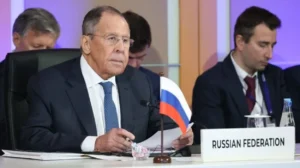
Russia has persistently criticized the usage of its frozen assets and their generated revenue as theft in past comments and associated reporting. This stance will not shift because it is completely opposite to the argument made by Moscow about the protection of sovereign assets within international law. It is not only a matter of money to Moscow, it is also a question of symbolism. After the EU makes it clear that they can make use of frozen Russian assets’ revenues for Ukraine, then Moscow will lose one more argument to convince others that the freezing of the assets is only temporary and can be reversed.
The numbers that matter
It is the scale of the policy that makes it significant. This particular funding is of €1.4 billion, although it is part of an even bigger framework, where extraordinary revenues have been generated from the immobilized assets for an amount of €8 billion until now. In addition, earlier reports have indicated that there was a yearly revenue of €3 billion generated from the interest of the immobilized assets, explaining why this funding mechanism has been so important as a source of finance. This fund can be used by Ukraine for various purposes. According to the materials provided by the EU, it helps with budget stability, critical public services, macro financial aid and military needs. This is very important, considering that the war efforts of Ukraine involve much more than just weapons.
The wider significance
This latest transfer shows that the EU has moved past the experimental stage. What began as an emergency sanctions idea in 2024 has become a repeatable funding mechanism embedded in EU policy and reinforced by later legal decisions. The repeated tranches demonstrate administrative durability, while the legal design aims to reduce the risk of an outright confiscation dispute.eeas.
The bigger question now is whether the EU will eventually go beyond interest and windfall profits and move toward using the principal itself in some form of reparations or reconstruction mechanism. That debate is already alive in European capitals, but it remains politically sensitive, especially among states worried about legal precedent and retaliation. For now, Brussels is staying with a narrower but still powerful approach: using the money generated by frozen Russian assets to sustain Ukraine’s resistance.