Donald Trump’s scheduled participation in the G7 conference in France is coming at a particularly tricky time, as the rifts between America and its most trusted allies continue to grow. While a normal meeting of the G7 is nothing out of the ordinary, this particular one will likely prove to be quite a challenge for President Trump to navigate, since it will allow him to both handle any potential frictions with Europe and justify his administration’s stances regarding Iran, trade, and NATO spending.
The conference, due to take place in France in June 2026, will be a highly significant event, especially considering the current state of international politics. Trump is reported to have said that he will “probably” attend the summit, using a rather restrained wording choice to emphasize the likelihood of last-minute changes characteristic of the president’s diplomacy strategy. Still, even such a conditional agreement on attending the event can attract considerable attention to it because of the hostile political climate surrounding it.
Not only does the story hinge on Trump’s appearance, but the bigger issue remains that of whether the G7 will remain an effective forum to conduct meaningful business despite the profound differences between the US and Europe on key international questions. This summit is likely to see the participation of people who no longer trust each other. This lack of trust is felt not only at the level of this single summit but also at a more fundamental level regarding the strength of the US security guarantee as Washington continues to pressure Europe to pay for its defense.
A summit shadowed by division
It is important to emphasize the timing of the President’s visit to Europe. G7 should represent the spirit of unity between countries that are leading powers within democratic states, but the G7 being held under such circumstances would not make unity visible. As reported, there are three main sources of conflict – the war with Iran, the issue of trade, and disputes over NATO duties.
It appears that the current situation indicates that the meeting might become a pressure test rather than just a symbolic event. Apparently, some leaders in Europe feel uneasy because of Trump’s behavior, especially his readiness to attack his allies and discuss issues in such a transactional way. As a result, there has been created an environment where any communication might become controversial.
According to one source, the overall situation could be characterized by “deep Western divisions” — something that shows the extent to which the current summit revolves around addressing the issue of division rather than finding common ground. Indeed, in the previous years, the G7 was regarded as a good platform for sending out messages, but it seems that the problem of finding the common language has become the priority now.
Trump’s balancing act
It looks like Trump’s position on the issue is that of selective engagement. While he doesn’t seem to be refusing participation in the summit, he is certainly not welcoming the opportunity in the same way as other nations would do. The fact that his “probably” regarding the summit seems to suggest a willingness to change plans if the situation requires it makes clear his intention to play hard to get.
On the other hand, one can also note that Trump’s administration tries to use this summit as an occasion to advance some of its views. For example, the current Secretary of State, Marco Rubio, is expected to visit France as part of broader efforts aimed at selling the US stance on Iran to its skeptical allies. This information is rather significant because it means that the current US approach towards the upcoming summit is rather diplomatic in nature, implying that it will involve extensive preparations and advance positioning, regardless of whether the US will find the right audience among other participants.
It should not be a surprise that this approach might cause some problems for the US side since the situation implies the need for President Trump to demonstrate strength and confidence while participating in an event with many leaders whose trust might be rather questionable in their current situation.
Europe’s growing anxiety
It goes without saying that European leaders enter the conference with certain apprehension. It does not have anything to do just with the fact that it will not be easy to work with Trump. What is more troubling is the possibility that his policies may put into question the principles on which European-U.S. collaboration was based for decades. The growing worry is related to the dependability of the United States when it comes to defense and security matters.
That is why media reports about the upcoming event have been tying the visit of Trump to the problems associated with NATO and European defense. The problem has become not the existence of discrepancies between European countries and the United States, but the ability of the latter to withstand them without sustaining serious losses.
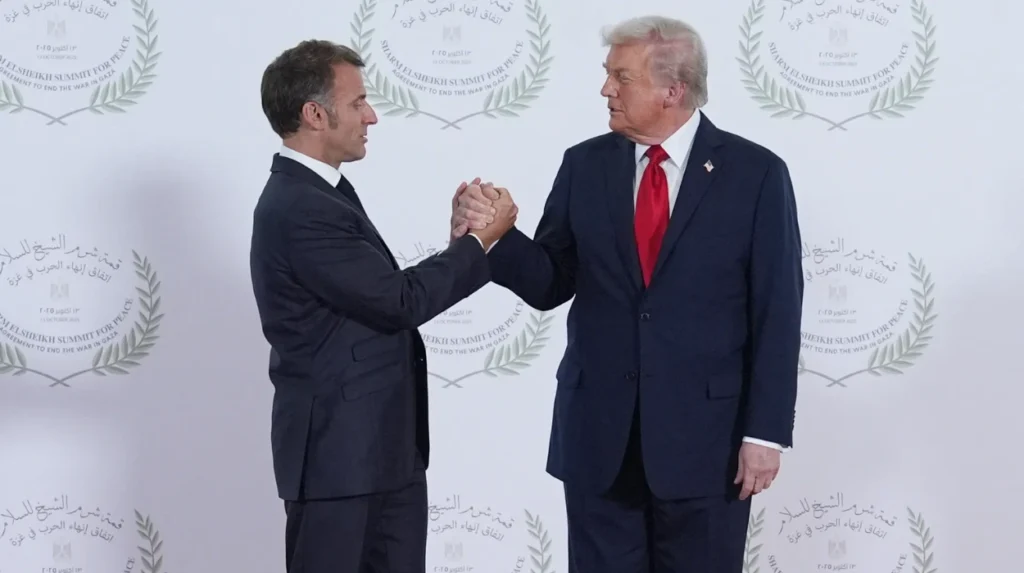
France, as host, is in a particularly delicate position. President Emmanuel Macron has often tried to act as a bridge between Europe and the United States, but the current climate leaves little room for easy diplomacy. Hosting a summit under these conditions means trying to keep the conversation constructive while avoiding public clashes that could dominate the headlines. It is a difficult balancing act, and one that will likely require careful choreography from the French side.
Iran and trade drive the agenda
While it seems that the summit will be broadly focused, the immediate challenges seem to be emerging from Iran and trade. According to AP reports, the trip by Rubio to France was part of an effort to win over allies regarding the Iran issue, implying that the Americans realize that their allies doubt the way that the U.S. deals with the crisis. This kind of doubt could define the nature of the summit that would be held.
The trade challenge is yet another problem that the G7 summit could face as Trump has frequently used trade policies against his allies. It seems that such practices make Europe used to receiving sharp criticism, thus increasing the risk of tension at the summit even if its official agenda is broadly focused on diplomatic issues. On a practical level, this particular problem raises broader questions concerning the nature of the relations between the U.S. and other countries.
Together, Iran and trade create a volatile mix. One involves war and security, the other economic rivalry, but both point to the same underlying problem: a lack of confidence between the United States and its partners. That is why the summit’s significance goes beyond the headlines. It is not only about policy outputs, but about the survival of a shared political framework.
Reading the statements carefully
The language employed by the officials and the media gives some insights into the diplomatic maneuverings surrounding the summit. The use of the word “probably” when Trump said he will attend sent a lot of messages. In doing this, the president indicated his intentions without giving up any kind of control. This move was designed to allow changes depending on political developments without losing face as far as the White House is concerned.
When one considers the use of the Reuters style regarding the European anxiety, the description of Trump’s attendance as tentative by Bloomberg, and the AP story regarding Rubio’s mission, one comes to realize that a lot of maneuvering is going on behind the scenes. It is not surprising that the leaders are preparing for conflict as much as they are preparing their agendas. It is an indication of how conflict has come to define such events during the period of crisis.
A separate line from earlier coverage described past G7 meetings with Trump as a kind of uncomfortable family reunion. That metaphor still fits. The participants share deep interests, but they also carry grudges, suspicions and conflicting priorities. The summit is therefore likely to be less about harmony than about controlled disagreement.
What this means for the G7
The deeper question is whether the G7 still has the power to shape a common Western response to global crises. In theory, it does. The members remain influential economies with huge diplomatic reach. In practice, however, the group’s effectiveness depends on trust, and trust is in short supply. Trump’s attendance ensures attention, but it does not guarantee cooperation.
If the meeting ends with even limited agreement, that would be seen as a modest success under the circumstances. But if the summit is dominated by public sparring or visible division, it could reinforce the perception that the G7 is struggling to stay relevant in an era of fragmented alliances. That would be especially damaging because the summit is taking place in France, a country that has tried to keep multilateral diplomacy alive even as geopolitical pressures increase.
The stakes are therefore both immediate and long term. In the short term, the summit will reveal whether Trump and his counterparts can manage their disagreements without letting them spill into open confrontation. In the longer term, it will test whether Western leaders can still rely on the G7 as a forum for strategic alignment. The answer may not come in a single joint statement, but in the tone of the meeting itself.
Trump’s planned G7 visit to France is thus more than a diplomatic trip. It is a snapshot of a strained international order, one in which allies are still talking, still meeting and still trying to cooperate, but with far less confidence than before. The summit may proceed as scheduled, but the tensions surrounding it suggest that the real story is not who shows up. It is whether the alliance remains stable once everyone is in the room.