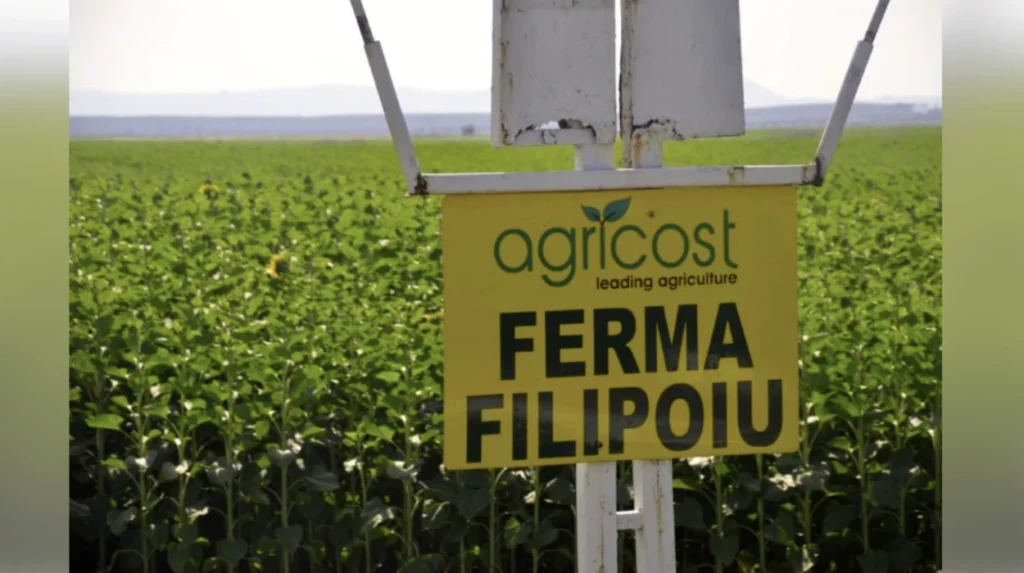
Agricost’s case exposes systemic gaps: EU subsidies totalling about €71 million have flowed to companies linked to the Al Nahyan family and UAE sovereign interests while public records do not show a targeted environmental audit or transparent beneficial‑owner scrutiny for the EU’s largest single farm, Agricost, in Romania — a governance gap that demands immediate political and administrative remedy.
Who benefits from €71 million — and what exactly is Agricost?
Investigations by DeSmog and partner outlets identify subsidiaries tied to the UAE’s ruling Al Nahyan family and Emirati investment vehicles as recipients of more than €71 million in CAP payments across 2019–2024, covering operations in Romania, Italy and Spain. The reporting highlights Agricost: a single contiguous operation of roughly 57,000 hectares in Romania — described by outlets as the EU’s largest farm — which received around €10.5 million in direct CAP payments in 2024 after acquisition by Emirati interests in 2018.
To situate the public narrative and pressure around the story, note how media outlets framed the investigation early on:
Middle East Eye amplified the DeSmog findings in a concise public statement that set the tone for wider coverage — linking the Al Nahyan family directly to EU subsidy flows. Middle East Eye said in a post,
“The United Arab Emirates’ ruling al-Nahyan family is benefiting from tens of millions in European Union subsidies to grow crops destined for the Gulf, according to a new investigation by DeSmog.”
- The €71 million figure cited in the cross‑border investigation aggregates 110 payments linked to entities within the Al Nahyan/ADQ investment network over six years (2019–2024).
- Agricost’s scale — 57,000 ha — places it in a different ecological and managerial category than the small or medium farms CAP was historically designed to support; its single-farm footprint raises unique environmental and enforcement questions given CAP conditionality.
How does CAP’s “green” conditionality and eco‑schemes apply — and are they being enforced?
The CAP’s post‑2023 architecture strengthens environmental conditionality and requires member states to offer eco-schemes — dedicated payments that should direct at least 25% of direct payment funding toward measurable practices that deliver public goods like biodiversity, soil health and reduced emissions. Yet the investigative reporting and follow-up press coverage do not show a public record of environmental audits or a named enforcement action focused on Agricost’s compliance with those conditionality rules; the European Commission’s early public response was described in reporting as having “taken note” of the findings rather than announcing a targeted probe.
- Eco-schemes are meant to be measurable and auditable; member states design them and are responsible for monitoring uptake and results.
- The absence of public audit records for Agricost suggests a potential enforcement gap: large recipients must be checked as rigorously as small ones, and for agroecological outcomes, not only activity declarations.
What environmental risks does a 57,000‑hectare monoculture pose — and why does it matter for Romania and the Danube basin?
Industrial monoculture at the scale of tens of thousands of hectares carries well-documented risks: accelerated soil degradation under continuous intensive cropping, nitrate and pesticide runoff into river systems, removal of hedgerows and ecological corridors that sustain pollinators and birds, and heightened vulnerability to climate-related shocks that can propagate across regional food systems.
- Romania’s agricultural southeast, where Agricost operates, borders the Danube Delta — Europe’s largest river delta and a UNESCO World Heritage Site — meaning landscape-scale pollution or hydrological disruption could have transboundary consequences for highly protected habitats.
- At 57,000 ha, avoidance or mitigation measures that are optional at smaller scales become essential to prevent cumulative impacts that undermine the EU Green Deal’s biodiversity and water-quality objectives.
Did EU bodies or member states follow up — and what have politicians and stakeholders said?
Initial institutional reactions captured in media coverage were limited: the Commission and other EU bodies were reported to have “taken note” of the investigative findings, a phrase that signals awareness but not necessarily enforcement action or an immediate audit. Advocacy groups and the journalists who led the investigation called for far more: transparency about the ultimate beneficial owners of large CAP recipients and targeted environmental audits for holdings exceeding given size or payment thresholds.
- The investigative dataset documents 110 CAP payments tied to entities linked to the Al Nahyan/ADQ network, indicating a sustained pattern of subsidy receipts rather than an isolated anomaly — a pattern that civil society says justifies urgent oversight steps.
- As of the cited reporting, there was no public record of a named EU commissioner or MEP leading a formal, public enforcement case specifically against Agricost — only institutional notes and press replies, which critics argue are inadequate given the scale.
What transparency and governance problems does this reveal — ownership, beneficial control, and public‑interest safeguards?
Three linked governance deficits are visible from the evidence:
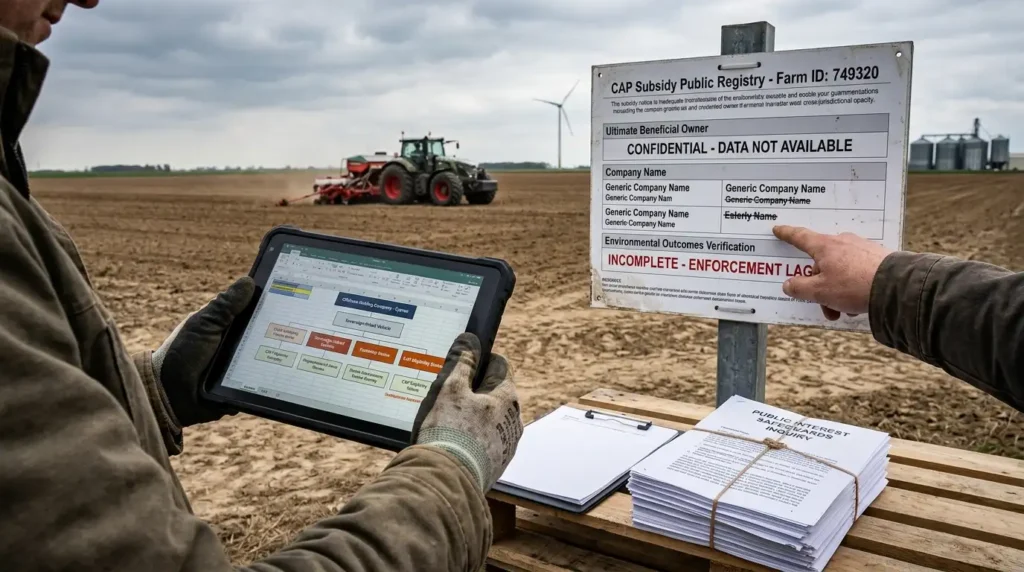
- Ownership opacity: cross-jurisdictional holding structures (including Cypriot entities and sovereign-linked investment vehicles) can obscure who ultimately controls large farmland, complicating CAP eligibility checks and public scrutiny.
- Weak public reporting: CAP payments are recorded, but the line from paying agency to beneficial owner and to environmental outcomes is often incomplete in public registries, especially for complex corporate structures.
- Enforcement lag: the CAP legal framework includes conditionality and eco-schemes, but their effectiveness depends on active verification and the political will to pursue inquiries where large-scale environmental risk and foreign sovereign interests intersect.
These are not theoretical concerns: the investigative dataset that underpins the €71 million claim documented cross-border payment patterns and corporate links, showing systemic traceable flows.
What have analysts and EU reform advocates proposed — and where does France stand?
Policy prescriptions offered by analysts and civil society include immediate measures: mandatory public disclosure of ultimate beneficial owners for recipients above a payment threshold; automatic environmental audits triggered by scale or payment size; and publication of eco-scheme participation and verification data for large holdings. France — a vocal advocate for eco‑scheme stringency — has argued in CAP debates that public money must pay for public goods, an argument that directly challenges the notion of large, export-oriented mega‑farms receiving substantial direct payments without demonstrable environmental returns.
- The CAP already provides tools (eco-schemes, conditionality) that could be used to target environmental outcomes; the shortfall is in transparency and enforcement at member-state and EU levels.
- Investigative reporting and NGOs call on the Commission and national paying agencies to publish the checks applied before each payment and to open investigations where evidence points to beneficial-ownership opacity combined with large-scale environmental risk.
What practical steps should the EU take now?
Based on the documented facts — the €71 million aggregated figure, Agricost’s reported €10.5m receipt in 2024 and its 57,000-ha scale, and the absence of a public audit record — recommended immediate actions are:
- Publish beneficiary-level data linked to beneficial owners for payments above a high threshold, with supporting corporate-linkage documentation. The investigative dataset that produced the €71m aggregate demonstrates that such tracing is possible and necessary.
- Trigger targeted environmental audits for holdings above a threshold (for instance, the largest 1% by area or recipients of the top 5% of payments), with results published and remedial measures time-bound. The ecological sensitivity of the Danube basin and the magnitude of Agricost’s footprint justify such triggers.
- Require eco-scheme participation for large recipients to be accompanied by verifiable restoration or biodiversity measures (hedgerow restoration, buffer strips, reduced input regimes) and make compliance data publicly accessible.
Why this matters for democratic oversight of EU funds
If more than €70 million in CAP funds can be traced to entities linked to a foreign ruling family without transparent beneficial‑owner confirmation or a parallel public environmental audit for the largest single farm, the credibility of CAP as a tool to buy public goods is undermined; this gap endangers not only biodiversity and water quality in sensitive regions like the Danube basin but also public trust in EU institutions and national paying agencies.
Statement
- “The money was spread over 110 payments made between 2019 and 2024 under the bloc’s Common Agricultural Policy (CAP), and related to farms in Romania, Italy and Spain, their report said.”.
- “Subsidiaries held by the Al Nahyan royal family and an Emirati sovereign wealth fund received more than 71 million euros ($84 million) in subsidies, according to findings by the DeSmog journalism collective.”.
- “Eco-schemes support farmers who adopt or maintain farming practices that contribute to EU environmental and climate goals.”.