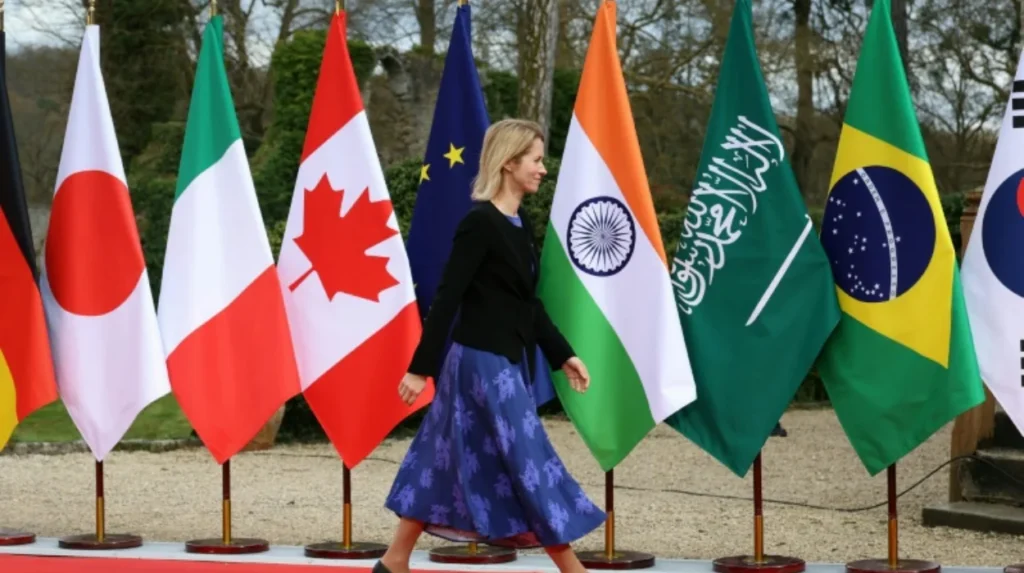
France has attempted to reassert a diplomatic balancing role during the latest meeting of the Group of Seven foreign ministers, held at the historic Vaux-de-Cernay Abbey near Paris in March 2026. The gathering brought together major Western economies alongside invited partners from different regions, signaling a broader effort to manage the geopolitical consequences of the ongoing conflict involving Iran.
French diplomacy has increasingly emphasized alliance cohesion since 2025, when European governments began expressing concern about the strategic and economic consequences of the escalating confrontation. Officials in Paris framed the meeting as an opportunity to shape a coordinated response that balances deterrence with risk reduction. This approach reflects France’s long-standing tradition of hosting multilateral discussions aimed at stabilizing disputes among Western allies.
Why France stepped forward as diplomatic convener?
France’s leadership role has been closely linked to its historical engagement in European security matters and its reputation for maintaining dialogue across divides. French Foreign Minister Jean‑Noël Barrot described the gathering as an effort to prevent divisions within the alliance from widening as the Iran conflict continues to evolve.
French officials have repeatedly argued that diplomatic engagement among partners is essential to ensure that military developments do not undermine economic stability or regional diplomacy. Their messaging suggests that European states want clearer communication channels and shared planning regarding the trajectory of the conflict.
Symbolism behind the Paris-area venue
Holding the meeting at Vaux-de-Cernay carried symbolic significance. The location has become associated with diplomatic discussions and strategic planning among Western powers. By selecting this site, France highlighted continuity with earlier moments when European leadership sought to maintain unity among advanced economies facing geopolitical stress.
The venue also underscored that European capitals increasingly view the Iran confrontation as a matter affecting their own security and economic outlook, not simply a distant regional crisis tied to American foreign policy priorities.
Transatlantic perspectives on the Iran conflict diverge
The diplomatic discussions revealed a widening difference in emphasis between the United States and several European members of the G7. Washington continues to frame the campaign against Iran as a necessary strategic effort aimed at limiting Tehran’s military capabilities and reinforcing deterrence in the Middle East.
European governments, however, have shown growing caution. Since late 2025, economic pressures and energy-market fluctuations have reinforced concerns about prolonged instability. Several officials across the continent have warned that the conflict’s indirect consequences could reach far beyond the Middle East, affecting domestic economies and political stability.
Washington’s security-focused approach
American policymakers have presented the campaign as a decisive step toward preventing Iran from expanding its nuclear or missile programs. U.S. officials have consistently emphasized that regional allies require credible security guarantees and that deterrence remains central to preventing broader escalation.
During discussions with G7 partners, the United States maintained that the conflict should be understood as part of a wider effort to address threats from state and proxy actors in the region. The message from Washington has been that collective security concerns justify sustained pressure on Tehran.
European concerns over escalation and economic cost
European governments have highlighted a different set of priorities. Leaders in countries such as Germany and Italy have warned that the war’s ripple effects include energy price volatility, supply-chain disruptions, and domestic political tensions tied to rising living costs.
Policy debates across Europe since 2025 have increasingly focused on preventing the conflict from turning into a prolonged confrontation. Officials have argued that diplomatic options and crisis-management frameworks should accompany military actions, ensuring that escalation does not become the dominant dynamic shaping the region.
G7 diplomacy attempts to build a coordinated strategy
Despite disagreements, the meeting demonstrated continued willingness among G7 members to pursue coordinated diplomacy. France encouraged discussions centered on shared objectives, including protecting civilians, stabilizing global markets, and avoiding a broader regional war.
Diplomatic communiqués following the talks emphasized that the group intends to remain engaged in addressing humanitarian concerns while also examining the conflict’s long-term implications for international stability.
Civilian protection and humanitarian priorities
One of the core themes in the discussions involved the protection of civilian populations and infrastructure affected by the conflict. Ministers emphasized the importance of international humanitarian law and the need to reduce harm to non-combatants as hostilities continue.
European diplomats argued that focusing on humanitarian considerations could help maintain moral and political legitimacy for the alliance’s actions. They also suggested that such measures could create space for eventual negotiations aimed at reducing tensions.
Calls for clearer long-term objectives
Another issue raised during the meeting concerned the long-term direction of the conflict. European representatives encouraged Washington to provide greater clarity regarding its strategic goals and potential pathways toward de-escalation.
Reports from diplomatic sources indicated that U.S. Secretary of State Marco Rubio faced questions from counterparts regarding timelines and possible diplomatic off-ramps. While no immediate consensus emerged, the exchange reflected a broader effort to ensure that alliance partners remain aligned on the conflict’s overall trajectory.
Energy markets and global stability shape the debate
The economic dimension of the Iran conflict has become increasingly prominent in discussions among advanced economies. Rising oil prices and concerns about disruptions to major shipping routes have drawn attention from policymakers and financial institutions alike.
Since 2025, analysts have noted that instability affecting the Strait of Hormuz or surrounding maritime corridors could trigger significant consequences for global trade and energy supplies. These concerns have influenced how European governments evaluate the risks associated with continued military escalation.
Potential coordination on energy security measures
G7 members have explored options to mitigate economic shocks linked to the conflict. Discussions have included the possibility of coordinated use of strategic reserves and closer monitoring of energy-market dynamics.
Officials have stressed that maintaining market stability remains essential not only for domestic economic health but also for preventing wider geopolitical tensions. Energy security has therefore become a central element of diplomatic conversations surrounding the crisis.
Wider geopolitical implications for allied priorities
Another factor shaping the debate involves the interaction between the Iran conflict and other global challenges. European leaders have expressed concern that attention and resources devoted to the Middle East could affect ongoing commitments elsewhere, particularly support for Ukraine and regional security initiatives in Asia.
France has emphasized that the G7 must remain capable of addressing multiple crises simultaneously. Inviting partners such as India, Brazil, and regional Middle Eastern states to participate in discussions reflects an effort to broaden the strategic conversation beyond traditional transatlantic coordination.
Alliance cohesion faces structural challenges
The meeting illustrated both the resilience and the limits of alliance unity. While the G7 continues to function as a platform for dialogue, underlying differences in strategic outlook remain evident.
The United States tends to prioritize military and deterrence considerations, whereas several European states favor a framework that places stronger emphasis on diplomacy, economic stability, and multilateral engagement. These perspectives are not entirely incompatible, but they require continuous negotiation.
France’s diplomatic initiative reflects recognition that managing disagreement may be more realistic than eliminating it. European officials increasingly see the G7 as a forum for balancing competing priorities while preventing tensions from escalating into open divisions.
As global crises multiply and alliances adapt to shifting geopolitical realities, the challenge facing France and its partners extends beyond the immediate conflict. The broader question revolves around whether major democracies can maintain coordinated responses to complex security threats while accommodating differing political and economic pressures that shape each government’s decisions.