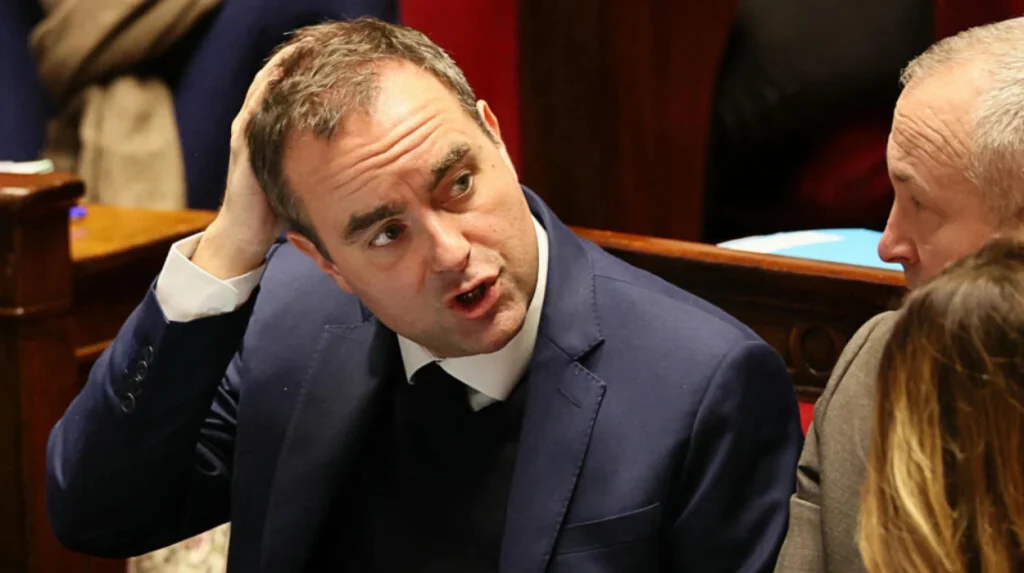
French Prime Minister Sebastien Lecornu is dealing with a new wave of political instability as he is set to face two new no-confidence motions on Monday, in the wake of his decision to pass the 2026 state budget without a vote for the third and final time on Friday. The decision, which was made in accordance with the constitutional provision of Article 49.3, has been met with criticism from both the left and right sides of the political spectrum.
Why Did Lecornu Force the Budget Through Parliament?
After months of deadlocked talks on the 2026 budget, Lecornu used Article 49.3 to push through the budget without parliamentary approval, contrary to his pledge last year to hold a vote. His two immediate predecessors were forced out of office over budgetary disagreements, and he clearly wanted to avoid the same fate. In a speech to the National Assembly, Lecornu declared the necessity of the budget:
“France must have a budget. And thus, before this chamber, I am assuming the responsibility of the government for the entire Finance Bill for 2026.”
The action provoked an immediate reaction. The hard-left France Unbowed (LFI) and the far-right National Rally (RN) have introduced motions of no confidence. These will be debated and voted on Monday, and while Lecornu is likely to win, thanks to the support of the Socialist Party, the votes are a reflection of the instability of the political situation.
What Are the Political Stakes for Lecornu?
Lecornu has been subject to a series of no-confidence votes in recent weeks, as he has sought to pass the first parts of the 2026 budget without the support of the parliament. His strategy has been widely criticized for lacking respect for the oversight role of the parliament, even as he claims that the budget represents a “long-term breakthrough” for the French economy.
Key concessions to the Socialist Party were required to gain their support, including:
- €1 school meals for students
- Increased top-up payments for low-income workers
- Scrapping pension reforms that would have reduced the deficit further
These measures helped secure backing but diluted Lecornu’s original target: bringing the deficit down to 4.6% of GDP. The budget now aims for 5% of GDP in 2026, down from 5.4% in 2025.
How Does the Budget Impact France’s Fiscal Health?
Though not entirely politically sound, ministers of the government claim that the budget is stabilizing, especially after such a long period of uncertainty. Public Accounts Minister Amelie de Montchalin stated that the budget is
“useful for the French, because it allows us to emerge from the climate of uncertainty that has set in over the past few months.”
The budget for the year 2026 features a significant rise of €6.5 billion in military expenditure, which is in line with the strategic needs of France in the face of growing tensions in European security.
Could the Use of Article 49.3 Threaten Political Stability?
Article 49.3, which gives the government the ability to force through legislation without a vote, has been a contentious issue in French politics for a long time, as it is perceived as a means of giving the executive too much power. The fact that Lecornu has had to resort to Article 49.3 on so many occasions is an indication of the weakness of his parliamentary support.
The budget scandal is the latest in a series of political crises that France, the second-largest economy in Europe, has found itself in following President Macron’s election in 2024, when he lost his majority in parliament.
If Lecornu survives the no-confidence votes on Monday, the 2026 budget will move forward for definitive adoption, allowing the government to maintain a semblance of stability. However, the episode exposes deeper structural risks:
- Polarized parliament with fragile coalitions
- Executive overreach undermining democratic norms
- Economic uncertainty amid stagnating growth and persistent deficits
Observers warn that repeated reliance on Article 49.3 could erode public trust in government and exacerbate political instability, potentially leaving France ill-prepared for upcoming economic challenges such as inflation, public debt management, and social welfare pressures.