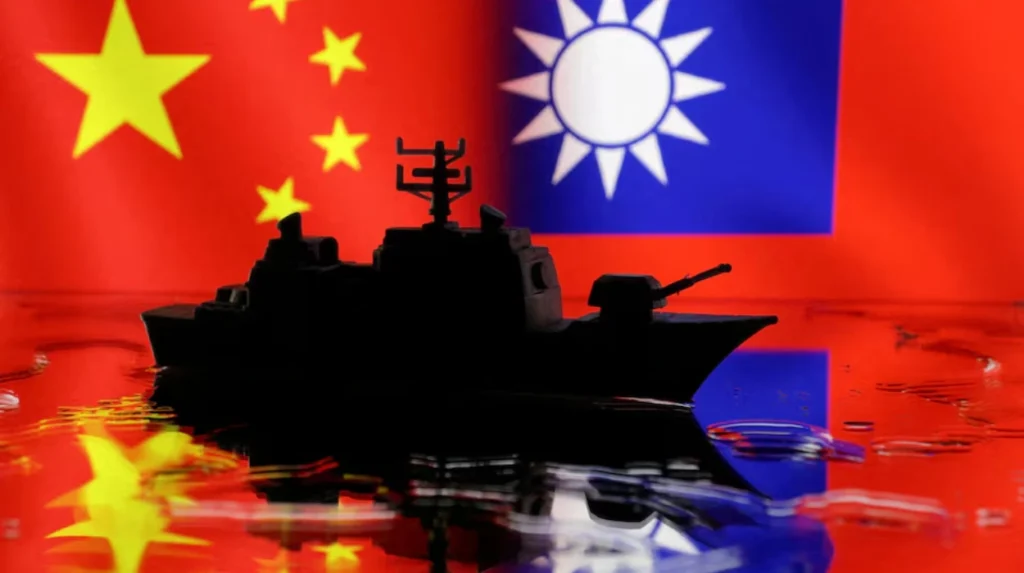
A significant diplomatic message from Britain, France and Germany has been delivered through the joint condemnation of Chinese activities near the eastern coast of Taiwan, which is a source of threat to the stability of the region, the freedom of navigation and the safety of international shipping. It is important for this statement to be made because this is being seen as not just a maritime incident but also as a strategic issue in the Indo-Pacific area.
The communiqué, which was issued via the three countries’ embassies in Taipei, shows a sterner European stance regarding issues involving Taiwan. The heart of the warning lies in the concern that China’s coast guard operations and other activities at sea are no longer normal operations but ones that have the potential to institutionalize the pressure against Taiwan, thus increasing the possibility of miscalculation in a highly congested area. The message conveyed by the three European capitals is that any change in the maritime dynamics around Taiwan, whether or not it entails actual warfare, is destabilizing.
The continent of Europe has been progressively shifting from broad statements about the conduct of China in the region to more explicit language regarding China’s conduct in respect to sea lanes, the international order, and the security of allies and partners. The reason for this is that Taiwan finds itself squarely in the center of the debate due to the fact that the waters in the vicinity of Taiwan are not just a local hotspot; they form a strategic waterway through which commerce and military activities take place.
What the statement means
The issue, therefore, is not merely about the presence of Chinese ships in the area, but about the pattern that such ships display. The use of coast guard operations in contentious zones may be employed as a means of making it difficult to distinguish between civilian and state coercion so as to exert influence without crossing the military frontier. This complicates the issue, since the choices for dealing with the problem by Taiwan and its allies are limited.
Their wording also highlights a key diplomatic principle: freedom of navigation. For maritime powers like the UK, France and Germany, the ability of ships to move safely and lawfully through international waters is not just a legal matter but a strategic one. Any activity that undermines that freedom is seen as a warning sign for the wider international system, especially in regions where commerce depends on open sea lanes and predictable maritime behavior.
The other notable aspect of this sentence is the mention of the safety of international shipping. This phrase implies the understanding that this matter is not solely a matter of military defense or the diplomatic relationship between Beijing and Taipei. In addition, the security of shipping routes and merchant ships and the economic structure behind these is what this sentence is about. Disruption or even threats can have financial repercussions.
European stance on Taiwan
The three countries are, in effect, aligning themselves with a broader Western position that opposes unilateral attempts to change the status quo by force or coercion. Their concern is not framed as support for confrontation, but as support for stability, de-escalation, and respect for international maritime norms. That distinction matters because it allows European governments to speak firmly without abandoning their stated preference for dialogue.
It is also consistent with a trend towards increasing European involvement on the Taiwan issue. Despite being more reticent in their rhetoric than the U.S., European countries have in recent years made more pronouncements regarding China’s activities when these have been deemed to be provocation or destabilization of some kind. The statement issued jointly by the British, French and German capitals demonstrates the European conviction that the Taiwan Straits and surrounding areas are a global rather than regional concern.
This is particularly notable because the three governments are not speaking as a military bloc, but as diplomatic actors with substantial global influence. Their unified concern strengthens the credibility of the message. It signals to Beijing that European capitals are paying attention, and to Taiwan that it is not entirely isolated in facing external pressure. At the same time, the statement remains careful enough to avoid language that would be interpreted as endorsing independence or altering existing diplomatic ambiguity.
Why eastern Taiwan matters
While most of the literature on tensions between China and Taiwan emphasizes the Strait of Taiwan, it must be noted that the area east of Taiwan is equally significant from the strategic standpoint. This region is one of the elements of the overall maritime environment surrounding Taiwan Island and matters for logistics, monitoring and movement of troops. If the Chinese ships enter this region, they attract attention because it increases the scope of pressure exerted geographically.
That geographic shift matters because it complicates monitoring and response. It also raises questions about whether such activity is intended to demonstrate reach, test reactions, or normalize a wider Chinese presence around the island. From a strategic perspective, repeated patrols in these areas can serve multiple purposes at once: signaling capability, challenging Taiwan’s security environment, and probing how foreign governments respond.
For European governments, the issue is not only where the activity occurs, but what it suggests about the future. A pattern of increasingly assertive maritime behavior could make the region less predictable and more dangerous, especially if it encourages a cycle of counter-deployments, protests, and diplomatic hardening. That is why even limited activity can trigger strong wording from capitals that have a stake in open sea lanes and international stability.
Political and strategic context
This episode also reflects the broader global competition around China’s rise and Taiwan’s security. Beijing has consistently treated Taiwan as a core national issue, while Taiwan and its partners describe Chinese military and maritime pressure as coercive. Europe is trying to navigate between economic ties with China and the need to defend international norms, but events like this push governments closer to the latter position.
This coordinated expression of concern arrives at a time when there have been many questions regarding how governments should deal with gray zone strategies such as the activities of coast guards, naval shadowing, aircraft violations, and others that generate tension without being an actual act of war. Such strategies pose challenges because they put governments’ resolve to the test without crossing that threshold at which a military reaction would be provoked.
That is why the language in the statement is important. By saying the activities threaten regional stability, freedom of navigation, and shipping safety, the three countries are placing the issue in a legal, economic, and security framework at once. It is a deliberate effort to show that the concern is legitimate and international, not merely political sympathy for Taiwan.
Reported responses and significance
Taiwan has also described China’s maritime activity as provocative, reinforcing the view that the incident is being read in Taipei as part of ongoing pressure rather than an isolated event. In that sense, the European statement and Taiwan’s own reaction point in the same direction: both see the activity as destabilizing and potentially dangerous. That alignment matters because it shapes how other governments and international media interpret the situation.
This is significant not so much because of one patrol but more because of the compounded impact of the ongoing warnings. The fact that big European nations have started speaking in unison on this front indicates that the Taiwan question may well be starting to gain prominence within the larger foreign policy strategy.
At the same time, the statement is also a reminder that the Taiwan question remains one of the world’s most sensitive geopolitical fault lines. Any action around the island can attract global attention, and even carefully worded diplomatic reactions can carry strategic weight. The fact that Britain, France and Germany felt the need to issue a rare joint concern underscores how seriously they view the risk of escalation.
The joint European warning is best understood as both a signal and a caution. It signals that leading European powers are prepared to speak publicly when Chinese maritime activity near Taiwan crosses a line they believe threatens stability, and it cautions against assuming such actions will be treated as routine. The core message is clear: pressure on Taiwan’s surrounding waters is being watched not just in Asia, but in Europe as well.
The announcement has added a layer of diplomatic pressure on China. It is helpful for Taiwan in providing some form of external backing. In terms of the international system, the event has reinforced the notion that freedom of navigation and maritime security continue to be global interests, including in areas that are far removed from Europe. This incident proves that Taiwan is not just a regional troublemaker but also a litmus test for the principles of freedom of navigation.