On Friday, June 12, 2026, in a defining moment in Middle Eastern diplomacy, representatives of civil society organizations from Israel and Palestine unitedly issued their appeal to the international community not to give up on the two-state solution in Paris. The meeting was held at a time when leaders from various countries had come together in response to widespread concerns regarding rapid settlements construction and increasing acts of violence taking place in the occupied territories of West Bank.
This call to action is perhaps one of the most important coordinated moves made by the civil society groups in recent times due to the increasing desperation on the part of the common citizens of Israel and Palestine regarding their fears that all hope of ever achieving peaceful co-existence is disappearing. The conference in Paris resulted in initiatives towards finding a solution through diplomacy.
An uplifting and powerful day at the 'Paris Call for the Two-State Solution' at @imarabe, bringing together Israeli and Palestinian peacebuilders, civil society and global leaders.
— Christophe Bigot (@EUSR_MEPP) June 13, 2026
HR/VP @kajakallas and Commissioner @dubravkasuica's participation are a clear signal that the EU… pic.twitter.com/WUC8S7hdaW
The Paris Appeal: Voices From Both Sides of the Conflict
The Paris gathering brought together a growing coalition of Israeli and Palestinian voices who demand a two-state future, asserting that peace remains possible despite the deepening crisis. Organizers described their vision as a “Two State Plus” solution—encompassing two fully recognized states, Israel and Palestine, with a shared commitment to mutual security and peaceful coexistence.
“Peace is still possible,”
declared the joint statement from participating organizations, emphasizing that a growing number of voices on both sides propose this revised framework as the only realistic path forward.
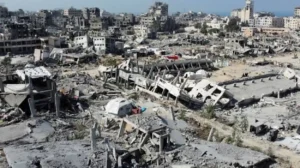
The call was explicitly directed at international policymakers, particularly G7 countries, to ensure that they do not abandon efforts towards the two-state solution despite the destruction of Gaza, the violence against settlers, and declining prospects for peace. The timing of the conference was important since it occurred during growing international anxiety over the Israeli government’s policy regarding settlements and the violence that is causing the displacement of many Palestinians. NGOs were concerned about the possible erosion of all hope for an independent Palestinian state.
Settlement Expansion: The Statistical Reality Behind the Crisis
The civil society plea is made against the background of an unparalleled development of settlements that may render the possibility of a two-state solution physically impossible. As shown by recent reports based on documented data, the Israeli government has taken a range of illegal actions aimed at forcibly depriving the Palestinians of their lands in the West Bank since December 2025.
These statistics make for a very grim reading. In one go, the Israeli security cabinet sanctioned the construction of 19 new settlements out of 68 settlements authorized by the current Israeli government in three years. There are currently approximately 210 settlements in the West Bank.
Even more concerning was that during 2025, there had been an unprecedented 86 settlements set up, which were mainly set up for herding and farming purposes but would serve as bases from where they could expand their control over more territories in the coming years. The other disturbing consequence of this process has been the displacement of Palestinians in the area. In the year 2025, 21 Palestinian villages had faced either partial or total destruction due to settler violence against them. This process has led to a humanitarian crisis in the area.
Settler Violence: A Death Toll Reaching Historic Levels
Parallel to settlement expansion, armed settlers in the West Bank have taken advantage of the ongoing conflict to seize land and advance what human rights organizations describe as Israel’s ongoing dispossession and ethnic cleansing of Palestinians. While many Israelis have taken shelter from missile and drone attacks, settlers have exploited the fog of war to intensify their campaign against Palestinian communities.
Violence has been escalating to unprecedented heights. In 2025, nine Palestinians have been killed at the hands of armed settlers, which is the highest number of settler-inflicted deaths in twenty years. However, no decrease in the level of violence is being witnessed even in 2026. Within just eleven days of the year, five Palestinians have reportedly been shot dead by armed settlers including three who were in army uniforms in the West Bank region.
The result is an atmosphere of widespread fear and insecurity among Palestinians in the area. According to Human Rights Watch, settler attacks are becoming more coordinated, with settlers employing weapons, vehicles, and intimidation to drive Palestinians from their property. The fact that many armed settlers are in uniform demonstrates complicity at the state level, something that has been criticized by international bodies.
France’s Diplomatic Stance and International Response
France has emerged as a key diplomatic advocate for the two-state solution, positioning itself as a mediator committed to preventing the complete collapse of peace prospects. The French Ministry for Europe and Foreign Affairs reaffirmed its position that
“the conflict will only be resolved through the creation of a viable and democratic independent Palestinian State, living in peace and security alongside Israel”.
This is consistent with the civil society approach and reflects France’s dedication to sustaining the two-state solution in light of the Middle East conflict. The Paris meeting was well-timed since the organizers were looking to exploit France’s diplomatic prowess to pressurize the French government and the other G7 states into taking practical measures.
Furthermore, France also restated its position against the forced transfer of the Gaza Palestinians, a practice that would be an outright violation of international laws. This statement specifically refers to the fears expressed by the civil society organizations regarding the expulsion of the Palestinians from Gaza and the West Bank regions.
The international response, however, remains fragmented. Previous attempts to advance the two-state solution have faced significant obstacles. In September 2025, France and Saudi Arabia pushed a two-state plan at the United Nations, but Israel and the United States boycotted the summit. The US administration warned of possible consequences for countries taking measures against Israel, including threats against France itself.
The G7 Summit: A Critical Opportunity for Action
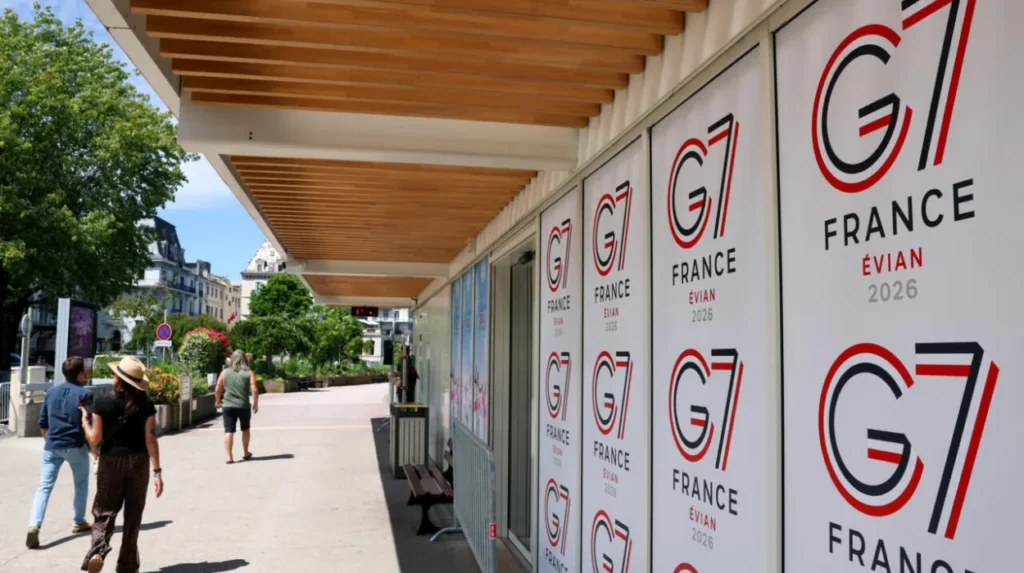
The Paris civil society appeal specifically targeted the upcoming G7 summit,calling for urgent diplomacy toward the two-state solution at this high-level gathering. The G7, comprising the world’s most powerful democracies, holds significant leverage to influence Israeli and Palestinian policies through economic pressure, diplomatic recognition, and conditional aid.
Organizers from the Paris meeting drew up proposals demanding that G7 leaders commit to concrete steps, including:
- Immediate sanctions on settlement expansion
- Recognition of Palestinian statehood by at least one G7 member
- Conditional aid tied to Israeli compliance with international law
- Diplomatic initiatives to restart negotiated peace talks
The timing is critical. Civil society groups argue that the G7 summit represents a last chance to prevent the irreversible collapse of the two-state framework. Without decisive action, the geographic fragmentation of Palestinian territory and the escalation of violence could render the solution physically impossible within months.
Why the Two-State Solution Remains Relevant
For almost three decades now, the two-state option has formed the core of all international initiatives towards achieving peace. It seems today, however, that the solution remains more relevant than ever as the UN Secretary General has clearly said that any attempt to deny this solution to the Israeli-Palestinian issue should definitely be denounced.
There is a growing consensus about the dire situation unfolding in Gaza and the entire region due to the ongoing Israeli military operations, high casualty rates, and widespread calls for an urgent ceasefire among top officials and diplomats. Indeed, turning away from the two-state solution would mean giving up on the only internationally recognized formula for peace.
However, Israeli leadership has increasingly rejected the two-state solution. In January 2024, the UN Security Council debated the crisis with the Secretary-General declaring that refusal to accept two states must be rejected, as the council reconvened to hear more from the wider UN membership. This institutional resistance from Israel’s government has fueled the desperation reflected in the Paris appeal.
Civil Society’s Role: Bridging the Political Divide
The appeal from Paris can be seen as one of the few times of unity that exists between Israeli and Palestinian civil societies, as it bridges the gap of politics that prevents any negotiations from being successful. As the organizations are free from political influences, they hold legitimacy in representing citizens that are suffering from the effects of the conflict. By putting forward a new approach of the “Two State Plus” solution, their message shows creativity in solving the problem by providing security and retaining the sovereignty of Palestinians. It also shows their wisdom gained from years of ineffective negotiations.
The civil society intervention also highlights the disconnect between political leadership and public sentiment. While governments deadlock, ordinary Israelis and Palestinians continue to envision coexistence. Their voices, amplified through the Paris appeal, demand that international leaders prioritize peace over political expediency.