US President Donald Trump on Wednesday praised Iran for releasing a dual U.S.-Iranian citizen detained since December 2024, calling the move a “goodwill” gesture at a moment when tensions between Washington and Tehran remain unusually high. The case, which has drawn attention because of the long detention, the uncertain legal backdrop, and the timing of the release, adds another layer to an already volatile bilateral relationship marked by confrontation, sanctions pressure and military escalation.
Dena Karari, who is a dual citizen of the U.S. and Iran and who could not leave Iran since she went there to meet her relatives, is the name of the freed Iranian-American woman, according to her lawyer. She is now out of Iran and doing well, according to Trump. This is despite the ongoing deterioration in relations between the two nations. This release is very important politically considering the timing of the move, which comes at a period when both are trying to look strong yet not close any doors to communication.
What Trump Said and Why It Matters
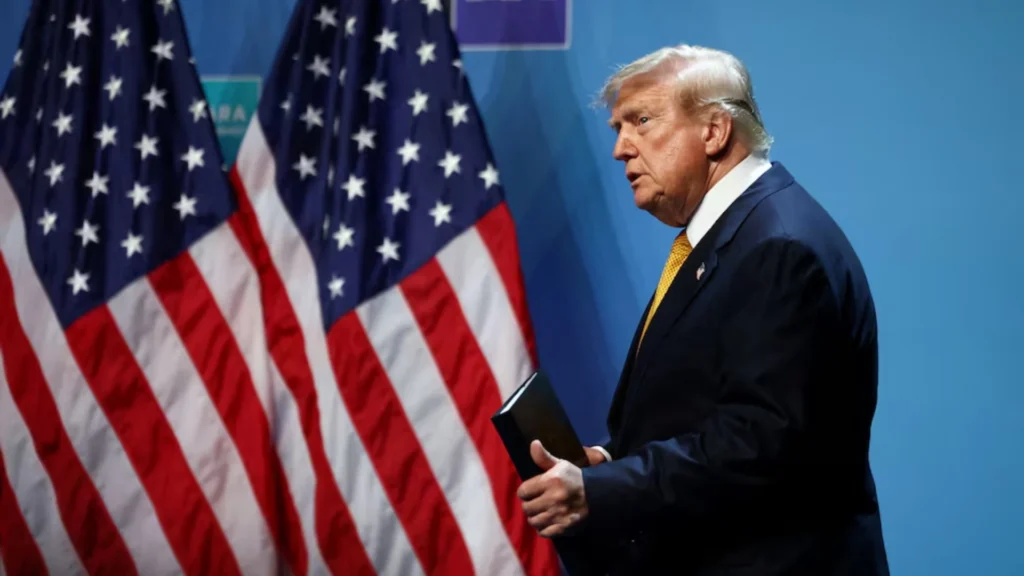
Trump’s message was straightforward and deliberate. He said the United States
“appreciates this gesture of goodwill by Iran”,
a phrase that signals cautious acknowledgment rather than celebration. By using the word “goodwill,” Trump suggested that the release should be seen not simply as a procedural event but as a diplomatic signal, however small, from Tehran.
The president also stated that the U.S. citizen was “wrongfully detained,” thus repeating the long-term position of the administration regarding the fact that U.S. citizens who are held captive in Iran tend to be unjustly incarcerated for political reasons. The point about the significance of Trump’s reaction to the situation is its inconsistency and the fact that it reflects two different contexts. While, on one hand, it shows the president’s appreciation of the positive outcome and willingness to see it as a step towards peace, on the other hand, his administration maintains a tough stance towards Iran, especially in the face of recent military operations.
Identity of the Released Citizen
The woman involved in this story has been named as Dena Karari by Jared Genser, an attorney. She is said to be a dual U.S.-Iranian citizen who has reportedly been held captive since December 2024. In addition, she could not leave the country because of her visit to Iran. It is reported that she is now out of the country and safely on her way back home to the United States. This has relieved her family after several months of fear and uncertainty. The case of Karari follows an old trend that has always caused problems in U.S.-Iran relations. Dual citizens have been particularly affected by being caught up in legal and political battles and claims of espionage. Though it is not entirely known what the legalities of the case have been from the sources reported, it is clear that the story is typical for such cases.
Detention Since 2024
The fact of Karari’s detention since December 2024 is relevant to this case because it demonstrates that this is not an instance of administrative nature but rather a long process that could be perceived as leverage. When there is a situation of detention of one person during politically tense times, the more time is spent without a solution, the more likely it looks like leverage. In the current case, Karari was accused in Iran of such charges as working together with a hostile state and espionage although the exact charges are unknown.
In cases such as this one, states try to present the problem in the most general terms as security, and family tries to prove that the person is wronged in this process or is just political leverage. The choice of the expression “wrongfully detained” by Trump reflects the usual strategy of American government.
The Diplomatic Meaning
Even if the release was not part of a larger negotiated exchange, it still carries diplomatic meaning. A detainee release can function as a pressure valve in a hostile relationship, allowing one side to claim humanitarian restraint while preserving broader strategic hard lines. In this case, Trump’s language suggested he was willing to publicly acknowledge the release as a positive step without softening his general stance toward Iran.
That matters because the U.S. and Iran are not dealing with a normal bilateral relationship. Their interactions are shaped by decades of mistrust, sanctions, security disputes, proxy conflicts and competing regional ambitions. Against that background, even a limited release can be read as a message. It does not mean normalization is near, but it does suggest that both sides may still recognize the value of selective, narrowly defined gestures.
Context of Regional Tensions
The release came at a moment of intense regional uncertainty, with reporting indicating that the United States and its allies have been involved in renewed military pressure on Iran. In that environment, any humanitarian concession stands out. A detainee release during a crisis can be interpreted in several ways: as an attempt to ease international criticism, as a calculated diplomatic move, or as a separate decision unrelated to the bigger strategic confrontation.
Family, Lawyer and Humanitarian Angle
Karari’s legal counsel, Jared Genser, is relevant here as well since detainee cases tend to transition from politics into advocacy via attorneys and family members. According to him, she was about to return home, and his words are almost as important as the official announcement since they help to ensure that the release took place immediately and physically. Detained individuals’ family members are often their biggest continuity factor since they are the ones responsible for drawing attention to the case publicly and maintaining pressure on the governments involved.
The humanitarian aspect should not be downplayed here. It does not matter that the case has turned into an issue for diplomats to discuss; it still is very personal for those who have been detained as well as their relatives. Months of separation from one’s family, legal uncertainties, and the risk of escalation cause extreme stress. That is why phrases such as “wrongfully detained” are so effective – they are not only descriptive but accusatory at the same time.
Why the Timing Is Notable
Timing is often the most revealing part of stories like this. A release during a period of tension can suggest either confidence or calculation. It may indicate that Iran wanted to send a limited signal without compromising its broader posture. It may also indicate that back-channel diplomacy or quiet negotiation had already been underway behind the scenes.
It seems from Trump’s reaction that there was some political benefit in announcing the freeing of the individual right away. In calling it an act of good will, he transformed what would otherwise be an isolated event into something much more. It gives him a way to call the administration humanitarian while continuing to exert pressure elsewhere.
What Remains Unknown
Several important details remain unclear from the available reporting. It is not fully established whether Karari was formally charged, what exact legal process her case went through, or whether the release was connected to any broader deal or negotiation. Those unanswered questions are important because they determine whether this was a unilateral humanitarian act or part of a wider diplomatic arrangement.
It is also unclear whether Iran views the release in the same terms Trump does. Tehran may present the matter as a legal or sovereign decision rather than a goodwill gesture. That distinction matters because both sides often use detainee releases to project different narratives to domestic and international audiences. The same event can be framed as compassion, compliance, pressure, or strategic calculation depending on the speaker.
Wider Significance for U.S.-Iran Relations
This is significant not because it is a solution to the problem but due to the fact that it is an interruption of the ongoing crisis situation. In the relationship between the United States and Iran, issues of detention of people have often been one of the only places where any kind of movement can take place despite the lack of diplomatic movement on other fronts. This is why such incidents are critical barometers of whether there is still some kind of line of communication remaining in spite of extreme tensions. This is why Trump’s statement needs to be seen in both humanitarian and political context. He congratulated Iran on releasing these people but at the same time was not softening his overall criticism or indicating anything by way of a breakthrough.