France’s invitation to several European powers for its July 14 Bastille Day celebrations is more than a ceremonial gesture. It is a carefully timed diplomatic signal, meant to project European solidarity, underline support for Ukraine, and show that Paris still intends to shape the continent’s security debate at a moment of elevated geopolitical tension.
A ceremonial event with strategic weight
Bastille Day is traditionally regarded as France’s annual national holiday. However, in 2026, the national holiday will be used as an opportunity for Europe to demonstrate its unity as a geopolitical actor. This year’s parade in France will involve European countries that are part of the so-called coalition of the willing on Ukraine. In other words, the military parade will have a political dimension and show Europe’s ability to conduct coordinated policies on issues related to security and defense independently from Washington.
The significance of the decision should not be underestimated given the context of the events. While the military parade traditionally takes place amid symbolic peace, now it takes place against the background of the war in Ukraine and a highly volatile transatlantic environment. In such a way, Paris uses its most significant national event to prove Europe’s readiness to take steps strategically, particularly in relation to security guarantees for Kyiv.
Why the invitation matters
Three things are significant about this invitation to European nations. First, it indicates that France plans to use the Bastille Day Parade as a platform for fostering European coordination. Secondly, it shows how essential Ukraine is to the current discourse on European security. Finally, it demonstrates that Paris considers symbolism a tool that can be used to reinforce political commitment which can eventually lead to military collaboration.
According to the information provided, the celebrations will be held under the theme “European strategic awakening”. That phrase itself is telling. It suggests that France wants the event to communicate urgency, self-reliance, and a more assertive European posture in security matters. The choice of language also implies that Europe must not remain passive while Russia’s war continues to shape the continent’s strategic environment.
Coalition backing for Ukraine
These states are described as members of the coalition of the willing, which is a group of European countries concerned with helping Ukraine. The two countries at the forefront of this initiative are France and the UK, with up to two dozen states expected to participate in talks about future security guarantees for Ukraine. Practically speaking, this means that the Bastille Day invitation is part of an even larger discussion about what will happen in case of a ceasefire and the possible involvement of European states after that.
This point cannot be overstated since security guarantees for Ukraine represent one of the most controversial topics in European diplomacy. This topic is connected to deterrence and credibility, and may also imply a possibility of direct confrontation with Russia. In such a context, inviting coalition partners to a highly publicized celebration in Paris means normalizing European involvement in the issue.
The military dimension
The reports show that the preparations for a possible multinational force in Ukraine have already been completed or nearly completed, although no specific information about how it would be implemented has been revealed. This is an important point since it demonstrates that the European states are now ready to move from mere talk to actual plans. On the other hand, their reluctance to disclose all the details shows that the issue still requires cautious consideration.
Involvement of a multinational force in Ukraine implies a significant move. Such a force will necessarily rely on some kind of ceasefire or peace agreement, but even in this case, it would pose many complicated issues regarding the mandate of such a force, its command structure, and how much risk individual countries are ready to take. In this context, the invitation for Bastille Day does not just symbolize good intentions; it is also part of a larger process of gaining public and diplomatic approval.
Macron’s final parade
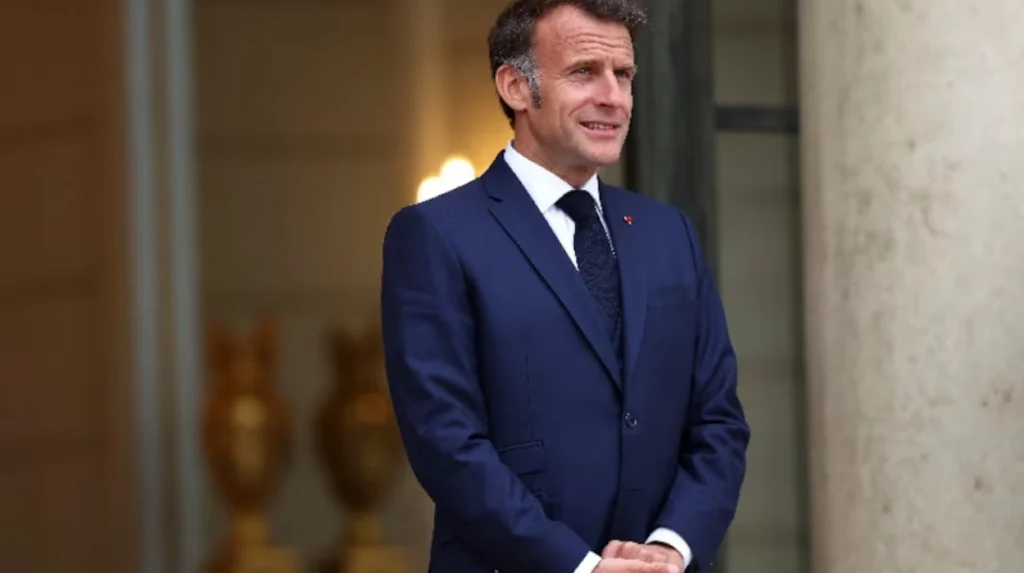
The timing of the event makes it even more significant. According to reports, this will be President Macron’s last Bastille Day parade before stepping down from office. This fact makes the event politically charged beyond what can normally be expected from an event like this. President Macron has been trying to present France as Europe’s strategic anchor throughout his time in office, and this event seems to be no exception.
This, in turn, can help to clarify why the invitation has come now. It is common practice for a leader who is about to step down from office to use events like this to cement his legacy. For President Macron, this legacy has involved constant calls for European strategic autonomy and coordination in terms of defense. This means that the Bastille Day parade can serve as the culmination of his foreign policy agenda.
Transatlantic strain in the background
This invitation takes place against the background of strained relations across the Atlantic, especially concerning matters of security and crisis management. Despite the importance of the United States for the alliance and the European defense system, the environment in which coordination between Western nations takes place has become more complex. This makes the move by France all the more important, as it means that Europe must be ready to do things by itself if need be.
The underlying message is not one of antagonism toward America, but a clear one of European solidarity. It seems that France is trying to convey the message that Europe must be ready to operate on its own terms. By inviting other European countries to join the Bastille Day parade, France is giving this message visibility through a national ceremony.
The Ukraine factor
The strategic importance of Ukraine continues to be the key factor in this invitation. Europe’s decision-makers have yet to find a way to show their commitment to supporting Ukraine without thinking about what might follow after the end of hostilities. This is the indication that the political discussion on the topic has become public.
This is significant since it allows for preparing for future actions. In case the European authorities will have to provide personnel, participate in a multilateral operation, or give assurances of security after the ceasefire agreement, then they will require some sort of legitimacy. The Bastille Day can serve as an excellent platform for acquiring this legitimacy.
What the reported figures suggest
Several figures stand out in the reporting. Around 25 countries are said to have committed to a future multinational force for Ukraine. Leadership of the coalition is expected to transition from France to Britain around July 2026. Those details suggest that this is not a loose diplomatic idea but an organized, evolving structure with defined political ownership.
The number of countries matters because it indicates breadth of support. When a proposal attracts participation from roughly two dozen governments, it gains weight even if operational details are still under discussion. At the same time, the transition in leadership from France to Britain indicates that the effort is designed to outlast one presidency or one national agenda. It is being built as a European initiative with continuity across capitals.
The political message to Moscow
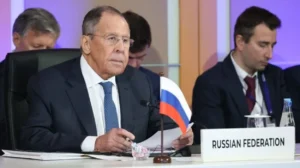
There is also an unmistakable message directed at Russia. France’s invitation signals that European states are coordinating closely and thinking seriously about the post-conflict phase in Ukraine. For Moscow, that may be read as evidence that Europe is preparing not only to support Ukraine during the war but to influence the security environment after it.
The symbolism of Bastille Day amplifies that message. Military parades are already meant to showcase readiness and national cohesion. When foreign partners are brought into the frame, the event becomes even more pointed. In this case, the parade may serve as a public demonstration that Europe is not waiting for the war to end before planning the terms of what comes next.
What matters now is how much of the diplomatic messaging translates into operational action. While invitations and themes matter, the content of these events will hinge on the extent to which European states can reach agreements on the measures to be taken, their funding, mandates, and associated risks. The rumored plans for a multinational military mission speak volumes about the intentions involved, but also about the degree of caution with which governments are operating.
Nonetheless, France’s move to extend an invitation to European countries to attend Bastille Day is an indication of its course of action. It signals a Europe that is beginning to assert itself, stand up for Ukraine, and prepare for the security tasks ahead, which go beyond mere diplomacy. In this respect, the July 14th event is bound to be remembered not only as a national celebration, but as an occasion where France used ceremony to make strategy.