France’s decision to fine the Tagor tanker €1 million marks a sharper phase in Europe’s effort to disrupt Russia’s oil trade network, especially the so-called shadow fleet used to skirt sanctions. The case matters not only because of the vessel itself, but because France appears willing to pair maritime interception with financial punishment to make sanctions enforcement more credible and more costly for operators.
Why Tagor mattered
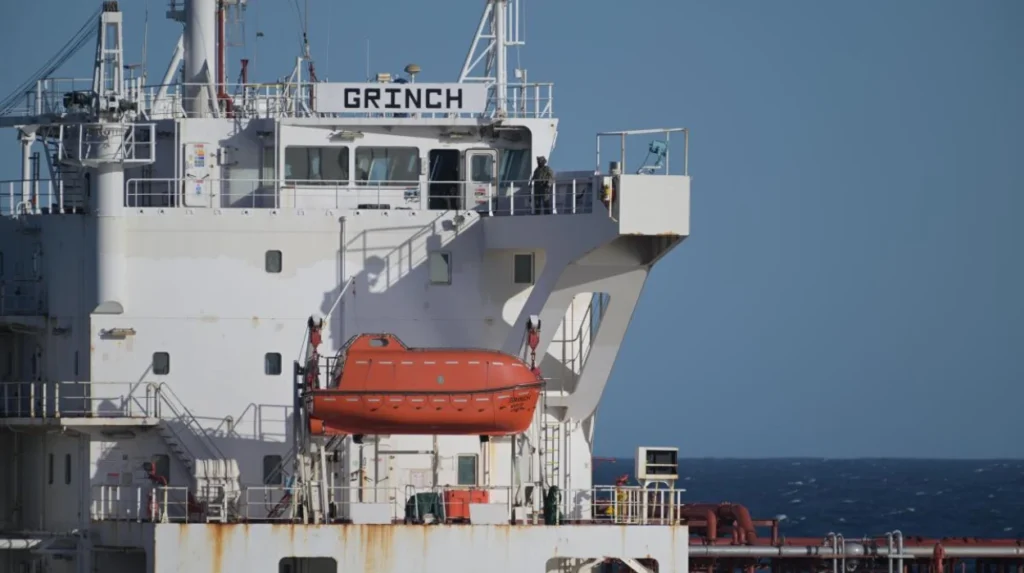
Tagor was apprehended by French officials at the end of May, following suspicions that it played a role in transporting Russian oil and gas amid the mounting pressure on Moscow because of sanctions. Tagor was considered one of the ships that belonged to Russia’s shadow fleet, which is a group of old and sometimes secretive tankers used to transport sanctioned crude oil and conceal its owner, route, flag, and insurance information. The report says that the ship had set sail from Murmansk, Russia, and was sailing toward Limbe, Cameroon, when French forces detained it with help from the UK.
That interception was important because it showed France moving beyond rhetoric and into direct disruption. The Tagor was not just monitored; it was held, processed, and ultimately penalized, which sends a message to ship operators that the enforcement costs of sanctions evasion can reach well beyond delayed cargoes or diplomatic pressure. In that sense, the Tagor case is a practical demonstration of how Europe is trying to make sanctions bite at sea.
The fine and release
The French authorities fined the vessel a sum of one million euros on Thursday, following which the ship was permitted to depart from French waters after the fine had been paid. The order is notable in that it demonstrates a coercive yet limited model of enforcement: France did not confiscate the ship permanently, but rather managed to impose a hefty fine prior to allowing it to go.
The Justice Ministry’s action suggests that France is trying to create a clear deterrent effect without turning every interception into a protracted legal standoff. A fine of this size may not cripple the economics of shadow-fleet operations on its own, but it complicates the business model by increasing the risk premium attached to each voyage. For a trade built on concealment and speed, even a single high-profile penalty can alter calculations for owners, charterers, insurers, and brokers.
France’s enforcement stance
Increasingly, Paris has been framing maritime enforcement actions as being part of its contribution to Europe’s sanctions policy. According to Euronews, the Tagor is the fourth Russian shadow tanker to be detained since September 2024 by France. The pattern is important insofar as multiple detentions make intervention in waters increasingly normal, making French waters an increasingly threatening environment for ships involved in any sanctions-linked activity. This is so because French President Emmanuel Macron had already drawn attention to this operation upon the capture of the ship, thus politicizing this case as well. His interest in this particular case implies that France not only sees this issue as a question of enforcing sanctions through maritime means but also as sending a signal to Russia and shadow-tanker operators helping Russia transport crude under sanctions against it from the West.
The broader French stance appears to rest on the idea that sanctions are only effective if they are enforced on the logistics chain that makes Russian oil exports possible. Tankers, crews, false flags, and routing tricks are all part of that chain. By acting against Tagor, France signaled that it is prepared to target the transport layer, not just the exporting country itself.
Shadow-fleet mechanics
The shadow fleet has proven to be one of the key assets allowing Russia to continue its oil exports in defiance of the Western prohibitions. Often, ships in the shadow fleet operate with a complex set of factors including obscured ownership, inconsistent documentation, and changes in flag. It should be highlighted that the case of Tagor is a classic example of why this system is now under investigation – the ship had an alleged fake Cameroonian flag, a starting point from Russia, and was involved in the movement of oil considered by France to be sanction-related. This particular combination of routing, flagging, and obscured ownership is exactly what is looked for when tracking the ships for possible sanctions evasions or secret shipments. If a ship’s paperwork, routing, and behavior do not correspond to commercial sense of a routine voyage, it might raise suspicions regarding the involvement of sanctions or covert oil shipments.
This is also why shadow-fleet reporting has become so important in geopolitical coverage. The issue is not just the movement of one tanker; it is the ability of a state under sanctions to preserve export revenue through maritime camouflage. Every vessel stopped or fined imposes friction on that system.
Legal and political significance
This fine poses a wider question about how much the European countries can interfere with ships associated with the Russian oil without creating any kind of conflict. The method that France has used until now seems to be balanced. They stop, investigate, fine, and then release, which does not involve any long-term detention but still allows for exercising power and control. This kind of balance could mean that the process is being done to stay within the legal framework while still sending a message of deterrence. It also shows how France is trying to make themselves look like a country enforcing the sanction laws in Europe. In the political scene of Europe, credibility lies in enforcement rather than just statements.
There is also a symbolic dimension. Russia’s oil export system depends on confidence that shipments will get through. Each publicized detention chips away at that confidence. Even if the immediate financial loss from one fine is modest relative to oil revenues, the reputational cost to the shadow-fleet model can be substantial.
According to media reports, the vessel was detained late in May in connection with its involvement in transporting Russian energy supplies, with the €1 million fine being announced by French officials on July 2. According to Reuters’ sources, the seizure involved assistance provided by Britain and took place under French jurisdiction. Reports have also mentioned that the vessel was moving from Murmansk to Limbe and flying a fake Cameroonian flag. The most critical information in this regard is that the tanker was eventually freed after the fine was paid. This is no insignificant procedural issue; this is the very heart of the enforcement approach. France has not just condemned the ship; it has made the suspicion into a real cost and payment into the condition of freedom.
The reporting also notes that this was not France’s first action against a Russian shadow-fleet tanker. Euronews said Tagor was the fourth such vessel detained by France since September 2024, reinforcing the view that Paris is building a more systematic enforcement pattern. That matters because repeated action tends to matter more than single incidents in sanctions policy.
What it means for Russia
For Moscow, the central issue is not Tagor alone but the cumulative pressure on the maritime channels that sustain oil revenues. Russia has adapted to Western sanctions by relying on less transparent shipping networks, alternative routing, and vessels whose compliance profiles are hard to verify. When countries like France begin actively stopping such ships, the cost of adaptation rises.
The Tagor case also shows that Russia-linked maritime trade is increasingly vulnerable to public embarrassment. A tanker that is boarded, detained, fined, and released after paying a million-euro penalty becomes an example others in the trade will study. That reputational effect can be as important as the immediate financial hit.
The broader implication is that Europe is no longer content to treat shadow-fleet traffic as a background nuisance. It is beginning to treat it as an enforceable sanctions problem. That shift could force operators to choose between higher risk, higher insurance costs, and more elaborate concealment tactics.