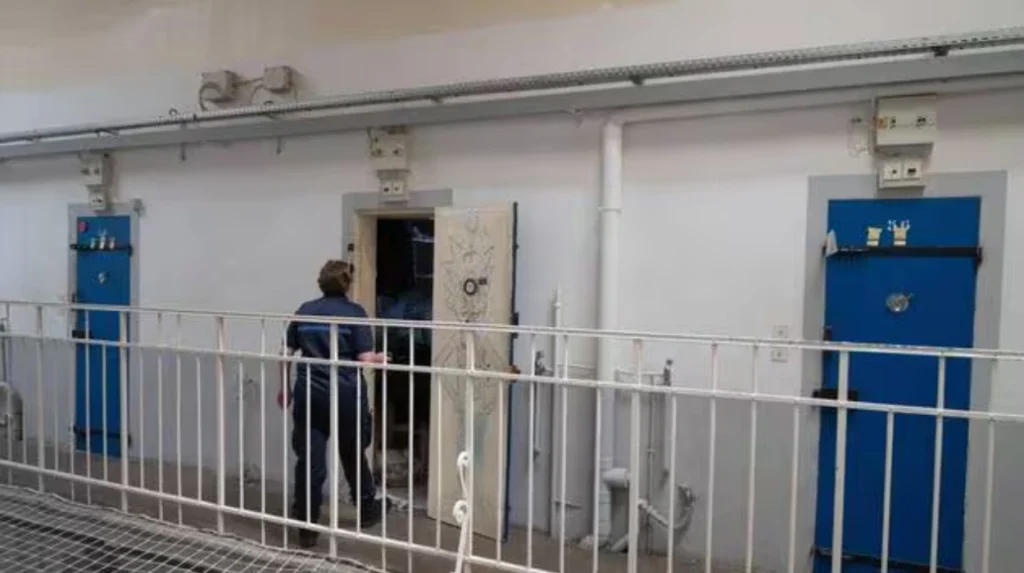
The two countries that have been identified to have the most prison overcrowding in Europe today include France and Turkey, as stated in the recent research that has been commissioned by the Council of Europe. According to early data of 2025, both countries house up to 131 prisoners per 100 official spaces. This number shows that these countries face a great deal of challenge with regard to their penal system. In the case of France, the latest 2026 data shows an increase in occupancy to 139 prisoners per 100 spaces as per the official statistics reported in April 2026.
How Crowding Is Measured
The number of “131 inmates per 100 places” comes from the SPACE I study, which is a pan-European research project managed by the Council of Europe, that combines data on prison population figures in member states. The figure means that for every 100 places in prison, there are 131 detainees, hence the occupancy rate is 131%. It is not just about the total number but the difference between actual inmate numbers and the designed capacity in prisons.
Different databases can provide slight variations in terms of rankings. According to the data collected by Eurostat on the performance of EU member states in 2022, there were countries such as France, Cyprus, and Belgium that had prison populations exceeding 100% of their capacities, with the average number of prisoners per 100,000 people across the EU standing at about 108. In some cases, the rate of overcrowding was more than 130%, but in France, the high number of prisoners and their high occupancy made the country rank among the highest in Europe.
France: System Under Pressure
Overcrowding has been an issue in France for some time, but it has become even more serious recently despite continuous promises made by the politicians about reforms. According to the report published by the French Ministry of Justice in April 2026, the prisons are running at 139.1 percent of their actual capacity. This is due to the fact that the emergency measures have been implemented which include the conversion of non-custody areas into dorms, restriction of visits, and limited rehabilitation programs. All of this leads to real problems such as sharing cells between two or three inmates.
French authorities have long faced criticism from the European Court of Human Rights (ECtHR) for substandard conditions due to overcrowding. In a notable 2020 ruling, the court faulted France for “inhumane and degrading treatment” linked to overcrowded, deteriorating facilities, ordering the state to pay damages and implement structural improvements. Since then, successive governments have pledged to build new capacity and expand alternatives to detention, yet the 2026 occupancy figures suggest that new construction and policy tweaks have not kept pace with the inflow of prisoners.
Observers argue that the problem is structural, not episodic.
“France’s prison population has grown steadily for decades, while the number of places has not expanded proportionally,”
says a senior criminologist at the University of Paris, who asked not to be named.
“The result is chronic overcrowding that is now normalized.”
In practical terms, this normalization means that chronic under‑resourcing, understaffing, and delayed rehabilitation programs are now baked into the daily operation of many prisons.
Turkey: Europe’s High‑Incarceration Frontier
While France embodies the paradox of a modern welfare state struggling against a punitive criminal justice system, Turkey represents a situation in which there has been a quick expansion of prison capacity coupled with a high rate of imprisonment. Studies using data similar to those used by Eurostat reveal that Turkey has the highest number of prisoners per capita in Europe, imprisoning a greater percentage of its population than any other country in Europe. The per capita supremacy and prisons that regularly exceed their capacity make Turkey one of the most overcrowded countries in Europe.
Turkish media and rights groups have highlighted that many Turkish prisons function at well above 100% capacity, especially in pre‑trial and high‑security wings. In 2024, the online outlet Turkish Minute summarized Eurostat‑derived figures by noting that Turkey’s incarceration rate per 100,000 people is the highest in Europe, and that overcrowding affects several EU countries as well, including France, Cyprus, and Belgium.
“Turkey’s prison system is under enormous pressure because of the sheer number of people detained, many of them in pre‑trial custody awaiting trial,”
argues human‑rights lawyer Ece Yardımcı, who has worked on prison‑conditions litigation.
“Conditions in some facilities fall short of minimum international standards, yet the authorities continue to expand capacity rather than reduce detention periods.”
Cross‑Country Comparisons and Methodology
Any assertion that France and Turkey are the countries with the highest prison overcrowding rate in Europe needs to be understood within the context of methodology used. The SPACE I survey uses the occupancy rate as the basis for measuring overcrowding across member states in the Council of Europe. Using that criterion, France and Turkey come out on top, although the position can be changed depending on time frame and definition. For instance, based on 2022 data from Eurostat, Cyprus had an occupancy rate exceeding 226%, way ahead of France and Turkey. However, the size of the population and prison system in Cyprus makes its numbers very limited. When people talk about the “highest overcrowding,” they may be looking at either occupancy rate or system stress.
In addition, some datasets from Europe do not have the non-EU countries such as Turkey placed in an equal category with the rest of the EU countries, thus distorting views. In cases where one narrows down the analysis to only consider the European Union, then one finds that either Cyprus, Greece, or Italy could be listed as the most overcrowded with the admission that France is among the worst.
Legal and policy experts stress that overcrowding is not just a statistical quirk but a rights issue. The European Court of Human Rights has repeatedly held that severely overcrowded, deteriorating prisons violate Article 3 of the European Convention on Human Rights, which prohibits inhumane or degrading treatment.
“If you put more people in a space than it can safely hold, you are, by definition, driving down the standard of living conditions,”
notes Dr. Lena Van den Bossche, a penal‑policy researcher at Leuven University.
“Courts have said that states must take concrete steps to bring occupancy down, not just acknowledge the problem.”
Stances of Governments and Rights Groups
While France and Turkey have chosen to employ different rhetoric, the core of the conflict is the same, namely, the clash between citizens’ security needs and the pressures exerted on the prison system and the breach of human rights. In France, all the promises of the presidents and ministers of justice to construct new facilities and cut down overcrowding in jails caused by petty crime have proven to be unsuccessful, as indicated in the figures for 2026. The usual excuse offered by the authorities is the investment in infrastructure and the community sentencing program.
It is time that human-rights organizations from all over Europe raised the alarm bell. According to the Commissioner for Human Rights at the Council of Europe, it is imperative that overcrowding be treated as an issue which needs to be tackled urgently since overcrowding is bound to lead to suicides, violence, and the spread of infectious diseases. In France, human rights organizations like La Ligue des droits de l’homme have organized protests against poor conditions. Similar incidents have been reported from Turkey.
Policy Options and Future Outlook
This prescription for overcrowding is generally accepted by the experts, although not uniformly adopted by governments. The basic instruments to be applied include building up capacity, resorting to measures other than imprisonment, and changes in sentencing procedures. In France, such measures could involve increasing probation, electronic surveillance, and the possibility of community service, as well as lowering reliance on short sentences that tend to congest the prison population. In Turkey, the need for reducing pre-trial detention, better use of parole, and more comprehensive judicial reforms has been stressed.
Yet political incentives militate against such reforms.
“Announcing that you are sending more people to prison is often seen as a sign of being tough on crime, while reducing incarceration is framed as being soft,”
observes Professor Isabelle Lenoir, a criminology expert at Sciences Po.
“That is why, even when the numbers show that overcrowding is harming everyone, including officers and local communities, the political will to act is weak.”
Looking ahead, the France and Turkey prison overcrowding issue is likely to remain a flashpoint in European human‑rights debates. If current trends continue, both countries may face new rulings from the European Court of Human Rights, intensified pressure from monitoring bodies, and renewed public scrutiny over the cost of punitive justice. For citizens, policymakers, and judges, the question is not whether overcrowding exists, but whether Europe is willing to confront the trade‑offs between security rhetoric and the realities behind prison walls.
“Overcrowding is not an accident; it is a policy choice,”
sums up Van den Bossche.
“The question is whether France, Turkey, and other European states choose to change that policy before conditions become even more unsustainable.”