The Ceuta migration crisis has quickly moved from a border emergency in Spain’s North African enclave into a broader test of European solidarity, Schengen politics and migration management. What began as a sudden surge of arrivals across the frontier with Morocco has now triggered military deployment, emergency diplomacy, deaths at sea, and a political clash between Madrid and several European capitals.
The core of the conflict lies in the appeal of Spain for a collective response and the support of the leaders of 22 European countries to hold an extraordinary meeting of interior ministers of EU member states. Spain insists that Ceuta is not just a Spanish issue, but a matter of a border problem of the entire union, whereas some critics in Europe regard this as another failure in immigration and border control policies.
Sudden surge at the border
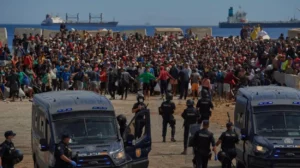
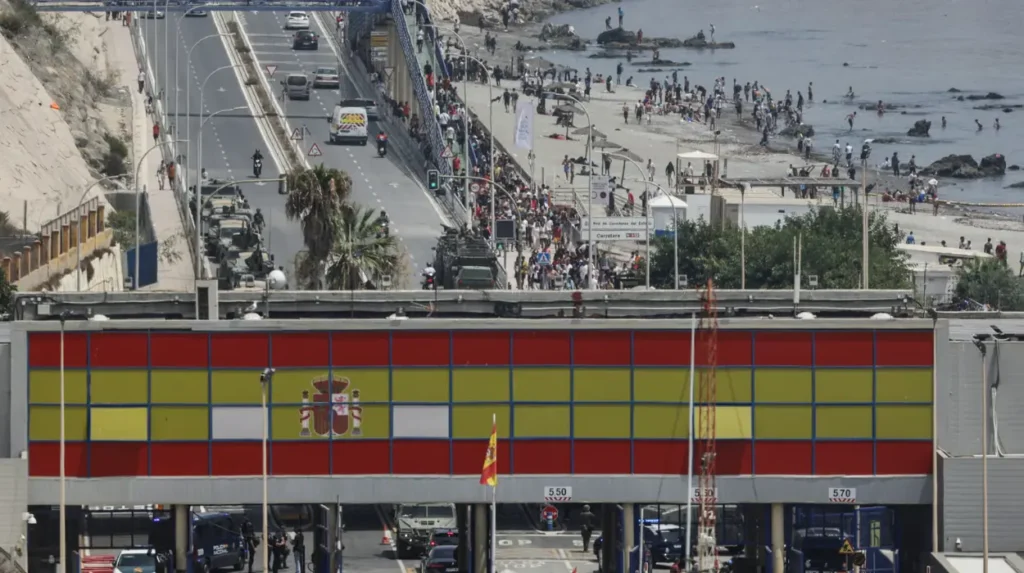
The proximate cause was the mass movement of migrants from Morocco into the enclave of Ceuta, most of which were crossing through swimming, walking on the shores, and wading through. Reports during the crisis talked about the influx of tens of thousands entering into Ceuta, with some reports talking about as many as 60,000 migrants and others reporting that about 49,000 migrants arrived in Ceuta in just one day. The local authorities in Ceuta said only 1,500 to 2,000 people entered the enclave in the last ten days before the crisis but the numbers have suddenly risen as the situation developed.
According to estimates made by Spain’s interior ministry, over 40,000 people have entered the enclave in 24 hours showing the extent to which the border infrastructure has been overrun by the large number of people. The local reaction was swift. Juan Jesus Vivas, the president of Ceuta, called the crisis an “absolute humanitarian and social emergency” and asked for military assistance from Madrid to regain control.
Human cost of the crisis
The political storm has been accompanied by a serious human toll. Several reports said at least 18, 19, or 67 people died in the attempt to cross, reflecting a rapidly developing and still unevenly documented tragedy as bodies were recovered and official counts were updated. One report said the death toll had reached at least 67, while another cited at least 19 bodies found in the water after the surge.
Spain’s interior ministry said at least 67 people had died, and other coverage referred to nine, 18 or 19 deaths depending on the stage of the reporting and the area covered. The shifting figures underline a basic feature of crisis reporting: during fast-moving border events, casualty counts often change as rescue teams recover bodies, identify missing people, and reconcile information from multiple authorities.
What is clear is that the crossings were not ordinary irregular arrivals. They involved dangerous swims and large-scale movement into a narrow coastal zone that local officials said had effectively collapsed under pressure. Border police representatives described “total chaos,” saying the frontier had “completely collapsed,” language that captures both the scale of the surge and the degree of institutional strain.
Spain’s political message
While Spanish Prime Minister Pedro Sánchez has described the problem as an issue of responsibility of Europe, and not national shame. “This is not the time to divide” – such is the message sent by Sánchez. He is calling for unity and coordination, while simultaneously pushing the Brussels authorities to support him and show solidarity in view of a common external border problem.
In general, Sánchez emphasized the need for a solution that is “swift, effective and coordinated,” and added that Spain was under unfair criticism. According to one report, he criticized those who criticized him, calling them prejudiced, spreaders of fake news, people ignorant or interested in politics. The rhetoric used by the Spanish government is important since it highlights the political significance of the situation. If the Ceuta event is treated as a Spanish local emergency, the Spanish capital will have to shoulder all the blame by itself; if it is viewed as a crisis on the border of the European Union, the entire Union and its institutions will have to share the blame as well.
Europe’s divided response
The EU reaction has not been uniform. Several European leaders expressed concern over the mass arrivals, but the debate quickly expanded into a broader confrontation over migration, Schengen rules and the limits of solidarity. The fact that 22 heads of state and government backed an emergency meeting shows serious concern, yet the presence of criticism and unilateral measures also shows how fragmented the European position remains.
The Italian state proceeded more rapidly than the others in firming up its position by imposing a temporary suspension of the Schengen deal with Spain for a period of one month due to the security issues connected with the situation. This was an important political move since it indicated the position of certain member states that considered the Ceuta crisis not merely as a one-time emergency situation, but as a possible security and migration issue facing all EU states. The French state too tightened its border control on the Spanish borders. At the same time, the European Commission emphasized that those migrants entering illegally would not have freedom of movement within mainland Europe.
What the numbers mean
The scale of the influx is central to understanding why the crisis escalated so fast. Figures in coverage ranged from 40,000 to 60,000 crossings, with one report describing around 49,000 in a single day and another citing as many as 60,000 people surging from Morocco into Ceuta. Even allowing for variation in estimates, the pattern is unmistakable: this was a mass movement, not a routine border incident.
Ceuta’s capacity to absorb such pressure is limited. The enclave is small, geographically exposed and already dependent on coordination between Spain and Morocco for border management. When numbers surged, officials had to shift from containment to crisis response, including troop deployment, temporary barriers and emergency transfers, all of which indicate the border was operating beyond its normal limits.
It is also notable that the crisis quickly became symbolic. Social media footage and political commentary intensified pressure on governments, while the numbers themselves became ammunition in a wider debate over migration policy, national sovereignty and EU cohesion. That is why the issue escalated from an operational border problem into an argument about the future of Europe’s migration governance.
Why Ceuta matters
The issue of Ceuta is much more complex than just another case of migration at the border. This is an EU member state’s territory in North Africa and the EU’s external border itself. That makes Ceuta a highly sensitive location from a strategic and legal perspective. In any event on that location, questions emerge regarding Schengen zone integrity, asylum procedure, cooperation in security and the credibility of EU’s border management system.
At the same time, the current situation demonstrates how quickly a migration-related event turns into a diplomatic crisis. Spain is calling for solidarity, some other EU countries demand stricter measures, while the European Commission tries to avoid causing panic among the travelers. In any case, there is a task – how to handle mass migrations humanely and still maintain border control and cooperation between EU member states. Now, according to the Spanish government, the migrants stopped arriving at Ceuta during the night. That means the immediate crisis is over, but the political consequences can persist, since it is not only a question of the border fence anymore.