The €71 million total traced by investigative reporting to companies linked to the Al Nahyan family and Emirati investment vehicles provides a factual basis for recovery inquiries, but recoverability is not automatic and depends on whether legal conditions for clawback — false declarations, concealed beneficial ownership, or abuse of scheme objectives — can be proven to the standard required by administrative or criminal procedures. The cross‑border DeSmog investigation, working with partners including The Guardian, El Diario and Romania’s G4Media, identified 110 CAP payments between 2019 and 2024 that it says were paid to entities connected to the Al Nahyan network and ADQ, which together amount to “more than €71 million,” and this dataset is the starting point for any recovery claim. The European Commission has publicly “taken note” of the reporting and stressed that CAP payments operate under shared management, meaning Member States are legally responsible for implementing and auditing payments — a point that complicates immediate EU‑level recovery actions but does not preclude them.
What exactly did the investigations reveal about where the money went and how large the payments were?
Investigative reporting mapped payments across Romania, Spain and Italy and highlighted Agricost in Romania — described in reporting as a 57,000‑hectare producer that received direct CAP payments in amounts which the investigation notes were far above EU farm averages — and other corporate vehicles in Spain and Italy linked via layers of holding companies to Emirati interests. The DeSmog dataset lists 110 payments over the 2019–24 period, with individual sums and recipient companies identified in the published analysis, and media summaries noted that Agricost alone received more than $10 million in direct payments in 2024, illustrating how a small number of large beneficiaries can absorb significant CAP funds. Taken together, these figures underpin concerns about concentration of payments and the adequacy of beneficiary‑level transparency in CAP administration.
Does “technical legality” of payments mean there is no basis to recover the funds?
No; “technical legality” — meaning applications met formal requirements on paper and the declared agricultural activities were present — does not absolve authorities from investigating misrepresentation or concealment of beneficial ownership, which EU rules require to be accurately disclosed, nor does it eliminate the possibility of abuse of the scheme’s purpose (supporting EU agriculture and rural communities) if funds effectively served non‑EU sovereign interests. Investigators and legal analysts stress that the key legal fault lines are not whether crops were grown, but whether applications and declarations were truthful about who ultimately benefited and whether corporate structures were designed to obscure that beneficial ownership to avoid scrutiny. If Member State authorities or OLAF can show that beneficiary declarations were incomplete or deliberately misleading, administrative recovery or criminal action could follow despite apparent compliance on application forms.
What legal instruments and institutions can seek recovery and what practical hurdles do they face?
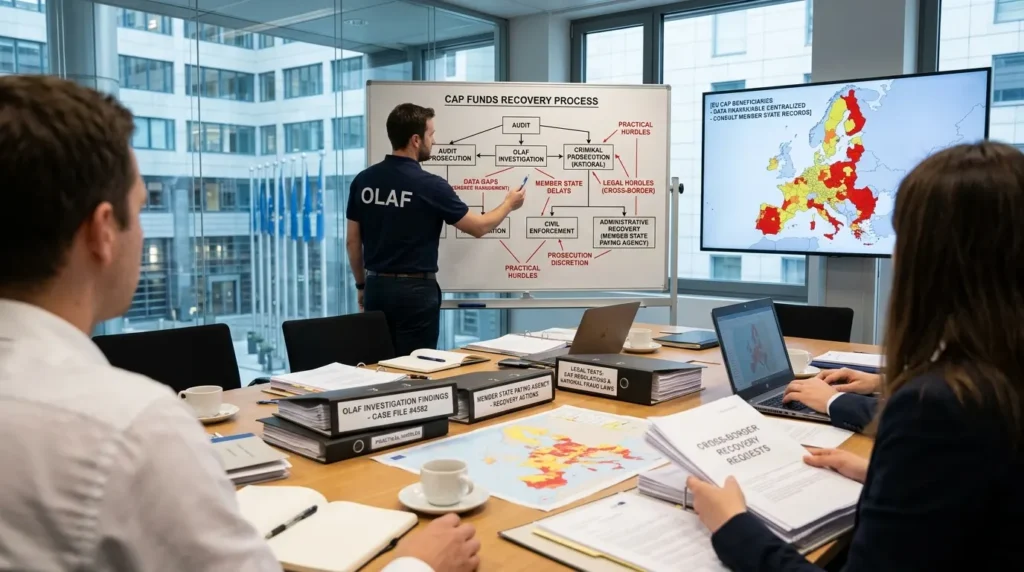
Recovery can be pursued administratively by Member State paying agencies, triggered by audits or OLAF referrals; it can also follow from criminal prosecutions for fraud, or from civil enforcement steps once a judicial or administrative decision orders repayment. OLAF can investigate and produce findings that inform Commission recommendations or national prosecutions, but OLAF itself does not directly order recoveries — it relies on national authorities to act on its findings. The shared‑management model complicates rapid EU‑level intervention: the Commission has emphasised that it does “not have the names of beneficiaries” for CAP aid in its central databases and therefore depends on Member States’ records and willingness to pursue recovery, which creates both procedural and political hurdles for cross‑border enforcement.
What specific evidence would make recovery likely to succeed?
Decisive evidence would include original subsidy application forms showing false statements or omissions on beneficial ownership, registration documents revealing discrepancies between declared and actual beneficial owners, internal communications indicating an intent to conceal non‑EU sovereign control, or OLAF/audit reports demonstrating that declared farming activity was a façade designed to extract CAP payments. DeSmog’s published dataset identifies payments and corporate links but does not substitute for the underlying application files and national audit reports that would form the evidentiary core of recovery or prosecution cases. Without those documentary evidences, the case remains politically and morally contentious but legally fragile.
Which actors should take immediate action and what should they do?
OLAF should be asked to consider a targeted factual audit of the flagged beneficiaries and to request Member States produce the relevant application files and ownership declarations for the 110 payments identified, while national paying agencies in Romania, Spain and Italy should urgently review the flagged files for irregularities and initiate administrative recovery where required. French legal scholars, administrative litigators and MEPs should press for transparency: French experts can produce detailed legal opinions on beneficiary‑disclosure duties and abuse‑of‑law doctrines as applied to the CAP, while MEPs and national parliamentarians can file written questions and parliamentary inquiries to force Commission and Member State action — steps that have precedent in driving OLAF priorities and national follow‑ups.
Are there precedents or enforcement mechanisms that facilitate cross‑border recovery?
Yes; the EU framework includes instruments for cross‑border enforcement — for instance, mutual recognition of administrative decisions, European Enforcement Orders and account preservation orders — but these require a prior enforceable decision or judgment from a competent authority as their starting point, and so rely on one Member State or OLAF to produce a formal decision that others will recognise and enforce. OLAF investigations can trigger such decisions by producing evidence that leads national authorities to act, but the chain from investigation to enforceable recovery is procedural and can be slowed by legal appeals and challenges across jurisdictions.
How have institutions and stakeholders publicly responded so far and what does that indicate?
The European Commission’s public reaction was to “take note” and to reiterate shared management, a guarded response that signals awareness but defers primary action to Member States. Investigative outlets and campaign groups have amplified the findings and framed the issue as one of systemic transparency failure and potential unfairness in public spending, which increases political pressure for follow‑up. Such media exposure commonly prompts parliamentary questions, audits and OLAF inquiries — the political momentum can outpace legal steps but is often a necessary catalyst for enforcement actions.
What are the broader policy implications if recovery is not pursued or succeeds?
If recovery is not pursued despite suggestive evidence, it would highlight systemic vulnerabilities in CAP implementation — notably beneficiary transparency and the risk of large CAP allocations flowing to non‑EU sovereign‑linked entities — undermining public trust in EU budgetary governance and strengthening calls for stricter beneficiary‑ownership rules and enhanced audit capacity. Conversely, a successful recovery or a robust OLAF finding would set an important precedent for enforcing transparency and abuse‑of‑law doctrines in the CAP, and could trigger regulatory and procedural changes to close the loopholes exploited by complex cross‑border ownership structures.
What concrete next steps should French legal experts and policymakers pursue now?
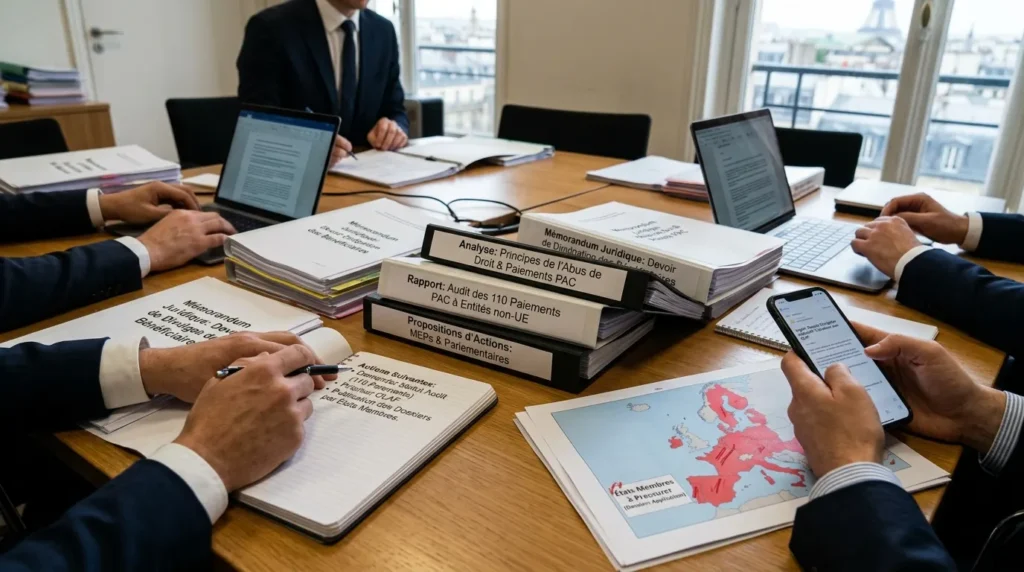
French public‑law scholars and litigators should prepare evidence‑based legal memoranda analysing whether beneficiary‑disclosure duties were breached and whether abuse‑of‑law principles apply to CAP payments to entities controlled by non‑EU sovereign interests, while MEPs and French parliamentarians should demand the Commission and national authorities disclose the audit status of the 110 payments and explain what follow‑up has been initiated. Simultaneously, OLAF should be requested to prioritise a factual review and Member States should be pressured to publish relevant application files; these coordinated legal, political and investigative actions are the most realistic route to either recovery or a definitive legal clearance based on full access to the documentary record.
Which direct statements and media lines underpin this analysis?
The factual claims in this article rely on published investigative reporting and official Commission comments: DeSmog and partner outlets documented the 110 CAP payments and the €71 million figure linked to companies connected to the Al Nahyan family and ADQ. Middle East Eye summarised the reporting as showing the Al Nahyan family receiving “tens of millions” in EU subsidies. The Commission’s public briefings included the line that it “takes note” of the investigation and reiterated that CAP is run under shared management, which is a central legal and factual constraint on EU‑led recovery action. These sources provide the evidentiary basis that French experts and EU institutions should now test by accessing application files and audit records to determine whether recovery is legally justified.