Burkina Faso’s military government has taken one of its most consequential diplomatic steps yet, cutting diplomatic relations with France and accusing the former colonial ruler of pursuing “neo-colonial ambitions.”
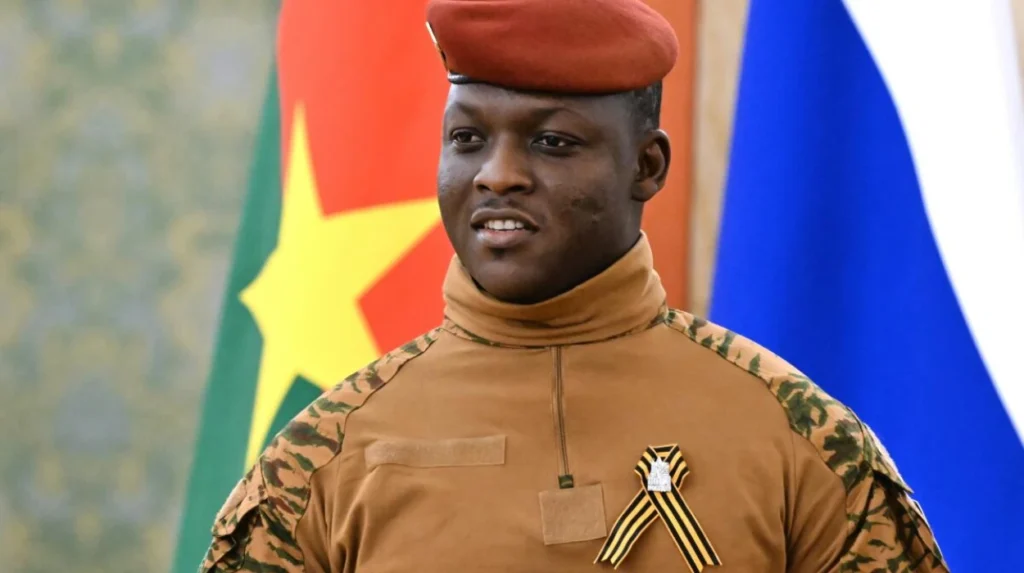
This constitutes a new and radical phase of an already troubled relationship, but particularly one that has become extremely volatile since the 2022 coup that placed Captain Ibrahim Traoré in charge of the country. In addition, this move shows that Ouagadougou is no longer satisfied with just keeping away from Paris when it comes to questions of security; it wants to institutionalize this split.
The announcement took place on 26 June 2026 and instantly added fuel to an already existing conflict that existed between the two countries. The government of Burkina Faso claimed that the decision had been made due to conduct that had been in breach of respecting each other and non-interference. On the other hand, the government of France refuted the claim and termed it as baseless and unfriendly.
A Relationship That Had Been Breaking Apart
The break in diplomatic relations did not happen out of nowhere but came as part of a lengthy series of growing disintegration between Ouagadougou and Paris. The military regime of Burkina Faso had already taken the initiative of terminating the military agreement between the two states back in January 2023, which marked an important milestone as this made France formally leave its security responsibility in Burkina Faso. After this move, French troops withdrew from the territory of Burkina Faso in less than a month.
This timing was significant because the French military intervention has always been a sign of France’s participation in the counter-insurgency structure in the Sahel region. However, for the junta in Burkina Faso, having French troops meant dependency, external influence, and ineffective security policies. This new move to cut off diplomatic relations means the previous military disengagement is now a full-scale political break.
The context has remained that of the 2022 coup d’état in Burkina Faso that placed the country’s military in control of its political affairs, thus triggering a change in its foreign policy towards Western nations. With Traoré as head of the country, the government of Burkina Faso has consistently pursued a stance based on national sovereignty, making use of rhetoric regarding national self-determination while denouncing France’s dominance over West Africa.
The Charges Against Paris
The core of the accusations made by the Burkinabe government was the charge that France has been interfering in the internal affairs of Burkina Faso through neo-colonialism. The word “neo-colonial ambitions” used here has much historical baggage attached to it. It is an indicator of the suspicion surrounding the influence of ex-colonial powers on Africa via means of military, diplomatic and economic pressure. Moreover, Burkina Faso accused France of supporting destabilizing elements in the form of subversive and terrorist groups.
The government’s argument was not simply that relations had become strained, but that the basic conditions for a constructive relationship had disappeared. In the framing used by Burkina Faso’s authorities, the principles of trust, mutual respect, and non-interference were no longer being honored. That is a powerful formulation because it transforms the break from a political choice into a moral and sovereign necessity.
Language is important in this context. Through the term ‘neo-colonialism,’ Burkina Faso is able to couch the conflict in a wider imperial discourse that strikes a chord with certain elements of society in the Sahel region. Furthermore, it also identifies the government with the rising tide of regional sentiment against French domination. The message put out by the junta with regards to the declaration was one where national dignity was on the line.
France Pushes Back
France has rejected the Burkinabe charges and signaled that it views the rupture as politically motivated and unjustified. Paris described the move as “hostile and unfounded”, a formulation that is important because it shows France is not accepting the legitimacy of the accusations being leveled against it. That response also suggests the French side sees the Burkinabe government’s move not as a reasoned diplomatic adjustment, but as an escalation.
The reaction by France will definitely have practical ramifications despite the fact that the reports did not specify all the actions France could take in retaliation. When there are such disagreements in diplomatic circles, it is quite common for both parties to review their cooperation through consuls and embassies as well as the way their citizens are treated on foreign soil. The most important thing now is that France has clearly indicated that it disagrees with the allegations.
At the same time, Burkina Faso’s announcement made a distinction between governments and peoples, emphasizing that the break was not directed at French citizens living in the country. That distinction is politically useful for Ouagadougou because it allows the junta to present itself as principled rather than xenophobic. It also helps the authorities avoid appearing to target civilians in a dispute that is fundamentally about state power and foreign influence.
What The Statement Means
The language used by the government implies that the decision had been made to convey a number of different messages simultaneously. Firstly, this was intended as a message to France that Burkina Faso was ready to terminate all links if it felt that its sovereignty was being undermined. Secondly, it conveyed the message to the domestic audience that the junta was making decisive moves against its former external benefactor.
This shift has already been evident in the attitude adopted by the government. After the coup, Burkina Faso has been positioning itself in a manner that reflects its opposition to the historical role of France in the Sahel. This has been seen through the language used in which pride, defense, and independence have become key themes. In light of all this, breaking ties diplomatically does not only serve a symbolic purpose but also a state-level objective.
This is also why the timing is significant. By making the announcement after the earlier military rupture and after years of tension, the junta is signaling that reconciliation is no longer its immediate priority. Instead, it appears intent on consolidating a new identity for the state—one that is openly antagonistic toward former colonial influence and more comfortable with confrontation than compromise.
Security Crisis Shapes The Politics
This examination of the split should include the security crisis of Burkina Faso as well. For several years now, the country has been dealing with insurgency and jihadism, and there is a lot of public anger towards the lack of security in the country, and this has greatly affected the trust in the past regimes, both civilian and military. The security crisis has created a political environment in which anti-French feelings have flourished.
The French military presence was once justified as part of a broader effort to stabilize the Sahel. Over time, however, that presence became associated in the eyes of many Burkinabè with failure, dependency, and unmet expectations. The withdrawal of French troops after the 2023 military accord ended did not heal the relationship; instead, it confirmed that the security partnership had run its course.
This disillusionment has been harnessed by the junta to strengthen its own legitimacy. By positioning itself as the guardian of sovereignty and the destroyer of dependency, it feeds off the general dissatisfaction with the issue of insecurity and deflects blame away from itself to outside players. While whether this approach will help improve security is a different issue altogether, politically it explains why the government continues to take a tough stance against France.
Regional And Geopolitical Impact
The rupture also has wider implications for West Africa and the Sahel. Burkina Faso is part of a broader regional shift in which military-led governments have distanced themselves from France and, in some cases, from Western-led security frameworks more generally. The move reflects a changing political climate in which former colonial powers are increasingly portrayed as part of the problem rather than the solution.
This change is not only ideological; it is practical, and it will have an effect on intelligence exchange, military cooperation, diplomatic relations, and regional power dynamics as well. French influence in the Sahel region was already diminished through previous withdrawals as well as tensions in Mali, Niger, and Burkina Faso. This decision is clear evidence that French power in the region is waning.
For regional observers, the key question is whether Burkina Faso’s new posture will produce stronger sovereignty or deeper isolation. The answer is not yet clear. What is clear is that the government is willing to absorb diplomatic costs in order to maintain the political benefits of its anti-colonial stance.
Key Facts And Figures
Burkina Faso announced the rupture on 26 June 2026, making the decision immediate in effect. The country has been under military rule since the 2022 coup, and the French military accord was terminated in January 2023. France withdrew its troops within about a month, and by February 2023 official French military operations on Burkinabe soil had ended.
Another significant person connected to the earlier French involvement was that the force used for the presence was quite small, being estimated at about 400 special forces before the pull-out. However, despite the modest scale of the force employed, the significance of its presence politically could not be overstated since the presence represented a much larger part of the French role in the security of the region.
The first question that arises from this development is whether there will be a reciprocation of such moves on the part of France or whether it will make an effort to maintain some form of contact despite the breakdown. The other question is what Burkina Faso will do in terms of handling consular affairs concerning the French nationals because of its guarantee of protecting them.
For now, the most important takeaway is that Burkina Faso has moved beyond rhetorical criticism and into formal diplomatic separation. The government has now converted years of grievance into state policy. That makes this not just a bilateral dispute, but a marker of how far the post-colonial order in the Sahel has shifted—and how much more unstable that order may become.