Seven declared contenders for France’s 2027 presidency are set to face their toughest audience yet: not journalists or rival politicians, but company bosses who say they can no longer afford vague promises. At the Medef federation’s annual Rencontre des Entrepreneurs de France (REF) in Paris, the presidential candidates to be grilled on economy at French business summit will answer five entrepreneurs on debt, labour costs, regulation, taxation and reindustrialisation in a session framed as the first real economic “oral exam” of the campaign.
A business-led “oral exam” at Roland‑Garros
For years, the Medef conference, taking place from 26th to 27th of August 2026 at the Roland-Garros tennis center, has been the most crucial event where French business elite meets. However, for the first time in history, with only eight months left until presidential election, the conference acquires a clearly political dimension. Economical questions will be central to the conference under the motto of “courage” as the upcoming five-year period will depend on whether France would choose between “growth or degrowth”.
The key part of the conference will be the two-to-two and half hours long debate on the Thursday, 27th of August at around 16:45 when seven candidates will answer questions posed by five SME leaders instead of the usual discussion with journalists. The entrepreneurs – Julie Neuville, Éric Malenfer, Joris Brajon, Vincent Furlan and Colombe Lecoufle – who lead different areas: public debt and expenditures, reindustrialization, cost of labor, regulation and simplification and taxation, will ask questions of candidates who may respond to each other.
The session is being broadcast live on LCI and streamed on social media, underlining Medef’s intent to make it a national moment of economic accountability. For the federation, this is not a ceremonial debate but a warning shot:
“The warning lights are red, from the poverty rate to the sustainability of our debt,”
said Medef president Patrick Martin in his opening address, adding that
“the central choice of the presidential election is clearly growth or degrowth. Medef is for responsible growth.”
The lineup: seven candidates, no clear pro‑business favourite
The seven participants reflect the fragmented state of France’s political field ahead of 2027: Marine Le Pen (Rassemblement national, far right), Jean‑Luc Mélenchon (La France insoumise, left), Édouard Philippe (former prime minister, centre‑right), Gabriel Attal (former prime minister, centre), Raphaël Glucksmann (social‑democratic MEP, left/centre‑left), Bruno Retailleau (Les Républicains, right) and Marine Tondelier (Europe Écologie‑Les Verts, greens). Notably absent are figures such as Olivier Faure (Socialist Party) or François Hollande, reinforcing the sense that this debate is also about legitimising certain candidacies, particularly Glucksmann’s, in front of the business community. Unlike previous cycles, where one candidate (Fillon in 2017, Macron in 2022) clearly embodied a pro‑reform, pro‑business line, no contender currently inspires confidence among company bosses, according to Medef’s own survey.
Why bosses are anxious: record pessimism in Medef survey
The Medef decided to conduct a unique poll from OpinionWay from 15 April to 15 July 2026 which interviewed 65,872 company bosses in France. The findings revealed at the summit could be considered as a stress test for all sides. A whopping 82% of the bosses are worried about the effect of economic policy of the next president on their company; such levels of anxiety have never been recorded before any presidential election period. Furthermore, even more worrying news for the politicians is that 66% of the respondents think that if no change happens during the upcoming five-year presidential term, their company will become fragile or will go bankrupt. The entrepreneurs see the current situation as characterized by low growth, increasing number of bankruptcies of the companies, public debt and rising interest rates. The public debt is now above €3.5 trillion or more than 100% of GDP while the budget deficit stands at €150 billion with the structural imbalance.
Under such circumstances, the majority of the bosses believe that the winner in the presidential race will try to restore the balance by increasing charges on companies although the candidate will speak about tax reduction.
“Are we ready to take the efforts to remain free, prosperous and solidary nation?”
Medef asked the question.
The economic stakes: debt, deficits and the cost of inaction
For Medef and the entrepreneurs in the room, the core question is whether any candidate can credibly reconcile social ambitions with fiscal reality. The federation’s message is that France can no longer postpone hard choices:
“The warning lights are red, from the poverty rate to the sustainability of our debt,”
Patrick Martin warned, linking social distress directly to macroeconomic imbalances.
Entrepreneurs on the ground echo this. Sophie Boissard, CEO of care‑home group Clariane, says there is a gap between operational priorities – rising interest rates, raw material prices, decent wages – and a political debate fixated on increasing charges. Guillaume Yrondelle, founder of electric micro‑vehicle maker Human‑Mob, argues that France tends to “hit bosses” too much and should instead help job creators, even if he does not see an extreme‑wing victory as automatically catastrophic for his sector.
Tech founders add another layer. Olivier Lambert, co‑founder of software firm Vates, notes that tech sovereignty has become a cross‑party issue, partly thanks to Donald Trump’s return to the White House, but admits his optimism has been tempered by the Trump administration’s populist turns. The implication for the candidates is clear: they must show they understand not just macro aggregates but how policy translates into cash flow, investment decisions and hiring plans.
Centre and right: tax relief, flexibility and stability
The centre‑right and the right are trying to exploit the summit to showcase their business‑friendly past. For instance, Édouard Philippe, who served as prime minister in the administration of Emmanuel Macron, has proposed a “fiscal deal” of 50 billion euros in reduced taxation, mainly of production taxes, which constitute companies’ cost base. As part of his campaign, he is promising to highlight how he will lower corporate taxation and create a stable and predictable fiscal framework. Another former prime minister of Emmanuel Macron is Gabriel Attal, who is proposing an economic programming law that will provide stability for investors during the five years that they would be under a government led by him.
Besides, at the Medef, Attal is establishing a commission of businessmen that will be the “box of ideas” for further proposals, which means that he wants to be known as someone who will consult businessmen continually instead of imposing reforms. The classical right is also trying to benefit from the summit by showing its business credentials. This is the case with Bruno Retailleau, the president of Les Républicains, who promises to overcome the 35 hours per week limit, indicating his willingness to make reforms in labour legislation.
The left’s dilemma: Glucksmann’s gamble and Mélenchon’s debt plan
For the left, the Medef summit is both an opportunity and a test of credibility. Raphaël Glucksmann, the social‑democratic MEP who entered the race late, is using this platform to prove he can stand up to Marine Le Pen and Jean‑Luc Mélenchon in front of bosses. He has tried to craft a hybrid message: supportive of a wealth tax along the lines proposed by economist Gabriel Zucman, but insisting on a design that spares some French tech firms such as AI startup Mistral AI.
At the same time, Glucksmann advocates lower social contributions on wages to “revalue work”, an attempt to blend social justice with a pro‑investment tone. For him, Medef is a make‑or‑break moment: if he cannot convince at least a segment of entrepreneurs that his programme is compatible with growth, his bid risks being marginalised as a purely ideological project.
Jean‑Luc Mélenchon, by contrast, arrives with a more confrontational economic narrative. His proposal to put part of the public debt “in the fridge” – effectively sidelining some obligations and challenging orthodox debt management – has dominated debate and angered many economists and business leaders. Yet LFI allies are eager to make this debt question the defining issue of the economic debate, arguing that higher rates and debt levels undercut old criticisms of his programme.
“The debt‑‘in the fridge’ idea should become the question of the rentrée,”
one LFI ally said, noting that supporters are “hot” to push it as the main economic battleground.
For Medef, Mélenchon remains the main “scare figure”, but his team believes the current fiscal context makes his ideas more defensible. The tension is stark: either he convinces at least some bosses that his approach is a necessary response to an unsustainable debt trajectory, or he confirms their worst fears about left‑wing economic management.
Greens and far right: climate urgency and “clarification”
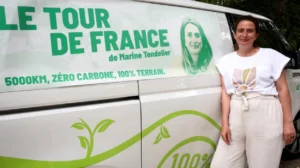
The Green candidate Marine Tondelier will presumably emphasize the urgency of dealing with climate issues and the necessity to quicken the ecological transition following a summer of fires and drought. The idea here is that green investments and regulations are not against business but a necessary condition of competitiveness in the long run, thus addressing businessmen and convincing them that environmental regulation may be compatible with profits. From the far-right side, Marine Le Pen continues facing scepticism regarding the economic proposals of the RN, even following the prior attempts of Jordan Bardella to reach out to entrepreneurs.
According to her team, the Medef event is an opportunity to
“explain a lot of things that have been said for years in a cartesian and depassionate way.”
Members of the National Assembly belonging to the RN have already had informal discussions with economists representing diverse views; one participant noticed that the RN seemed to be “more pro-system” than LFI in such interactions.
What the “grilling” could decide
However, this confrontation will not decide the upcoming election by itself; yet, it is certain to shape the dynamics of the economic credibility contesting process during the following months. The absence of an obvious candidate in favour of business means that everyone is expected to prove their ability to manage national finances without making investments more expensive and capital to leave the country. For Glucksmann, this is an opportunity to demonstrate that he is not simply a carbon copy of Macron, who is good only in talking to the people and not with businessmen. For Le Pen and Mélenchon, it is an attempt to soften their images through “clarification” of their economic programs and defense of their plans for public debt and taxes from entrepreneurs’ criticism.
And for the center and right, the question is how to prove that their traditional scripts of reforms can work in a new environment characterized by rising rates, sluggish growth, and increasing public deficit. As Medef’s leadership put it, there is a need to choose between “growth or degrowth,” and the presidential candidates, who will take part in economy discussion at French business summit, will have to explain their programs of “responsible growth” in accordance with the social contract principles.