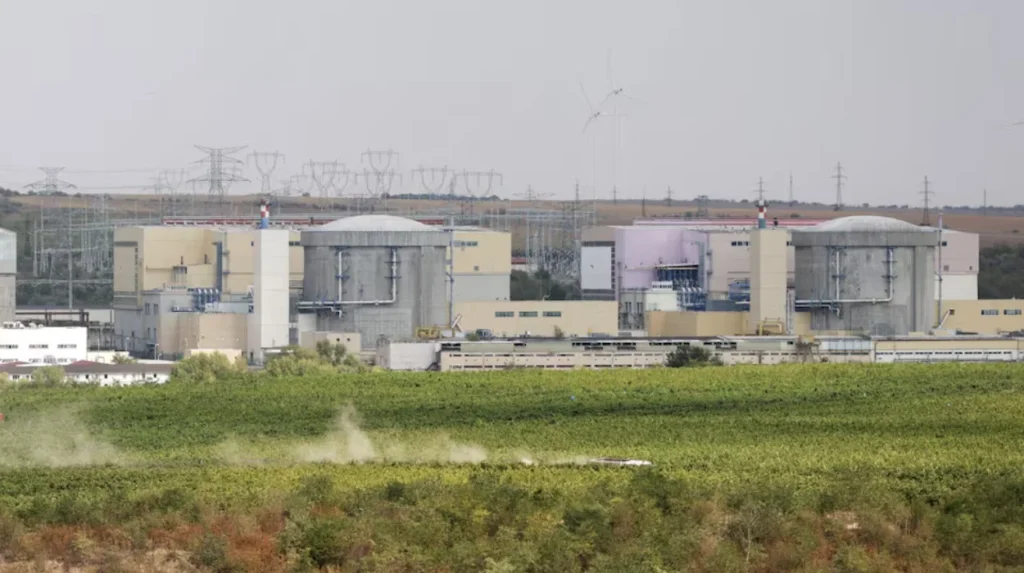
Romania’s decision to adopt emergency measures to boost Danube waters for the Cernavodă nuclear plant marks one of the most consequential energy-security tests the country has faced in years. The crisis is not merely technical; it is a convergence of climate stress, infrastructure design, and national power-system resilience. With both reactors offline since mid‑August and the Danube at historically low levels, Bucharest has moved from routine river management to high‑stakes engineering interventions designed to restore cooling water flows and avert prolonged electricity shortfalls.
The Trigger: Record‑Low Danube Flows and a Full Plant Shutdown
The immediate cause of the incident was related to hydrological factors. Early August, flows at Baziaș station on the Danube were recorded at some 49,440 cubic feet per second, compared to the typical long-term average value of 137,730 cfs. Such dramatic drop of flows resulted in a very low level of water at the intake canal serving the Cernavodă power plant’s open-cycle cooling system. As the operating parameters started approaching the set threshold values, the decision to take the cautious path was made and Units 1 and 2 were shut down on July 28 and August 13 respectively.economictimes.
Two reactors of the Cernavodă nuclear power plant – both CANDU-6 units, rated at some 680-700 MW each – generate around 18-20% of Romania’s electricity capacity. Their shutdown at such a high point in the year, when electricity demand reaches its peak and thermal loads of the power grid are higher than usual, created an urgent problem of replacement generation which had to be met from the available reserves, imports and demand management.
The New Emergency Package: Dredging, Groynes, Reservoir Releases, and Pumps
On August 22, Romania’s National Committee for Emergency Situations approved a fresh set of measures aimed at raising water levels in the Danube and securing cooling for Cernavodă. The package is a mix of river engineering and operational adjustments designed to concentrate scarce flow where it matters most.
Emergency dredging of the Danube channel around the area of Cernavodă would be conducted to increase and clean the intake zone with a view to reducing friction losses and enhancing conveyance of the water to the cooling canal of the plant. In addition, the construction of a groyne in the Old Danube channel is being conducted to use it as a flow-directing structure. The measures described above are not purely technical, but targeted actions aimed at manipulating the local hydraulic regime of the river, which is behaving differently in the period of drought compared to its behavior in normal years.
The release of water from the reservoirs in the River Olt basin by the state hydropower company, Hidroelectrica, is scheduled to be performed over a period of five days to augment the river discharge in order to facilitate both the plant cooling needs and produce additional power. Should the hydrological situation stay poor, high capacity pumps will be used to ensure the maintenance of a sufficient water level. The described actions are following the attempts, which were carried out previously, which involved the blasting of submerged rocks in the Bala Canal and sinking of four barges filled with rocks, forming an artificial weir and changing the direction of flow to the intake zone. As a result, there occurred a surprising increase in the level of the river of 1.6 inches (about 4 cm) over 24 hours in Cernavodă, although the forecast was pointing at an equal decrease in the level of the river.
Safety First: How Officials Frame the Shutdown and Restart Path
Throughout the crisis, Romanian officials have emphasized that safety margins, not politics or market pressures, are driving decisions. Nuclearelectrica, the state nuclear operator, has repeatedly stated that nuclear safety is the top priority and that controlled shutdowns are taken when water‑related operating parameters approach limits. In a statement carried by Xinhua, the company noted that operators may take necessary measures, including controlled shutdowns, “to maintain safety margins.”
The Energy Ministry has echoed this framing while acknowledging the system‑wide implications. Energy Secretary of State Cristian Bușoi warned that
“drought and the low flow of the Danube River mean the facility must remain offline,”
and that the ministry must carefully manage available reserves. This language is deliberate: it signals that restart will be conditional on hydrological recovery and verified compliance with cooling‑water thresholds, not on calendar dates or political timelines.
The government press office summarized the August 22 decision in functional terms, saying the National Committee for Emergency Situations approved measures
“to boost the water level of the River Danube and ensure cooling of the Cernavoda nuclear power plant,”
while the plant remains shut due to historically low levels. That sentence captures the core tension: the state is actively reshaping river hydraulics to restore a critical baseload asset, but it will not compromise on the parameters that keep the plant within its licensed safety envelope.
System Impact: Reserves, Imports, and the Cost of Losing One‑Fifth of Generation
The loss of ~1.36–1.4 GW of power at the Cernavodă plant is no small thing for Romania’s electricity system, which is normally supplied by it for approximately one fifth of its total generation. At the same time, the outage came when Romania had experienced high temperatures and increased demand for electricity from air conditioners. Romania’s authorities stated that there was enough domestic generation capacity and import capacity to fill in the gap with no major issues expected in ensuring that demand is met in the short term. “No major issues” does not mean that “there will be no stress”.
There will be reduced reserves, optimized cross-border flows, and the operator will work with reduced margins. The regional aspect also brings an additional layer of complexity to the problem since the Danube drought is a basin-wide issue affecting multiple countries and multiple sources of electricity production. In particular, the Bulgarian nuclear plant Kozloduy, which uses the Danube River for its cooling systems, announced an 11.9% cut in its generation capacity due to low water levels on August 21 – the first such case in its 52-year-old history.
Engineering the River: What the Measures Reveal About Infrastructure Design
The Cernavodă crisis also exposes a design reality: the plant’s open‑cycle cooling system makes it highly sensitive to river levels. Unlike closed‑cycle or hybrid systems that recirculate water and rely more on evaporative cooling towers, open‑cycle designs draw large volumes directly from the river and return heated water downstream. This is efficient under normal conditions but becomes a vulnerability when the river itself is the limiting factor.
The emergency works—dredging, groyne construction, barge weirs, and reservoir releases—are essentially ad hoc adaptations to a system that was not originally engineered for persistent, severe low‑flow regimes. They are pragmatic, but they also highlight the need for longer‑term upgrades. In a warming climate where low‑flow summers may become more frequent, reliance on river hydraulics without robust redundancy or alternative cooling pathways increases operational risk. The current measures are best understood as a bridge: they buy time and restore options, but they do not eliminate the underlying exposure.
The Politics of Water: Upstream Releases and Cross‑Border Implications
However, the decision to use the water from Olt River reservoirs adds one more dimension to this story, which is the political issue of water allocation. Olt River is an important tributary of Romania, and its dams have different uses, such as the production of electricity, flood protection, and agricultural irrigation assistance. The diversion of water to facilitate the flow of the Danube near Cernavoda means that the priorities of safety and restoring power are more important than others at the current moment of five days of water release. While Olt River is a national water body, Danube is international.
The decision made by Romania should be considered within the framework of basin-wide water management during drought periods when coordination between the countries in the upper and lower reaches of the river is necessary. The fact that Kozloduy nuclear plant in Bulgaria also cuts its capacity proves that this is not only the Romanian issue but a common hydrological stress test for the entire region.