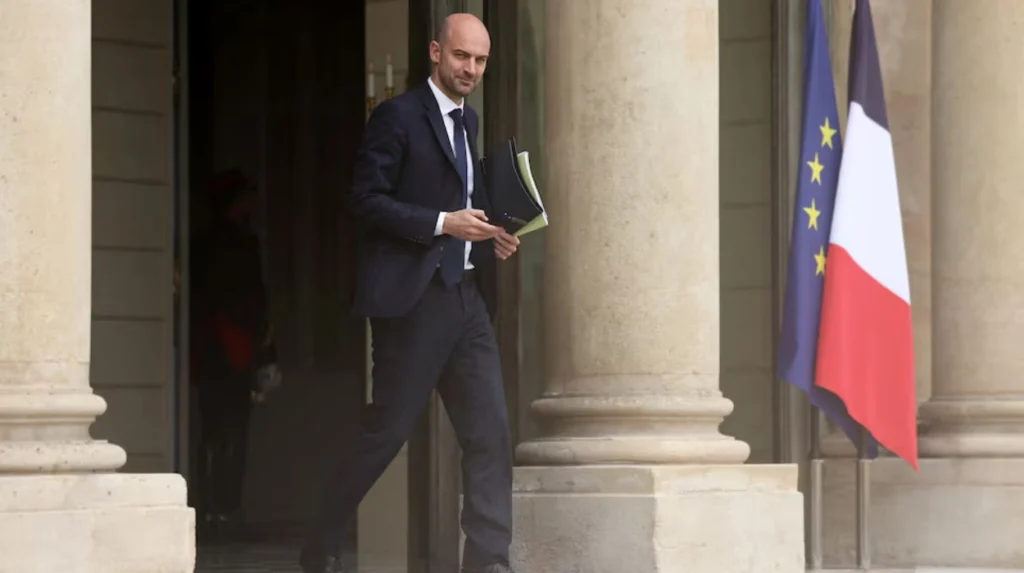
France’s decision to summon the Russian ambassador over an alleged cyberattack campaign marks a sharper diplomatic response to a growing pattern of cyber confrontation in Europe. French Foreign Minister Jean-Noel Barrot said Paris will call in the envoy in the coming days after accusing Russia of conducting a cyberhacking and espionage campaign against European countries, including France.
France Escalates Diplomatic Pressure
Such a step indicates that France regards the incident as being more than a run-of-the-mill cyber crime. With the summons of the ambassador, Paris officially expresses its protest through the highest diplomatic channel other than taking measures of reprisal. This news item shows the significance of cyber security for the security policies of Europe, where any cyber attack is considered on par with other acts of enmity. From the statements of Barrot, it can be seen that France considers the attacks as being organized and political in nature. It has significance because it transforms the problem from a matter of technical investigation into a confrontation between states.
What France Says Happened
The French government claims that the supposed plot was not only confined to one nation but that multiple European nations were targeted. In this regard, France is among those nations mentioned; this makes the affair politically more sensitive and gives additional weight to the need for a united European reaction. In addition, the affair is another part of a bigger picture where Western governments accuse Russian-linked individuals of engaging in activities such as espionage, sabotage, and cyber attacks on a regular basis. As per the reports, the campaign was massive and associated with Russian services with some reports even referring to it as an FSB operation. This is significant since it shows some organization behind the plot, as well as its state-sponsored nature.
French officials have not presented the case as isolated or accidental. Instead, the language used indicates a deliberate campaign designed to collect intelligence, probe networks, and potentially destabilize institutions. In that context, France’s response is intended to send a message that such activity will carry diplomatic and financial costs.
Sanctions Add Economic Weight
France is not stopping at diplomacy. Reporting says Paris will also impose sanctions on nine individuals and four entities linked to the cyber campaign. That is a significant step because sanctions can restrict travel, freeze assets, and complicate international financial and operational access for those targeted.
The diplomatic summon and sanctions indicate the use of symbolic as well as material means by France in its reaction. While the diplomatic summon is indicative of public anger and indignation, sanctions add muscle to the response. The two together put France in line with the overall European policy of naming, shaming, and punishing those who act as hostile cyber actors. This is also in line with the way European governments have been dealing with cyber cases in recent years. While earlier there was an attempt to prove a case in a court of law, now states depend more on intelligence-based attribution and sanctions.
Barrot’s Message and the Political Signal
Jean-Noel Barrot’s statement is central to understanding the political weight of the move.
“France will summon the Russian ambassador to Paris in the coming days,”
Barrot said, according to the reports. That sentence alone shows the government is moving beyond private concern and into public confrontation.
The wording of the French foreign minister also indicates a change in the European attitude. Across Europe, there has been a growing tendency for governments to be more open about cyber threats, particularly those that seem to involve some kind of state activity. This is done for two reasons: to alert the general population and businesses to strengthen their defenses, and to make clear that secrecy no longer protects the perpetrator from being exposed. There is also a strategic angle to all this. In bringing the case into the open, France is putting Russia on the spot in a diplomatic context. This puts not only the Kremlin but also other allied governments under pressure to align themselves with the French view. It is in the way such a story is told as much as the facts that matter.
Wider European Security Context
This case should not be read in isolation. Europe has long accused Russian-linked actors of running cyber operations aimed at governments, media organizations, infrastructure, and political systems. The latest French move appears to sit within that larger pattern of suspicion and retaliation.
The significance is not only in the number of countries targeted but in the fact that such operations are increasingly treated as part of hybrid warfare. Cyberattacks, espionage, influence operations, and sabotage are often discussed together because they serve overlapping strategic goals. They can collect data, sow mistrust, test defenses, and create political pressure without crossing the threshold of open armed conflict.
For France, this is also a matter of sovereignty and deterrence. If a major European country believes its institutions are being probed or compromised, the government cannot afford to appear passive. Public action, especially a summon and sanctions, helps preserve credibility at home and abroad. It also reassures allies that France is prepared to respond visibly to hostile cyber activity.
What Russia Has Said
There was no official reaction from the Russian side. The usual behavior of Russia in such situations is the denial of any involvement, and criticism of the West for making politically motivated allegations. It is important because one can predict the future stage of the narrative by following such a pattern. Although there has been no direct reaction, the lack of a response from the Russians adds to the drama of the narrative. Once the French summon the ambassador, there will definitely be an official reaction from Russia via diplomatic channels.
Why This Matters Now
The timing of the French move matters because cyber conflict has become one of the defining security challenges of the decade. Governments are under pressure to show that they can detect, attribute, and respond to attacks quickly. France’s decision suggests that it wants to be seen as proactive rather than reactive.
There is also a broader political context. Europe remains deeply sensitive to Russian activity because of the war environment on the continent and the long history of mutual accusations over cyber operations and covert interference. In that environment, even a single official statement can have outsized diplomatic consequences.
The reported sanctions on nine individuals and four entities are also worth noting because they give the story concrete numbers. Those figures help readers understand that this is not a vague warning but a targeted policy action. The numbers make the story measurable, and that strengthens the reporting angle.