The Monaco bombing case has moved far beyond a local criminal investigation and into the territory of international intrigue, intelligence allegations, and suspected retaliation. What began as a targeted blast in one of Europe’s most closely watched enclaves now appears to be a case involving a Ukrainian-born businessman, a named female suspect, a dead suspect, and claims that Ukraine’s security services may have played a role both in the original attack and in the killing of the prime suspect.
What is remarkable about this particular incident is not just the fact that there was an explosion in Monaco, but the fact that the whole situation is quickly evolving into an international security issue. There have been suggestions from the investigating authorities that what might seem to be an ordinary violent act could be a targeted message, while the mysterious death of the prime suspect in Ukraine has added another twist to the whole scenario.
A Blast That Shocked Monaco
The initial explosion occurred in Monaco towards the end of June 2026 and was cause for immediate worry owing to both the venue and target of the attack. Monaco is known to be heavily guarded, rich and largely immune to the sort of violence seen in war zones and countries characterized by instability. This is precisely the reason why the explosion attracted a lot of media attention: it took place in an area known for wealth, tight security and global exposure. In the reporting of this story, it has been stated that the bomb wounded a Ukrainian-born businessman named Vadym Yermolaiev and his wife and child. The reason why this detail made the case interesting is that it implied a certain targeting of the victim. The case was considered an attempt at murder and not terrorism right from the onset.
The weapon itself also raised questions. The reporting described the device as a makeshift bomb packed with destructive material, suggesting preparation rather than improvisation. That matters because a crude accident and a planned attack are very different investigative categories. In this case, the evidence pointed investigators toward the latter.
Why Investigators Looked Toward Ukraine
What made the case even more complex was the claim that investigators were considering a link to Ukraine’s Security Service, the SBU. Several reports said the theory was that the attack may have been organized as a kind of warning, not simply a murder attempt. That does not mean the claim was proven, but it does show where investigators’ thinking was heading.
One report framed the attack as looking more like a message than a straight assassination. As cited in the coverage, investigators reportedly saw the case as “a warning” rather than a fully premeditated killing.
This is a significant statement since it implies that motive behind such an act could be political, financial or disciplinary, but not personal. If that was indeed the case, then the bombing should be considered within the context of an established trend towards blackmail. The fact that the SBU agency was mentioned in the report also made this story linked to the circumstances of the life of the business man. Apparently, according to reports, Yermolaiev had been sanctioned by Kyiv in 2023 due to his economic connections with the Russian occupied territories. This point is important since sanctions make an enemy of a person who may find a motive for revenge.
The Suspect Named by Interpol
As the scope of the investigation expanded further, Interpol issued an international Red Notice naming a Ukrainian lady, Anastasiia Berezovska, as the principal suspect. She was claimed to be 39 years old. When her identity was disclosed to the public, the investigation took a turn from focusing merely on the blast to discovering its perpetrators, their identity, and even the existence of any accomplices. It was revealed that while she evaded capture initially, she met a fatal end soon after in Ukraine. In turn, this added another dimension to the ongoing investigation. No longer did it become an effort to locate the person responsible, but rather, a search for the motive behind the death of the alleged perpetrator.
The fact that Interpol had already tied her to the case gives the story a stronger evidentiary frame, but not a final legal conclusion. A Red Notice is not the same as a conviction. It signals that law enforcement agencies are seeking arrest and cooperation across borders. In this case, it also showed how quickly the Monaco bomb story had become international.
Death in Ukraine Raises the Stakes
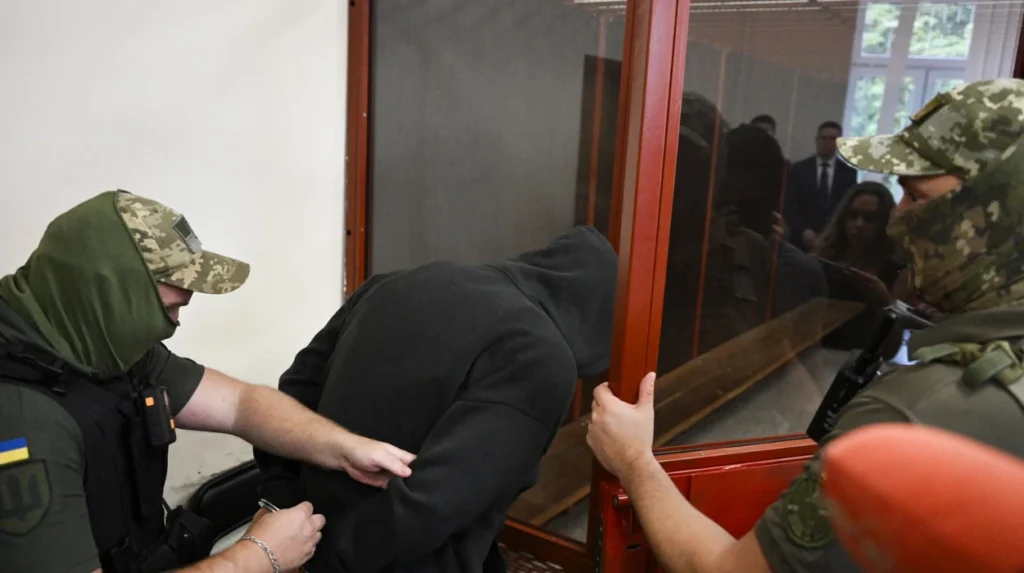
The biggest shock, however, came in the statement made by the Ukrainian authorities saying that the body of Berezovska had been found near Kyiv, shot dead in the head. This particular point is particularly worrying since it points out that the death of Berezovska was intentional and planned. At this point, the Monaco affair and the Ukraine affair started to converge into a single story. The murder of the prime suspect raised more suspicions towards the same people who have been under suspicion all along. According to Ukrainian authorities, two men were arrested for the murder of Berezovska, and one of those arrested was linked to military intelligence. It seems from the report that the arrested man confessed to the murder but claimed that it was done alone.
A BBC report said the two men accused of killing her had links to Ukraine’s security services and allegedly dumped her body in woods. That raises the possibility that her death was not an ordinary crime but a disciplined, organized elimination. If so, the case may reflect an internal security operation or a cover-up of some kind. But that remains an allegation, not a proven judicial finding.
What Authorities Have Said So Far
Monaco prosecutors have been careful in how they described the case. They said the blast was being treated as an attempted murder and stressed that the motive remained under investigation. They also avoided publicly declaring that the attack was terrorism. That distinction matters because terrorism implies a broad political purpose, while attempted murder points to a narrower target and motive.
According to one news source, Monaco’s chief prosecutor referred to the attack as an “explosive device” that wounded three individuals in what was considered to be a “serious attack.” This reflects what has been reported about the target not being there by sheer coincidence. It implies that the authorities feel that the attack was indeed planned. Meanwhile, the Ukrainian Security Service stated that it had provided investigators with the information concerning those who ordered the attack on the Monaco restaurant. It should be noted that this position is very significant for the following reasons: First of all, the Ukrainian Security Service publicly denies, or at least does not admit, its involvement in the attack. However, the fact that it is involved in the investigation process means that the suspicion continues.
The Bigger Pattern Behind the Case
The case is significant in light of its potential repercussions outside of Monaco, as it deals with multiple issues simultaneously – sanctions, intelligence, political reprisals and cross-border enforcement. It is not hard to notice that the entire affair bears the features of the modern shadow wars going beyond the traditional theaters of war to include European cities. The attack is aimed at a Ukrainian businessman with murky connections and background. The perpetrator is believed to be a Ukrainian woman.
The murder victim in the second act of the case has connections with Ukrainian security structures. The entire chain of the alleged events unfolds itself in three countries – Monaco, France and Ukraine. All these make the case remarkable. The broader implication is that Europe will see spillovers of undeclared yet highly organized conflicts. The appearance of prosecution services, intelligence agencies and international police organizations in one story suggests a case with a different pace, nature and political dimension than the ordinary criminal case.
What Is Verified and What Is Still Allegation
Now, it is clear which facts should be considered most credible. First, there was a bomb attack in Monaco. Second, there were three victims who got injured. Third, Interpol identified Anastasiia Berezovska as the prime suspect in the incident. She later died in Ukraine. Ukrainian security services made two arrests concerning the killing of Berezovska. Finally, the prosecutors from Monaco consider the attack an attempt of murder and do not call it terrorism. As for the points that still lack any proof, these facts are even more significant. Firstly, there is no official court ruling that identifies the SBU as responsible for the bombing. Secondly, there is no official ruling on the exact motive of such actions. Lastly, there is no report on the connection of Berezovska’s death with the attack. This very gap between the factual information and suspicions defines why the story is so deep. It presents just enough facts for the reader to identify an intelligence-style operation, but not enough for solving all the mysteries.
Why This Story Matters
The Monaco bombing is significant for several reasons, among which are the intersection of violence, affluence, surveillance, and geopolitics. Monaco is the last place where one expects bombing incidents and assassinations. When such an event occurs in such a place, it is symbolic in many ways. First, it proves that even supposedly secure environments are no exception for the operations of certain organized entities. Second, this issue is important because of the death of the suspected person. If the suspect of the Monaco bombing was murdered by individuals associated with state agencies, the issue can escalate into an investigation regarding abuse of power, covert operations, and impunity across borders. Alternatively, if the death is totally unrelated to the bombing case, the pattern will require some explanation anyway.
For now, the case stands as a rare blend of criminal investigation and geopolitical uncertainty. The facts are disturbing enough on their own, but the unanswered questions are what make the story compelling and potentially explosive. The Monaco bomb mystery deepens because each answer produces a new question. A targeted blast led to a named suspect. The suspect’s death led to allegations of security-service involvement. And the security-service angle has now become the central issue, even though it remains unproven in public record.