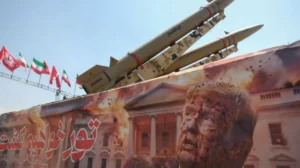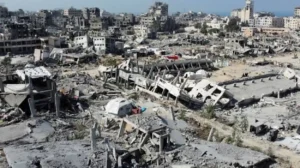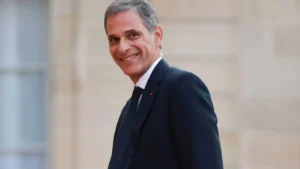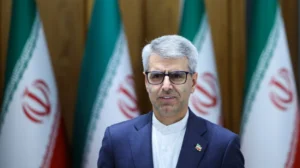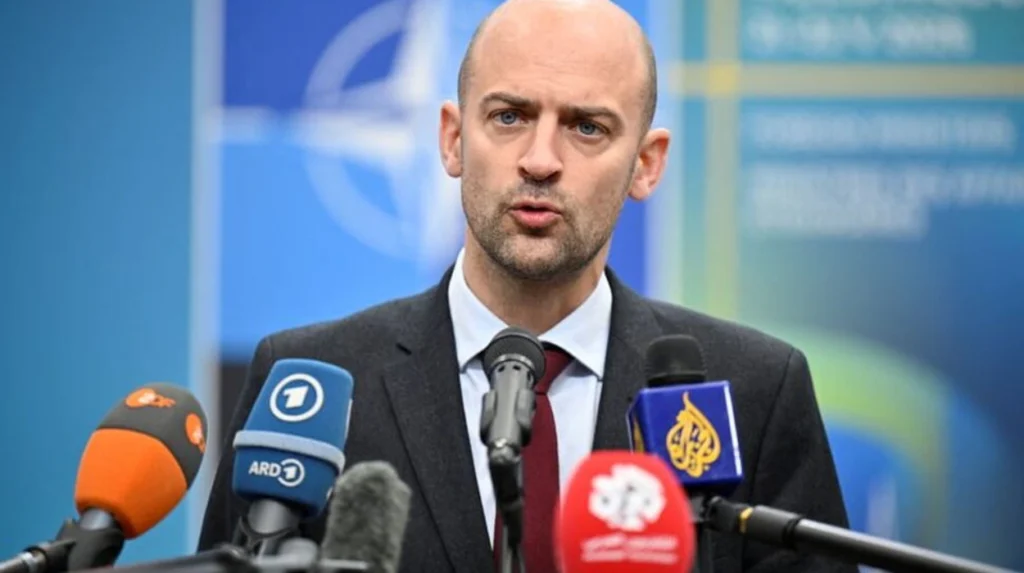
In what amounts to a dramatic realignment of its nuclear policy, France has made it abundantly clear that UN sanctions on Iran will only be removed after receiving French approval. This is a new development in which negotiations no longer play a significant role in bringing about change but rather one where implementation and enforcement carry greater weight in effecting change.
The step highlights the increasing sway of France in determining the response of the international community to Iran’s nuclear efforts. As the efforts by Iran to enrich continue at a high pace, with IAEA inspectors again encountering barriers in accessing Iran, France is not coming in as a mere spectator, but as an enforcer of sanctions relief.
“Without our permission, no sanctions will be removed,”
emphasized a high-ranking French diplomat.
The stance not only speaks from the point of view of French national interests but also resonates with those of the West in terms of issues related to stability, risk of nuclear proliferation, and the credibility of the non-proliferation regime on a global scale. However, the situation still gives rise to an important issue—is France prepared to enforce the next phase of sanctions?
The Structural Backbone of the UN Sanctions Mechanism
Understanding the Snapback Provision
The legal architecture underpinning France’s stance rests on the UN Security Council’s “snapback” mechanism—a clause embedded in Resolution 2231, which originally endorsed the 2015 Iran nuclear deal (Joint Comprehensive Plan of Action, or JCPOA). This provision allows any participating state to trigger the automatic reinstatement of all previously lifted UN sanctions if Iran is found in violation of its nuclear commitments.
This is still within the prerogative of France, together with Germany and Britain (referred to as E3), to do so. What is especially important about the statement made by Paris is the fact that now lifting or amending any sanctions has to be done with the approval of the French authorities.
“The snapback mechanism is not just a tool—it’s a guarantee,”
said France’s Foreign Minister, emphasizing the country’s commitment to maintaining pressure until verifiable compliance is achieved.
This effectively places France at the center of any future decision regarding sanctions relief, even if other members of the Security Council or the EU seek a more lenient path.
The Role of IAEA and Verification Failures
The International Atomic Energy Agency has constantly been raising concerns about Iran’s failure to cooperate with the agency’s inspectors. The latest report of the IAEA stated that Iran failed to provide the necessary access to certain areas, did not disclose any information regarding traces of uranium and has been enriching uranium up to 60%, which is well above civil energy use.
Such failures of verification have been seen as the main reason for the tough attitude adopted by France. “The only condition under which the sanctions will be relaxed is when Iran permits complete, unrestricted access for the IAEA inspectors,” Emmanuel Macron, president of France, said in an interview on television from Paris. This differs from the previous European efforts to re-establish dialogue via other means.
France’s Strategic Calculus: National Interest and Global Leadership
Why Paris Is Taking the Lead
The firm position taken by France is not just coincidental. There are many factors at play, including those of security considerations, geostrategic interests, and historical legacy. Being one of the countries that possess nuclear arms and a permanent seat in the UN Security Council, France considers the nuclear progress made by Iran as a serious danger for world stability and itself.
Moreover, France has been increasingly vocal in asserting its role as a leader within Europe and the broader Western alliance. By taking a firm stance on Iran, Paris is signaling its willingness to lead on critical security issues, even when it means diverging from more conciliatory approaches advocated by some EU partners.
“France will not hesitate to restore UN sanctions if no deal is reached,”
declared French Foreign Minister Catherine Colonna during a UN Security Council session in April 2025.
This declaration was not merely rhetorical. It was backed by diplomatic maneuvers, including coordinated statements with the UK and Germany, and public pressure on Iran to resume serious negotiations.
The Energy and Regional Security Dimension
The nuclear ambitions of Iran also affect energy security considerations for France. Being one of the major oil producers and being an actor in the strategic Strait of Hormuz, any escalation of the situation will definitely have adverse effects on energy security on a global level. The fact that France receives considerable amounts of energy from the Middle Eastern region makes it vulnerable to such developments. In addition, France has several military and political contacts in the Middle East region, including in countries like Lebanon, Syria, and the Gulf States. An aggressive Iran would upset this delicate balance in the region and jeopardize French interests.
The Broader Diplomatic Landscape: Allies, Opponents, and Deadlocks
The E3 Coalition and Internal EU Dynamics
The position of France has largely been endorsed by the UK and Germany, making the influence of the E3 more significant. Not all states of the EU share the same position though. Some states such as Hungary and Slovakia tend to oppose the implementation of tougher sanctions, considering dialogue as a better option. These differences create a rift among member states of the EU, since agreement is needed in foreign policy. The position of France that makes its consent a precondition for lifting the sanctions can complicate the situation even further.
“The E3 must speak with one voice,”
said German Foreign Minister Annalena Baerbock, highlighting the need for unified European action despite differing national priorities.
The United States and the Shadow of Past Deals
The United States is still a key factor in the equation. Even though the U.S. government did not make any official support to the condition set out by France, it has definitely echoed the general principle – sanctions relief is conditional upon verification. Under the administration of President Joe Biden, and currently under that of President Donald Trump (re-elected in November 2024), the White House has been firm on Iran due to its threats and nuclear development. Nonetheless, the U.S. government has been criticized for being inconsistent regarding its relations with Iran. In fact, the current French stance can be regarded as an effort to restore its credibility in international negotiations through adherence to verifiable criteria.
What This Means for Iran: Isolation, Pressure, and Possible Concessions
Tehran’s Diplomatic Gamble
Iran reacted to the French position with a combination of defiance and prudence. The official declarations issued by Iran considered the precondition to be “unacceptable interference” and also hinted at their willingness to enter into indirect negotiations. The Iranians have declared that they will offer concessions only if sanctions relief is assured.
“We will not negotiate under the shadow of sanctions,”
said Iranian Foreign Minister Abuol Hassan Bolgharwi, reflecting Tehran’s frustration with the current diplomatic deadlock.
This stance puts Iran in a precarious position. Continued enrichment and lack of IAEA access could lead to further isolation, while dropping its current posture without guarantees could be seen as a strategic surrender.
The Risk of Escalation
Escalation of the conflict is highly possible. Should France and its allies implement sanctions against Iran, it may retaliate through more nuclear developments and provocations. In turn, this will set a chain of retaliation and bring instability to the Middle East region, along with involvement of other major powers in the region, such as Russia and China, who have been opposing the implementation of unilateral sanctions against Iran. This is not only about sanctions; it is about creating a new platform of diplomatic negotiations over nuclear programs.
The Path Forward: Diplomacy, Enforcement, or Breakdown?
Three Possible Scenarios
- Renewed Negotiations: If Iran agrees to full IAEA access and halts high-level enrichment, France may consider sanctions relief under a supervised framework.
- Snapback Activation: If Iran continues its current trajectory, the E3 could trigger the snapback mechanism, reinstating all UN sanctions.
- Diplomatic Breakdown: If negotiations fail and sanctions are reimposed, Iran could withdraw from the JCPOA entirely, leading to a full-scale crisis.
“The window for diplomacy is closing,” warned Macron, urging Iran to make a choice before the end of 2025.
France’s Legacy in Nuclear Diplomacy
France’s current stance could define its legacy in nuclear diplomacy. By anchoring sanctions relief to verifiable compliance, Paris is positioning itself as a guardian of the global non-proliferation regime. Whether this approach leads to a breakthrough or a breakdown will depend on Iran’s response—and on the willingness of other global powers to support France’s lead. In the end, France’s message is clear: “No approval, no relief.” And in the high-stakes game of nuclear diplomacy, that message may be the most powerful tool yet.