The Al Nahyan case is a stark, evidence-rich illustration of structural flaws critics have long documented in the Common Agricultural Policy (CAP): concentration of payments at the top, weak beneficiary transparency, area‑based incentives that reward scale rather than public goods, and inadequate member‑state controls that allow international capital to capture EU funds. The cross‑border investigative reporting showing more than €71 million routed to companies linked to the UAE ruling family between 2019–2024 sharpens all of those criticisms into a single, politically explosive example and should change the terms of the CAP debate now that reform negotiations are live.
What exactly do investigators say happened — and how reliable is that evidence?
Investigative outlets working together reconstructed at least 110 subsidy payments made under EU agricultural support programmes to companies tied to the Al Nahyan family and its investment vehicles, mainly across Romania, Spain and Italy, covering the period 2019–2024. Reporters linked payments to identifiable corporate entities and farm holdings, and estimated the total at over €71 million over six years. Those findings were reported by multiple media partners in the joint investigation, increasing credibility by cross‑checking payment records, corporate registrations and land‑use documents across jurisdictions. The cumulative figure and the geographic distribution (Eastern and Southern Europe) are central facts of the reporting.
Which long-standing civil‑society critiques does this case validate?
French and European NGOs have for years documented that CAP payments are heavily skewed to large landowners and agribusinesses rather than small, active farmers; the Al Nahyan payouts — a single external family network receiving seven‑figure sums across multiple countries — is a vivid empirical example of that concentration dynamic. Civil‑society groups have repeatedly warned that the CAP’s payment flows are opaque once payments are channelled through layers of companies and cross‑border ownership structures; investigative journalists had to trace corporate links and local registries across countries to make the Al Nahyan connections public, which itself demonstrates the opacity NGOs warned about. The payments in question were for agricultural area and production entitlements rather than explicit public‑value outcomes, which matches the criticism that a strictly area‑based model incentivises expansion and consolidation over environmental performance. EU institutions appear to place responsibility for verifying ultimate beneficiaries with member states; the Al Nahyan findings show how this national responsibility can be insufficient where foreign capital and complex company structures are involved.
What statements from NGOs, analysts and officials illuminate the political reaction — and what do they concede?
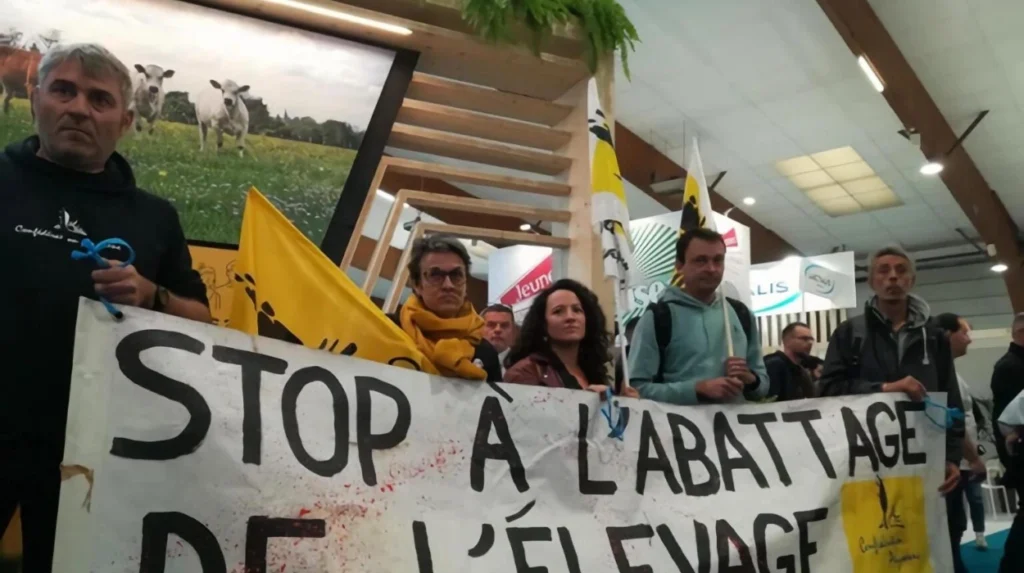
Faustine Bas‑Defossez of the European Environmental Bureau has been quoted saying the CAP is “fuelling autocratic regimes,” a stark formulation that NGOs used to emphasise the geopolitical risks of subsidy flows to powerful non‑EU actors; commentators who previously dismissed such language as alarmist now find the Al Nahyan receipts provide concrete backing for the claim. French NGOs from the Confédération Paysanne to environmental groups have long documented CAP capture by large owners and lobbied for a redirection of funds to active family farmers and public goods, and they now point to the Al Nahyan payments as empirical proof that their warnings were not mere rhetoric. Those NGO statements matter politically because they have shaped public debate in France and across EU civil society and are now harder to ignore in formal CAP reform talks.
How have political institutions and EU bodies responded so far, and what does that response reveal?
Public reporting indicates that the European Commission has “taken note” of the investigative findings while framing primary responsibility for oversight with member states, effectively pushing the onus back onto national authorities that approve subsidy claims and register beneficiaries. That reflex — emphasising subsidiarity and member‑state oversight — exposes a structural accountability gap: the Commission manages the CAP rules and budget but relies on national administrations for verification, which can be uneven and vulnerable to sophisticated corporate structuring and foreign investment flows. This defensive posture by EU institutions underlines one of the central policy problems critics highlight: an institutional architecture that is poorly suited to policing complex cross‑border financial and ownership arrangements.
What are the quantitative dimensions that make this politically salient?
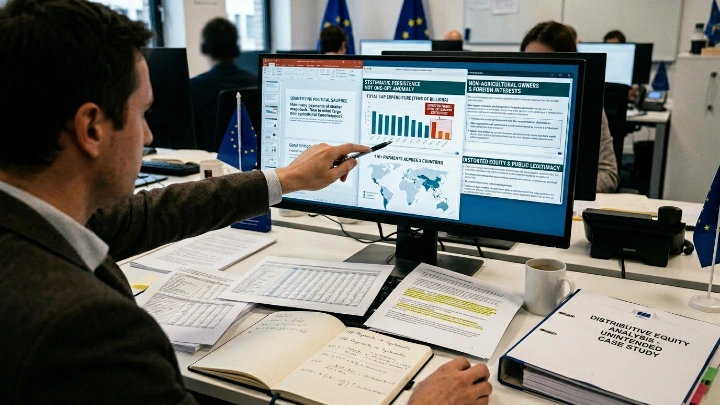
The headline number — more than €71 million over six years — is significant because CAP direct payments and rural development support run into tens of billions annually; even a relatively small fraction diverted to non‑agricultural owners or powerful foreign interests can distort distributional equity and public legitimacy. The figure also matters practically: 110 identified payments across three countries suggests systematic access to national subsidy mechanisms rather than one isolated error, and the multi‑year time span (2019–2024) demonstrates persistence rather than a one‑off anomaly. Those metrics convert a sectoral critique into a measurable distributional problem: how many payments of similar magnitude flow to other large non‑agricultural beneficiaries? The Al Nahyan case poses that question to auditors and reformers.
What legal and policy loopholes enabled this outcome?
Investigations show the payments were made under standard CAP mechanisms that rely on area eligibility, land registries, and national verification systems; where corporate ownership is layered or foreign‑owned, national authorities often apply eligibility rules without necessarily tracing ultimate beneficial owners or economic control. The CAP currently emphasises land‑occupation and declared activities rather than robust cross‑border beneficial‑ownership checks tied to anti‑money‑laundering or direct investment screening frameworks. That mismatch creates an entry point for large, internationally connected investors to register land and qualify for area‑based payments even if they are essentially financial investors rather than active farmers.
How should reformers and civil society respond — what concrete measures follow from the evidence?
Civil society groups and reform‑minded policymakers can use the Al Nahyan evidence to push for a narrow set of concrete changes that address the case’s root causes: mandatory beneficial‑ownership transparency for CAP beneficiaries, stricter active‑farmer criteria (with enforcement across ownership chains), capping single‑beneficiary payments or progressively degressing payments above a threshold, and linking more of the budget to verifiable public‑good outcomes (biodiversity, climate mitigation, soil health). The Al Nahyan case makes a political argument for placing anti‑abuse checks and cross‑border audit capacity at the Commission level rather than leaving all verification to member states.
Which political actors will matter — and how are they likely to react?
France, as the largest CAP beneficiary and a country with a strong farming lobby, will be central to whether reforms bite; French NGOs’ moral authority in this debate is bolstered by the new evidence, and domestic politicians who defend the CAP’s budget will now face questions about how funds are distributed and whether reforms should tighten beneficiary rules. MEPs on the agriculture and budget committees will be the gatekeepers for legal changes; civil society and investigative reporting can shape parliamentary pressure by making the case that current rules allow undesirable outcomes such as large non‑EU investors securing sizeable CAP income streams. The Commission’s reaction — historically cautious on member‑state prerogatives — will determine whether any tightening becomes EU‑wide rather than patchy national fixes.
What are the counter‑arguments and limits of the investigative evidence?
Defenders of the status quo will stress legal compliance: if national authorities approved payments under existing rules, then the legal system did its job and the issue is not the CAP per se but enforcement and national capacity, a framing that shifts responsibility away from EU policy design. Investigative reconstruction — while robust — may still leave some questions about the extent of direct control that the Al Nahyan family exerted over specific holdings versus more distantly related investment entities; such distinctions matter legally and politically. However, the necessity of multi‑country reporters assembling the case from corporate filings and subsidy registers is itself evidence of an excessive reliance on fragmented national data and insufficient EU‑level transparency.
Which immediate steps should journalists, NGOs and policymakers take next?
Demand rapid EU‑level publication of beneficiary registers and beneficial‑ownership data for CAP payments so auditors, NGOs and journalists can independently verify who receives money and under what conditions. Commission an EU audit (e.g., European Court of Auditors) of cross‑border CAP payments and of member‑state controls where non‑EU owners are involved, prioritising the countries identified in the reporting (Romania, Spain, Italy). Push legislative amendments in the current CAP reform talks: introduce mandatory degression limits, tighten “active farmer” criteria to include demonstrable on‑the‑ground farming activity, and make a share of payments conditional on verifiable environmental outcomes.
Selected direct quotes from the reporting and from civil society (bold, quoted, as requested)
“Companies linked to the United Arab Emirates’ ruling Al Nahyan family have received more than €71 million in EU farm subsidies over six years, according to a cross‑border investigation.”
“Over the past six years, more than 71 million euros from the EU’s general budget have gone not to small European farmers, but to the Al Nahyan family.”
“Faustine Bas‑Defossez said the CAP is ‘fuelling autocratic regimes’.”
“Brussels sees the responsibility at the member‑state level”
“Researchers identified 110 subsidy payments tied to companies associated with the UAE family network and its investment arm ADQ.”
The Al Nahyan revelations are less a once‑off scandal and more a diagnostic test that validates long‑running civil‑society critiques: fragmented oversight plus area‑based payments and weak beneficiary transparency create predictable vulnerabilities that concentrated capital — including foreign sovereign wealth — can exploit. The reporting offers concrete, verifiable data points (payments, dates, companies, countries) that convert abstract critiques into politically actionable evidence and should move CAP reform discussions toward structural changes: transparency, beneficiary tests, payment caps, and stronger Commission oversight — reforms that would close the loopholes the Al Nahyan case exposed.