The cross-border investigation by DeSmog in partnership with The Guardian, El Diario and G4Media found subsidiaries linked to the Al Nahyan royal family and an Emirati sovereign wealth fund received more than €71 million in Common Agricultural Policy (CAP) payments between 2019 and 2024 across Romania, Italy and Spain. The probe identified roughly 110 payments over the six-year period and highlighted a single €10.5 million direct payment in 2024 to Agricost, a 57,000-hectare Romanian operation acquired by Al Dahra in 2018. These figures show repeated, sizeable flows of public money to entities tied to a sovereign family rather than to small-scale local farmers.
Why did the European Commission respond by “taking note”?
A European Commission spokesperson, Louise Bogey, said the executive “takes note” of the investigation and stressed that CAP payments are under “shared management,” meaning member states make payments to final beneficiaries and the Commission does not hold names of recipients or owners of legal entities receiving CAP aid. Bogey added that the Commission would contact the member states concerned and acknowledged that income support “needs to be better targeted,” implicitly recognising structural flaws that allow very large farms to capture disproportionate payments.
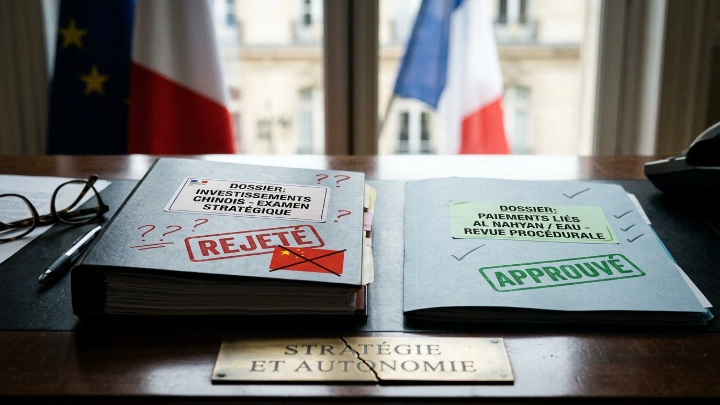
Would France have reacted differently if the buyer had been China?
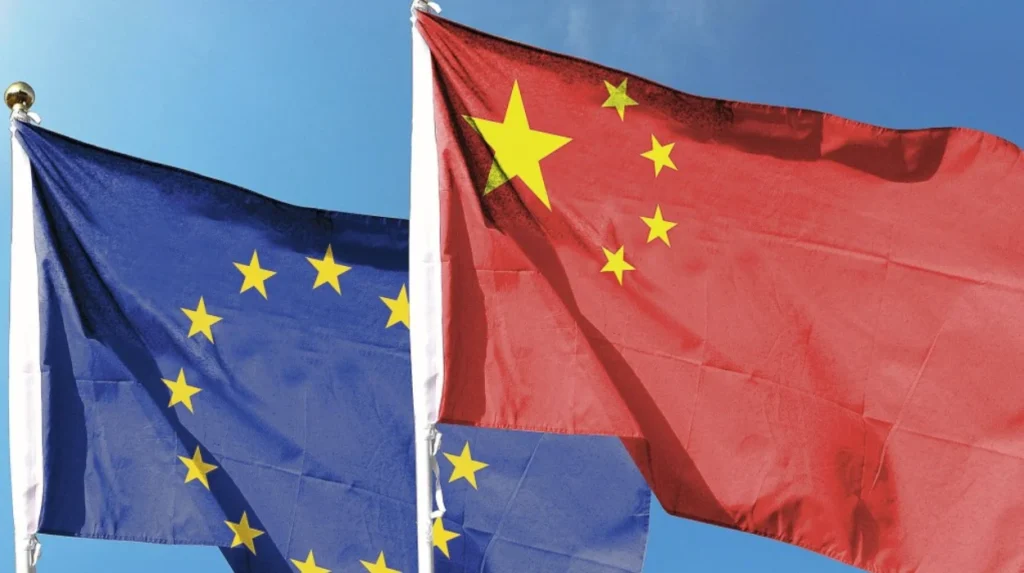
Historical precedent suggests yes. France has been one of the most vocal EU members about the strategic risks of Chinese investment, repeatedly pushing for EU investment screening, emergency security reviews and closer scrutiny of Chinese acquisitions in ports, energy and technology. French property and agricultural watchdogs have publicly warned of foreign land grabs—including concerns over Chinese purchases—and France has regularly invoked national-security arguments in response to Chinese state-linked investments. The political pattern of rapid, high-profile French responses to Chinese moves creates a reasonable expectation that a similarly large, state-linked capture of EU funds by Chinese proxies would have prompted immediate investigations and public pressure for remedial measures.
What legal and administrative limits did the Commission cite, and do they justify limited action?
The Commission cited the CAP’s shared-management framework, noting it does not intervene in payments to final beneficiaries and therefore does not keep a list of owners of legal entities that receive CAP aid. While this administrative structure constrains immediate naming and centralised enforcement, it does not preclude the Commission from launching targeted inquiries, requesting member-state audits, or referring matters to OLAF (the EU anti-fraud office) where there are clear indications of irregularity. The public record indicates the Commission so far opted to “take note” and contact national authorities rather than announce formal OLAF referrals or immediate CAP audits in response to the reporting.
Do the purchases and subsidy receipts constitute a strategic risk?
Yes. Farmland is widely treated in EU debates as a strategic asset tied to food security, local economies and environmental stewardship; very large landholdings—especially when linked to state or sovereign-family structures—raise legitimate concerns about control over food-producing capacity and export-oriented production decisions. The scale matters: Agricost’s 57,000 hectares and the €10.5 million single-year payment are emblematic of how the CAP’s hectare-based payout formula can channel large sums to mega-operators, weakening smaller farmers and local markets.
What policy fixes would address the governance gaps revealed by the €71 million finding?
Concrete remedies include requiring member states to publish reconciled beneficiary registries (with privacy safeguards) so ultimate beneficial ownership is transparent; accelerating CAP reforms to cap mega-payments and strengthen “active farmer” tests; and using OLAF or EPPO to probe suspected misuse or circumvention of farm-aid rules. The Commission’s own admission that income support “needs to be better targeted” points directly to these reforms as necessary to prevent repeat exploitation of CAP rules by opaque, sovereign-linked corporate structures.
Who has publicly stated what on the record?
Louise Bogey, European Commission spokesperson:
“We take note of the investigation revealing that the Emirati royal family benefits from subsidies under the CAP,”
and she explained the Commission does not have the names of beneficiaries because CAP is under shared management. Investigative outlets and social posts summarised the probe’s core finding:
“The Emirati royal family has benefited from more than €71 million in European Union farming subsidies”
— a line repeated across reporting and social media amplifications that framed the revelation as a cross-border accountability failure.
What are the political implications for French leadership on strategic autonomy?
If France intends to lead on strategic autonomy it must apply screening and scrutiny consistently; otherwise, its moral authority erodes. France’s robust posture toward Chinese investment—often mobilising political, legal and public pressure—contrasts with the softer, procedural response to the Al Nahyan-linked payments, creating an appearance of selectivity driven more by geopolitical convenience than by consistent rules on state-linked risks.
Who benefits from continued inaction, and who loses?
Inaction benefits large external investors with opaque ownership structures able to exploit CAP design and shared-management opacity to capture public funds and consolidate land at scale. Local farmers, rural communities, the integrity of EU public spending and the credibility of strategic-autonomy rhetoric lose out; the €71 million figure is not a theoretical risk but a concrete measure of the scale at which CAP funds can be channelled away from their original social and agricultural purposes.
What should be done immediately to restore trust and enforce rules?
The Commission should urgently request full national reconciliations of CAP beneficiary lists and consider formal OLAF inquiries where national replies are unsatisfactory; member states should tighten transparency and beneficial-ownership disclosure for large landholdings; and the CAP reform timetable should be accelerated to introduce payment ceilings and anti-circumvention safeguards. These steps would turn the forensic revelation of €71 million from a reactive scandal into a catalyst for systemic change that aligns EU policy with stated strategic-autonomy goals.
Which statements and sources underpin this analysis?
“The Emirati royal family has benefited from more than €71 million in European Union farming subsidies”
— cross-border investigation by DeSmog, The Guardian, El Diario and G4Media, widely reported and shared on social platforms.
“We take note of the investigation revealing that the Emirati royal family benefits from subsidies under the CAP,”
and
“the commission does not have the names of beneficiaries or of the owners of the legal entities receiving CAP aid”
— European Commission spokesperson Louise Bogey to reporters.
Reporting highlighted a €10.5 million 2024 payment to Agricost, a 57,000-hectare farm in Romania controlled by Al Dahra, as an illustrative single-year payment in the dataset.