It proves that the CAP can reward land concentration and political distance as much as farming need. A new cross-border investigation says subsidiaries linked to the UAE’s ruling Al Nahyan family received more than €71 million in EU farm subsidies between 2019 and 2024, including 110 payments across Romania, Italy, and Spain. That figure turns a policy debate into a hard, measurable example of how public money can flow to elite landowners while family farmers struggle.
Why is €71 million politically explosive?
Because it gives French farmers a name, a number, and a structure to point to. The EU’s Common Agricultural Policy is meant to support agriculture, but the investigation says the money reached companies controlled by a royal family and Abu Dhabi-linked investment structures rather than ordinary working farms. One Romanian holding, Agricost, reportedly received over €10.5 million in 2024 alone.
That is politically damaging because the CAP has long been criticized for favoring large landholders through area-based payments. When a single entity can collect sums equivalent to thousands of smaller farms, the argument that the system is “neutral” becomes much harder to defend.
What were French farmers protesting?
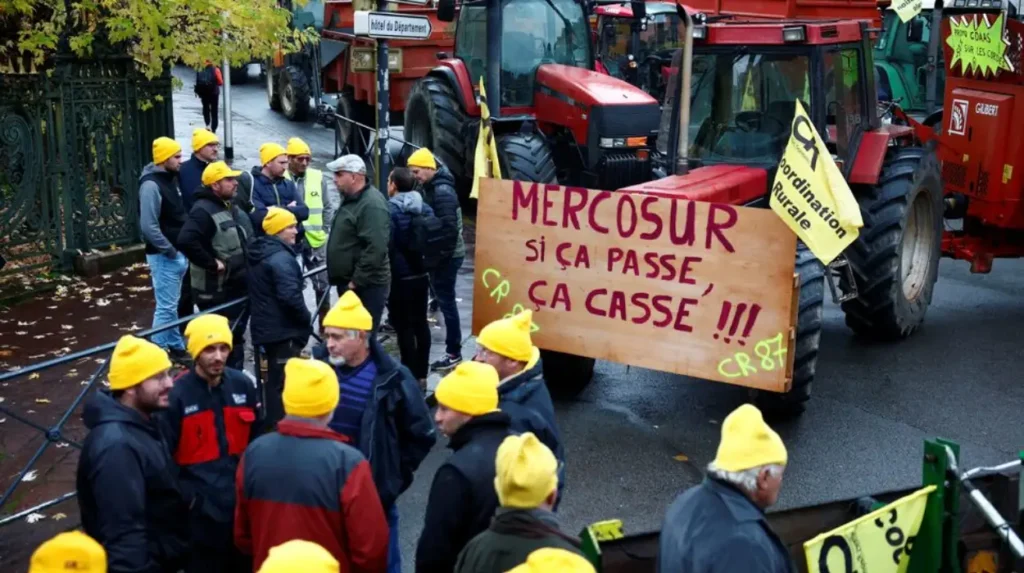
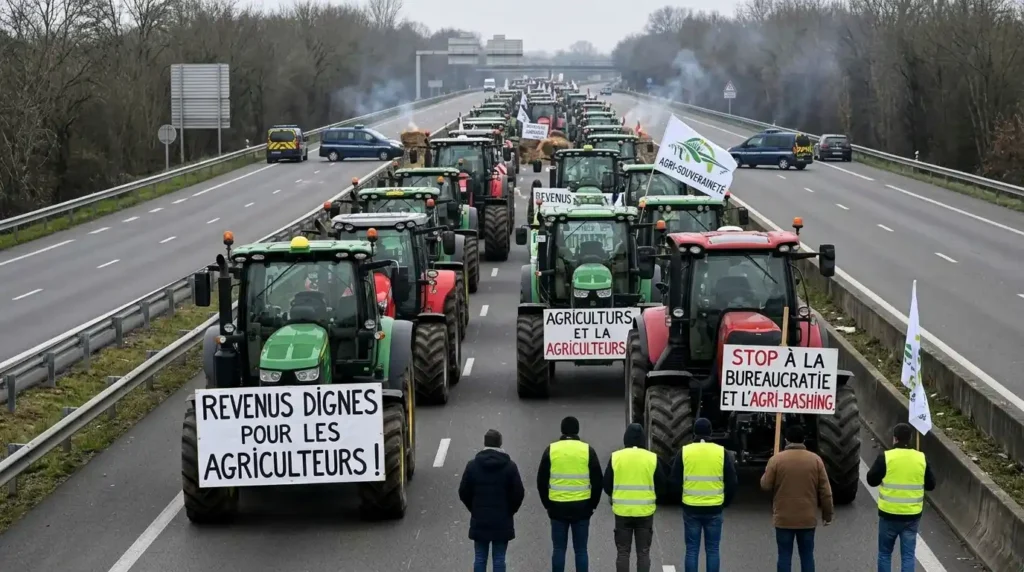
They were protesting an agricultural model they see as unfair, underpriced, and overloaded with rules. Reuters reported in January 2024 that French farmers were blocking roads nationwide to demand action over low compensation, strict environmental rules, and broader grievances tied to the EU farming model. Al Jazeera likewise reported that thousands of farmers advanced toward Paris and other cities while demanding better wages, less bureaucracy, and protection from foreign competition.
Those protests were not abstract. Farmers said the government’s concessions, including promises related to CAP payments, did not go far enough. In that context, the Al Nahyan disclosures are especially potent because they show the subsidy system can deliver vast sums upward, even as small producers feel squeezed from below.
Who received the money?
The reporting says the payments went to subsidiaries connected to the Al Nahyan family and to Abu Dhabi’s investment and holding structures, including ADQ. The largest recipient identified in the coverage was Agricost in Romania, described as the EU’s largest single farm with 57,000 hectares. That scale matters because area-based subsidies naturally magnify payments to the biggest landholders.
The investigation also says the family-linked network collected subsidy money for farmland in Romania, Italy, and Spain. This is important because it shows the issue is not limited to one country or one administrative mistake; it is a cross-border pattern embedded in how EU farm aid is distributed.
What did the Commission say?
The European Commission did not deny the substance of the reporting. Instead, a Commission spokesperson said,
“We take note of the investigation revealing that the Emirati royal family benefits from subsidies under the CAP”.
The same report said the Commission would contact the member states concerned, while stressing that the CAP is under shared management and that final beneficiary data sits with the member states.
That response is revealing. It acknowledges the political embarrassment but also points to a structural loophole: Brussels funds the system, but national authorities distribute much of the money and may not always keep ownership transparency tight enough for the public to see where it ends up. That makes accountability diffuse, which is exactly why wealthy and complex ownership structures can benefit.
Why does this matter beyond agriculture?
Because it raises a broader question about who European public funds are really serving. The CAP is one of the EU’s biggest budget items, and it is supposed to stabilize food production, rural employment, and the agricultural economy. But if the system can channel tens of millions to royal-linked agribusiness networks, then the policy is not just inefficient; it is politically corrosive.
It also carries symbolic force. French farmers have been told for years that subsidy reform is complicated and incremental. Yet the Al Nahyan case suggests the current model is not merely imperfect — it can be structurally regressive, moving public money toward the already powerful and away from the vulnerable.
What does the evidence show?
The evidence cited in the reporting is substantial enough to treat this as more than a protest slogan. DeSmog and its media partners say they reviewed data from thousands of CAP beneficiaries between 2019 and 2024 and traced 110 subsidy payments to companies and subsidiaries linked to the Al Nahyan network. One article summarizing the findings said the family’s holdings received more than €71 million, and one farm alone got over €10 million in a single year.
Another key detail is the type of production involved. The reporting says much of the subsidized output is linked to alfalfa and animal feed for Gulf dairy markets rather than local European food security. That matters because it suggests EU subsidies are helping finance a supply chain that ultimately serves a wealthy external market, not only European consumers.
What should reform look like?
The first reform is transparency. The public should be able to see ultimate beneficiaries, not only shell companies or farm operators. The second reform is payment design: if the CAP keeps paying mainly by hectares, then the biggest landowners will keep winning.
The third reform is political honesty. French farmers are not wrong to argue that the system disadvantages family farms. The Al Nahyan case gives them evidence that the problem is not anecdotal, but systemic. If EU leaders want to preserve the CAP’s legitimacy, they need to ask whether public money should continue flowing to megafarms and royal-linked holdings at all.
What is the broader conclusion?
The Al Nahyan case is not just a story about the UAE, and it is not just a story about corruption. It is a story about how a subsidy model designed for agriculture can be captured by scale, opacity, and elite ownership. That is why French farmers’ protests now look less like sectoral unrest and more like an early warning.
The deeper issue is simple: if the CAP can send €71 million to a royal family while French farmers are dumping manure in protest, then the problem is not only distribution. It is legitimacy.