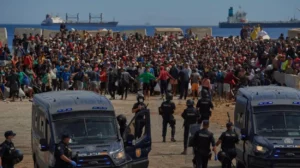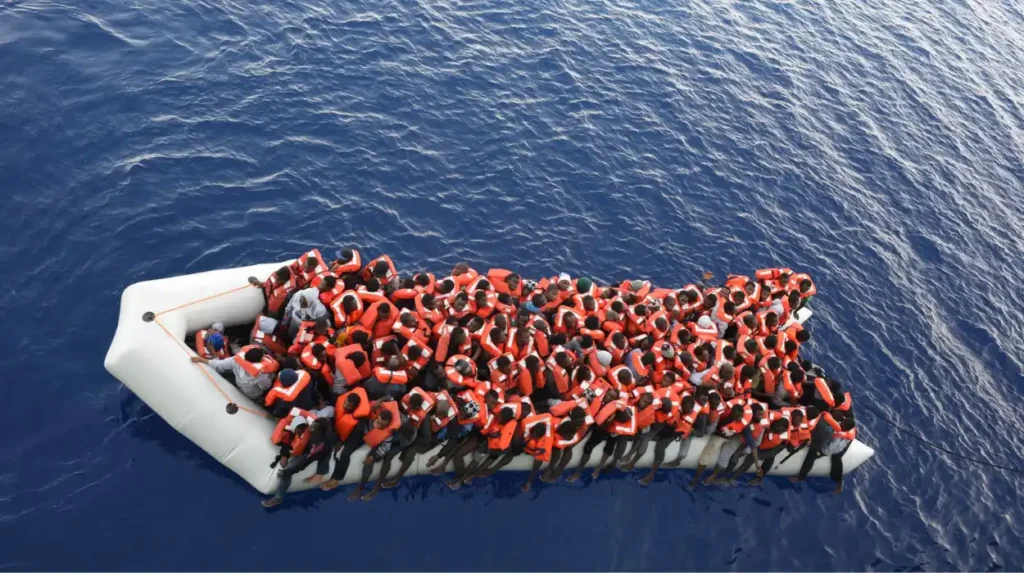
The 900-crossing incident in four days in early May 2026 represented a sharp increase in the already tense migration patterns between northern France and the United Kingdom. Almost 900 migrants arrived at the British coast in a narrow time interval, which coincided with a short time interval of favorable weather and sea conditions. The rush was after a fatal accident near Boulogne, where a small craft capsized, with at least two fatalities. This series of events depict how calm seas today are the source of the intense waves of crossings instead of flowing gradually.
This form of clustering is not just a coincidence but indicates a more profound structural change. Movement across the Channel has become a time-sensitive process, the migrants and the smuggling networks have adapted to respond to environmental and enforcement stimuli. This transformation was already present in the 2025 data, which registered more than 41,000 crossings. By 2026, the phenomenon had only worsened, with the crossings becoming more coordinated and risky, bringing the journeys into a tight slot that amplified both the success rates and the possible fatalities.
How Deterrence Policies Shape Crossing Behavior?
The deterrence actions taken by both the United Kingdom and France have unintentionally led to the crossing concentration. Heightened patrols, surveillance and enforcement activities have not stopped movement but rather caused it to be contained within shorter and more predictable time spans. The migrants are now waiting until the opportunities are favorable and this has resulted in sudden bursts like the 900 crossings in four days.
This trend is indicative of a strategic adjustment. Networks of smugglers pay close attention to the weather, tides, and patrol times. Once a feasible window is created, several boats are pushed out at the same time capacity to enforce is overwhelmed. What this produces is a surge dynamic in which deterrence has no effect in terms of reducing crossings, but instead restructures the timing and intensity of the crossings.
Increased Vessel Density And Risk Exposure
The other impact of deterrence is the increasing number of migrants per boat. Boats are becoming overcrowded and operators are looking to make the most out of each crossing they make. This method minimizes the amount of journeys that need to be made but causes a very high risk per voyage.
The 2025 numbers already reflected a doubling of the average number of passengers per boat as compared to previous years. This tendency has become more prominent by 2026, which makes every crossing a high-stakes situation. The incidents involving fatalities in the area around Boulogne highlight the potential of overcrowding, combined with the unpredictability of maritime conditions, to increase the chances of large scale loss of life.
Smuggling Networks And Tactical Evolution
Smuggling gangs have displayed a great level of responsiveness to enforcement measures. Instead of being derailed, they have streamlined their processes, with real-time information and logistical integration. Staging areas along the French coast are now used as hold-up places where migrants await mass departures.
This development brings out a great constraint of deterrence. Counter-adaptations are more likely to occur in response to policies that are aimed at restricting movement, which leads to a cycle where enforcement and evasion continue to increase. The 4 day example of 900 crossings in four days is a good example of how this cycle results in concentrated spikes as opposed to sustained reductions.
Policy Instruments And Their Operational Limits
Deterrence infrastructure has been a massive investment by both governments. The United Kingdom has been boosting financial aid to French coast guard operations, which has led to expanded patrols and surveillance systems. The agreements that will be signed in 2026 will aim at significantly increasing the number of officers deployed in key departure zones.
France has supplemented these initiatives with drones, surveillance systems, and other staff. The measures will be aimed at disrupting the smuggling process and preventing departures. Nevertheless, their success is limited by the magnitude and flexibility of migration networks.
The Gap Between Returns And Arrivals
One of the main tenets of deterrence has been the focus on the mechanisms of returns. The policies that encourage fast remittances of migrants to France are aimed at minimizing crossing incentives. However, the gap between implementation is still high. Although tens of thousands arrive every year, only a part of them is sent back within the frame of time.
Such a lack of balance nullifies the validity of deterrence. When the level of returns is low in comparison to the arrivals, the perceived threat of crossing would be less. This is considered by the migrants and the smugglers and they are strengthened to make the decision to go and take the journey despite their knowledge of the dangers involved.
Legal And Logistical Constraints
The effects of deterrence are further curtailed by operational issues. The laws that regulate asylum and human rights limit the scope to which the pushback can be carried out. Meanwhile, logistic coordination of the United Kingdom and France adds delays and inconsistencies.
These limitations form a system with visible but not decisive enforcement. The 900 crossings in four days serve to emphasize how easily these restrictions can be compromised when circumstances are to play in favor of migration flows.
Human Costs And The Politics Of Responsibility
The Channel is now one of the worst migration routes in Europe. The number of deaths in 2025, together with the events in the first part of 2026, demonstrate a consistent level of risk, which is tightly linked to the processes in the field of policy. The number of people in the boats, hasty departure and insufficient safety facilities are some of the factors contributing to high chances of accidents.
The deadly capsize off Boulogne is a chilling reminder that deterrence does not eradicate danger but redistribution of danger. Policies can also have the unwanted effect of pushing crossings into more compact and less predictable states.
Diverging National Pressures
The policy environment is influenced by political pressures on either side of the Channel. Migration is a key concern in the United Kingdom, with governments focusing on the dominance and minimization of migration. The fact that high numbers of arrivals persist however, challenge the effectiveness of these narratives.
In France, local governments have an alternative set of issues. The areas along the coasts need to consider the balance between enforcement and economic and social aspects and concerns, such as tourism and community relations. This dislocation makes it hard to coordinate and serves to reinforce the discontinuous quality of the response.
Humanitarian Concerns And Policy Debate
Humanitarian agencies claim that the present strategy places more emphasis on deterring as opposed to ensuring safety. They identify the lack of legal avenues through which asylum seekers can access as a major cause of irregular crossings. In the absence of feasible options, migrants resort to the smuggling networks despite the danger.
There is a core conflict in this view. The policies that are intended to deter movement might be at odds with the necessity to offer safe and controlled alternatives to those who need it. This tension is brought into stark relief in the 900 crossings in four days, which brings to life the human cost of policy trade-offs that are not resolved.
Structural Trends Beyond The Immediate Surge
The surge observed in early May 2026 is part of a broader upward trajectory. Since 2018, Channel crossings have increased significantly, with periodic fluctuations driven by enforcement changes and external factors. The 2025 figures confirm that high levels of migration have become a sustained feature rather than an anomaly.
This trend suggests that deterrence alone is insufficient to reverse the flow. Structural drivers, including conflict, economic disparity, and limited legal migration routes, continue to generate demand for crossing opportunities.
The Role Of Environmental Factors
Weather and sea conditions play a critical role in shaping migration patterns. Calm periods create windows of opportunity that are rapidly exploited. As forecasting tools improve, both migrants and smugglers are better equipped to plan crossings with precision.
This interaction between environmental and policy factors reinforces the surge dynamic. Even with increased enforcement, favorable conditions can trigger sudden spikes that exceed operational capacity.
Prospects For Policy Adjustment
The persistence of surge patterns raises questions about future policy direction. Incremental adjustments to enforcement may yield limited results if underlying dynamics remain unchanged. A more comprehensive approach would require balancing security measures with expanded legal pathways and international cooperation.
Whether such recalibration will occur remains uncertain. Political constraints and public sentiment continue to shape policy choices, often favoring visible enforcement over structural reform.
A Channel Defined By Cycles Of Pressure And Adaptation
The events surrounding the 900 crossings in four days reveal a system locked in a cycle of pressure and adaptation. Each new measure prompts a response from those seeking to cross, while each surge exposes the limits of existing policies. The Channel has become a space where timing, risk, and strategy intersect in ways that challenge traditional notions of border control.
As migration patterns continue to evolve, the central question is not simply how to reduce crossings but how to manage them in a way that aligns enforcement with safety and legal responsibility. The repeated emergence of high-intensity surges suggests that the current balance remains unsettled, leaving open the possibility that future crossings will follow the same compressed, high-risk trajectory unless a different approach begins to take shape.