Relations between France and Algeria have long moved between cautious cooperation and sudden diplomatic tension. Much of this dynamic stems from the unresolved legacy of the colonial period and the Algerian war of independence, which still shapes political narratives in both countries. The diplomatic rupture that followed the 2021 recall of Algeria’s ambassador to Paris demonstrated how historical grievances can rapidly translate into security and political consequences.
By 2023 and 2024, however, both governments began quietly rebuilding working-level contacts. Officials on each side acknowledged that geography, migration patterns, and regional instability require ongoing dialogue. Analysts noted throughout 2025 that the relationship was gradually shifting from symbolic disputes over memory toward practical discussions about security coordination, economic cooperation, and regional stability.
How historical memory continues to influence security decisions?
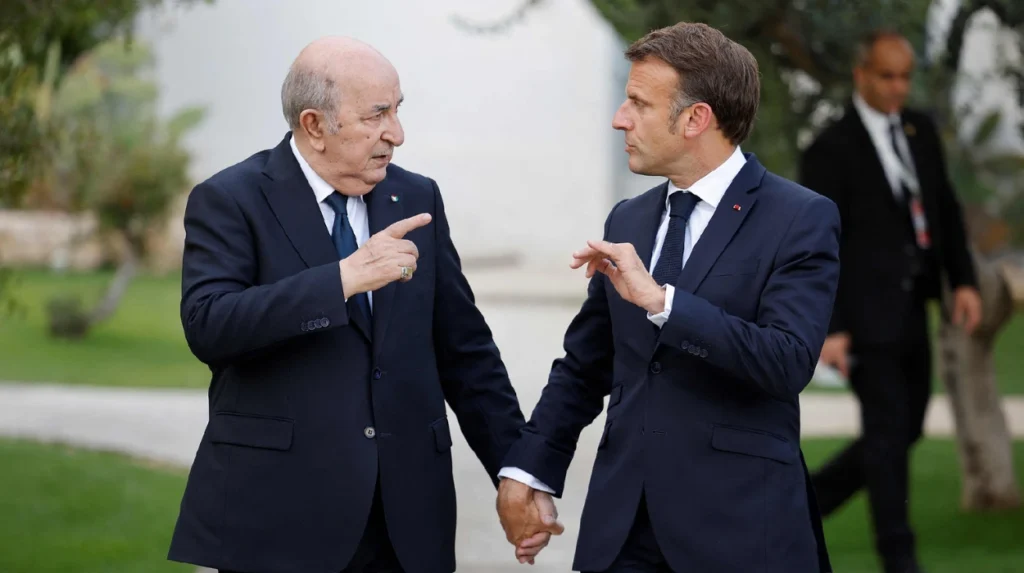
Historical memory remains embedded in policymaking. Algerian leaders frequently emphasize that any long-term partnership must include recognition of the colonial past and access to archival records related to wartime disappearances. Statements from Algerian officials often describe the need for France to address what President Abdelmadjid Tebboune called the importance of confronting the past with “honesty.”
In France, political leaders must balance acknowledgment of historical responsibility with domestic debates about national identity and republican values. The issue frequently emerges during diplomatic discussions, illustrating how security cooperation cannot be entirely separated from historical narratives.
Renewed diplomatic engagement after years of tension
During 2025, diplomats from both countries resumed ministerial consultations and technical meetings covering migration, counter-terrorism, and regional security developments. While these discussions remained largely low-profile, they signaled recognition that a stable working relationship benefits both governments.
French policymakers have increasingly described Algeria as a key regional actor whose cooperation is necessary for addressing security risks in the western Mediterranean and the Sahel.
The Security and Energy Nexus Shaping Bilateral Relations
Energy cooperation remains one of the strongest structural links between the two countries. Algeria is among Europe’s major natural gas suppliers, and long-term contracts with European utilities—including French energy firms—have reinforced economic interdependence.
This energy relationship has taken on additional importance since 2022, when European states began seeking alternatives to disrupted energy flows from other regions. By 2025, planners within the European Union emphasized diversification strategies that included maintaining stable supply routes from North Africa.
Natural gas diplomacy and economic interdependence
Energy partnerships often create incentives for stability. Algeria’s state energy company, Sonatrach, maintains agreements with European buyers that depend on predictable diplomatic relations and infrastructure security.
For France, maintaining energy ties with Algeria helps strengthen broader European supply networks. For Algeria, access to European markets ensures continued revenue and strategic relevance in continental energy debates.
Infrastructure security and regional stability
Pipelines, LNG terminals, and maritime transport routes form part of a larger regional security architecture. Disruptions in these systems could affect not only bilateral trade but also energy markets across Europe.
Security analysts in 2025 frequently highlighted that protecting energy infrastructure requires coordination on intelligence, maritime monitoring, and crisis response planning. This reality encourages dialogue even during periods of diplomatic strain.
Regional Security and the Western Sahara Question
Beyond bilateral relations, France and Algeria are influenced by broader geopolitical developments across North Africa and the Sahel. Migration flows, militant networks, and political instability in neighboring regions have placed new demands on security coordination.
European policymakers have increasingly argued that regional stability cannot be achieved without engaging Algeria, given its geographic position and influence in North African diplomacy.
Migration pressures and Mediterranean security concerns
Algeria hosts and manages significant migration routes connecting sub-Saharan Africa to the Mediterranean. These dynamics intersect with European concerns about irregular migration and border governance.
French officials have described migration management as a shared policy challenge rather than purely a European security issue. Algerian authorities, however, emphasize that cooperation must respect national sovereignty and avoid portraying the country as a containment zone for European migration policies.
The geopolitical sensitivity of Western Sahara
The dispute over Western Sahara remains a persistent source of tension affecting France-Algeria relations. Algeria supports the principle of self-determination for the territory, while France has historically maintained close ties with Morocco.
This divergence influences broader diplomatic calculations. Algerian officials have suggested that France’s stance reflects older geopolitical alignments, while French policymakers attempt to balance relations across the region. Any stable security partnership would likely require careful diplomatic management of this issue to avoid renewed political friction.
Domestic Politics and the Colonial Shadow
Domestic political debates in both countries continue to shape how leaders approach bilateral relations. Public discourse in Algeria often emphasizes historical justice and national sovereignty, while political debates in France frequently revolve around identity, migration, and integration policies connected to the Franco-Algerian diaspora.
These internal dynamics mean that even routine diplomatic developments can take on symbolic significance in public discussions.
Algeria’s expectations for historical accountability
Algerian political leaders and civil-society organizations continue to call for expanded archival transparency and official acknowledgment of colonial-era abuses. These demands are framed not only as historical questions but also as prerequisites for building trust in future cooperation.
The persistence of these expectations ensures that memory politics remains a recurring element of diplomatic engagement.
France’s domestic political balancing act
French governments face competing pressures when addressing colonial history. While symbolic gestures acknowledging past violence have been made in recent years, policymakers must also respond to domestic audiences wary of reopening historical debates.
The presence of a large Franco-Algerian community in France further connects domestic politics with foreign policy decisions, making bilateral relations a topic of national conversation.
The Limits and Possibilities of a Post-Colonial Security Partnership
Building a stable security partnership between France and Algeria would require navigating a complex strategic landscape. Both countries maintain relationships with multiple international actors, including the United States, Russia, and regional partners, shaping how they approach cooperation.
By 2025, analysts increasingly suggested that any partnership would likely remain pragmatic rather than formalized through a comprehensive security alliance.
Competing geopolitical influences in North Africa
Algeria’s foreign policy reflects a multi-directional approach, balancing relations with global powers while maintaining independence in defense procurement and regional diplomacy. French defense companies such as Airbus and Thales continue to engage with Algeria’s security sector, particularly in surveillance and aerospace systems.
However, competition from other international partners has expanded Algeria’s options, reducing the likelihood of exclusive security arrangements with any single country.
Institutional cooperation versus informal coordination
Security collaboration between France and Algeria has historically relied more on informal communication and selective cooperation than on formal treaties. Intelligence exchanges and crisis coordination have occurred when interests align, particularly regarding Sahelian security threats.
Experts in 2025 argued that sustainable cooperation may depend on strengthening institutional frameworks that can withstand diplomatic disagreements. Such mechanisms could include joint working groups, coordinated crisis planning, and structured dialogue on regional threats.
Strategic Outlook for France and Algeria in 2025–2026
As geopolitical conditions continue to evolve, both governments appear increasingly aware that their relationship cannot be defined solely by historical disputes. Economic realities, regional instability, and shifting alliances encourage pragmatic engagement even when political tensions resurface.
Diplomats and analysts observing developments during 2025 frequently emphasized that stability in the western Mediterranean will likely depend on maintaining at least a baseline level of cooperation between Paris and Algiers. Whether this cooperation evolves into a more structured partnership remains uncertain, yet the gradual return to dialogue suggests both sides recognize the strategic value of keeping channels open while managing the complex legacy that continues to influence every step forward.