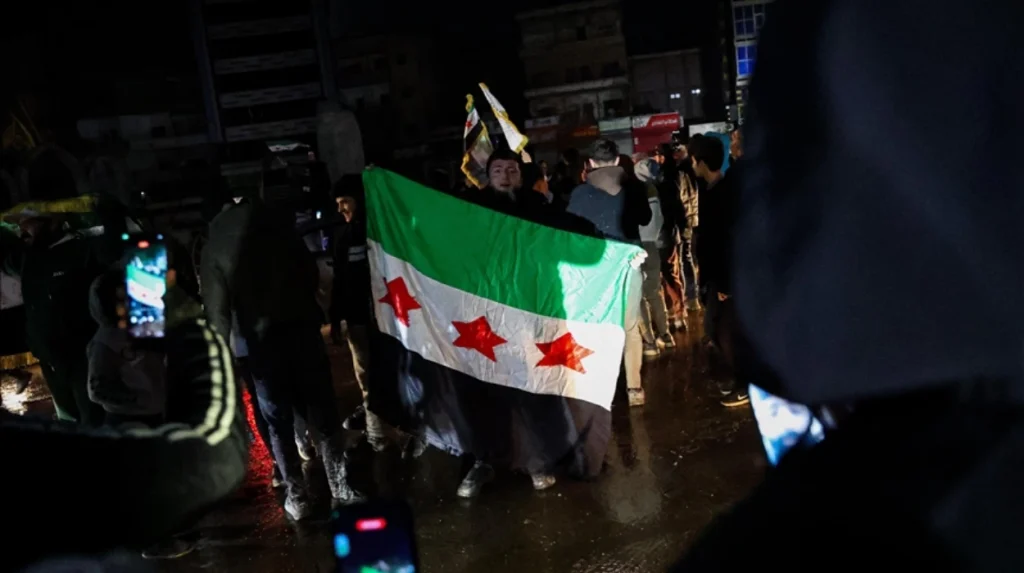
The French government’s reaffirmation of its solidarity with the territorial integrity of Syria and the Syrian transition after the integration agreement signed between Syrian president Ahmad Al-Sharaa and SDF head Mazloum Abdi is more than just diplomatic. This is because it is in line with French larger strategic visions in the Syrian state after the war.
The French message put a strong stress on the unity and the necessity for the integration of the Syrian Democratic Forces in the deal and described this moment as “a crucial moment in the future of Syria.” Nevertheless, in the light of this message and the negotiation procedure, it can be revealed that the French government keeps trying to play an active role in this conflict as well, even if the conflict has seen the intervention of the Russian State, Iran, Turkey, and the US as decisive players.
France’s Long-Standing Role in Syria
Historical involvement of France in Syria has greatly influenced its present policy. Historically, a strong presence of France in the Middle East has existed since the French Mandate following World War I. Currently, it has continuously tried to promote its interests. When the Syrian conflict broke out, it was evident that France was one of the most vocal Western powers vociferously criticizing the Syrian regime over its violation of human rights and support for opposition forces.
It also took part in the coalition against ISIS, led by the US, in terms of intelligence and logistical means. At the same time, it increased its humanitarian and financial assistance to Syrian refugees in neighboring countries. In doing so, France emerged as one of the key outside actors, in a position to influence the humanitarian and political processes in the region.
The Integration Deal: A Shift in the Syrian Conflict
However, the agreement reached on Jan. 18 has led to the end of a military campaign conducted by the Syrian government, which had regained ground in eastern and northeastern Syria following continual violations of the deal by the SDF. The agreement comprises a ceasefire and the integration of the SDF into the Syrian state institutions, where the latter will move east of the river Euphrates.
Even as this is portrayed as a restoration of sovereignty by Damascus, this agreement also illustrates that the SDF understands that it cannot maintain an autonomous military and political presence in this region without international support, and that US support for this end had been highly ambiguous. While this agreement will certainly stabilize this region, this does not address any of the political grievances of the Kurds.
France’s Strategic Motives: Containing Turkey and Preserving Regional Order
France’s commitment to the integration agreement is thus a result of strategy and political insights for two reasons. One, France has always been opposed to the fragmentation of Syria, as it believes that it leads to regional instability and a new source of threats for its own security. The creation of an independent Kurdish state will change the dynamics of the power equation in the Middle East and will hammer away at a possible Turkish military attack against the Kurds.
France has tried to balance out the influence of Turkey in Syria and has also condemned their actions against SDF. By supporting a political solution which leads to the reintegration of SDF under the government’s control, France seems to support a solution which lessens Turkey’s intervention and asserts centralized authority. France is also taking advantage of its position as an important European player in Syria, due to the withdrawal of US military influence in the region.
The Question of Legitimacy: Supporting Assad Without Accountability
However, there are many questions raised regarding the nature of France’s commitment as expressed in its statement. While the French government has been adamant that it is committed to political transition and unity, its stance on recognizing the authority of Damascus has the implicit task of recognizing Assad’s régime as the political authority for Syria. This is despite Assad’s régime being widely accused of human rights abuses and war crimes.
In addition, the fact that France is supporting the opposition implies that the pursuit of stability rather than justice is taking place. France has always advocated for human rights in Syria. However, the latest stand the country has taken appears to be leaning towards geopolitical rather than democratic and humanitarian policies to control chaos in the region.
SDF’s Declining Leverage and the US Withdrawal
This agreement also emphasizes how international support for the SDF is far from certain. The SDF has been one of the most integral partners of the US in the combat operation against ISIS, with their autonomy partially sustained by American military support. In a context where the United States is gradually withdrawing, leverage for the SDF decreases, and the integration deal is a pragmatic necessity rather than a free-willed choice.
France’s support could thus be seen as one aiming to fill the vacuum left by Washington, although it equally reflects the limits of European influence in Syria. Indeed, Russia and Iran are the dominant power brokers, with Damascus’ sovereignty increasingly supported by Tehran and Moscow. In that respect, French influence would be relatively symbolic given that the actual balance of power lies in the hands of Russian military presence, Iranian militia networks, and Turkey’s regional ambition.