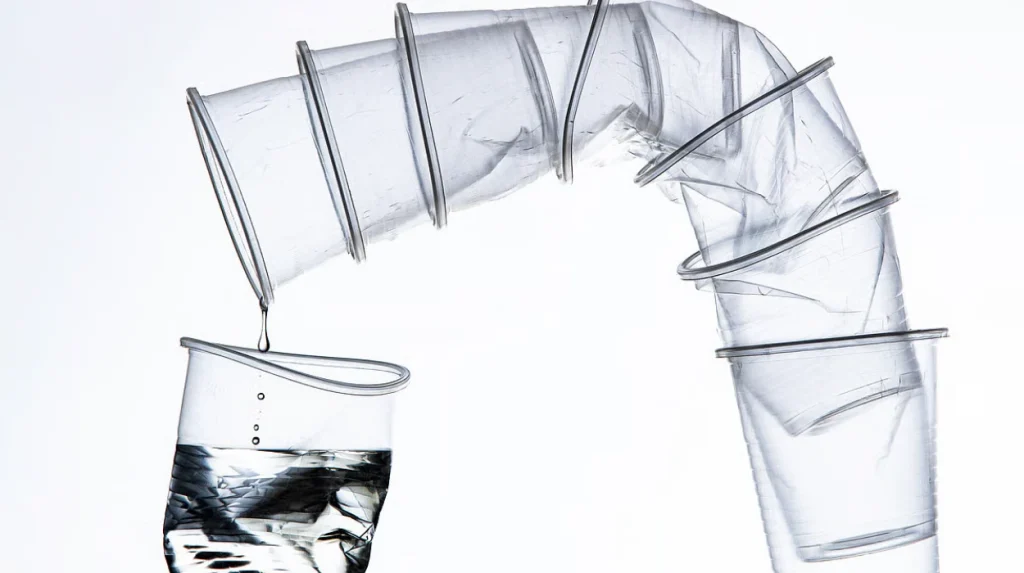
The French government postponed its ban on single-use plastic cups from January 1, 2026, to January 1, 2030, citing technical challenges in developing viable alternatives. This decision, announced via an official decree on December 30, 2025, reflects ongoing tensions between environmental ambitions and industrial realities in France’s anti-plastic agenda.
Policy background
France has pursued aggressive measures against single-use plastics since the early 2010s, driven by EU directives and domestic laws emphasizing circular economy principles. The 2020 Anti-Waste Law for a Circular Economy (AGEC) mandated phased bans, targeting plates, cutlery, and straws by 2021, with cups and lids originally slated for 2025 before shifting to 2026 amid supply chain adjustments. This legislation aligns with the 2040 goal to eradicate all single-use plastics, building on earlier successes like the 2016 plastic bag ban and 2022 fruit-vegetable bag prohibition, which reshaped retail habits and reduced waste by millions of tons annually.
The cup ban formed part of a broader “polluter pays” framework, imposing eco-fees on non-compliant items to fund recycling infrastructure. However, enforcement gaps emerged; the DGCCRF consumer agency reported in 2024 that 20% of inspected firms in 2023 violated rules, often by relabeling plastic products or misrepresenting “plastic-free” claims. These precedents underscore a pattern: ambitious timelines clashing with practical hurdles, prompting iterative delays while maintaining long-term commitments.
Reasons for postponement
The core justification rests on a 2025 review by the Ministry for Ecological Transition, deeming the “technical feasibility of eliminating plastic from cups” insufficient for mass rollout by 2026. Alternatives like paper, PLA (plant-based bioplastics), or fiber composites face scalability issues, including higher costs (up to 30-50% more), inferior heat resistance for hot beverages, and leakage risks in high-volume settings like cafes and events. The decree specifies a 2028 reassessment of substitution progress, allowing post-2030 cups with “minimal traces” of plastic if needed, and grants businesses a 12-month stock clearance period from January 2030. Industry lobbying intensified pressures, with manufacturers highlighting supply shortages Europe produces only 10-15% of required alternatives domestically and dependency on imports vulnerable to global disruptions like Red Sea shipping delays. Economic analyses cited by officials project job losses in hospitality without transition time, estimating 50,000 roles at risk in France’s €20 billion coffee-to-go sector. This pragmatic pivot prioritizes compliance feasibility over rigid deadlines, echoing similar EU-wide delays on fishing gear and balloons.
Environmental implications
While the delay averts immediate chaos, critics warn it perpetuates plastic pollution, with France discarding 1.2 billion cups yearly, contributing to 300,000 tons of marine litter annually across Europe. Single-use cups, often PET or PP-lined paper, degrade slowly, releasing microplastics that entangle wildlife and enter food chains, as evidenced by 2024 Mediterranean studies showing 80% of beach debris as plastic fragments. Postponement undermines momentum from prior bans, which cut bag usage by 90% since 2016, per ADEME data, potentially slowing the 50% reduction target by 2030 under France’s National Low-Carbon Strategy.
Zero Waste France’s Manon Richert labeled it “regression under lobbying,” arguing reuse systems like deposit-return schemes in Germany achieving 98% capture rates are ready via investment, not excuses. Positively, the extra years enable R&D; innovations like seaweed-based coatings or aluminum-lined fibers could emerge, aligning with EU’s 2025 Packaging Directive revisions. Yet, without penalties, pollution hotspots like Paris streets may worsen, delaying biodiversity gains in rivers like the Seine.
Industry and economic impacts
France’s €5 billion disposable tableware sector employs 100,000, with cups comprising 25% of output; abrupt bans risked factory closures and SME bankruptcies, as seen in Italy’s 2023 cutlery transition displacing 5,000 jobs. The delay provides breathing room for 1,500 firms to retool, with government subsidies via France 2030 plan (€50 million allocated for bio-materials) fostering local production. Cost analyses project alternatives at €0.15-0.25 per unit versus €0.05 for plastic, hiking cafe prices by 10-20% and squeezing margins amid 3% inflation.
Hospitality giants like Starbucks and Costa adapted via paper shifts, but smaller vendors lag, with 40% citing supply unavailability in 2025 surveys. Export ripple effects loom; France supplies 20% of EU cups, and delays could cede markets to cheaper Asian imports, undermining competitiveness. Economically, it balances green transition costs estimated €2-3 billion yearly with stability, per Economy Ministry models, while incentivizing innovation hubs in Auvergne-Rhône-Alpes.
Stakeholder reactions
Environmental NGOs erupted in protest; France Nature Environnement called it “capitulation to polluters,” linking it to Big Plastic’s €10 million annual lobbying via trade groups like Citeo. Greenpeace urged immediate reuse mandates, citing successful pilots in Lyon recovering 70% of cups via smart bins. Industry welcomed relief; the Union des Commerçants de France praised “realism,” pledging €200 million in alternative R&D. Politically, Macron’s centrists defended it as “responsible ecology,” while far-left La France Insoumise decried “greenwashing,” and RN’s Jordan Bardella framed it as EU overreach harming sovereignty. Consumers split: 65% in IFOP polls support bans but prioritize affordability, with urban youth favoring sustainability over rural price sensitivity. The decree’s publication in the Journal Officiel quelled immediate panic, but petitions garnered 50,000 signatures by December 31, pressuring for stricter 2028 benchmarks.
Future outlook and reforms
Looking to 2030, success hinges on 2028 review outcomes, potentially advancing if bio-sourced polymers scale via EU’s €1 billion Horizon fund. France eyes mandatory 50% recycled content by 2028, mirroring bottle laws, and national reuse targets of 40% by 2030 per AGEC updates. Comparative lessons from Sweden’s cup deposit system (85% return) or Portugal’s fines (€500 per violation) suggest hybrid enforcement: subsidies plus audits to curb DGCCRF-noted cheats. Broader EU harmonization looms via 2026 Packaging Regulation, pressuring laggards. Risks persist climate events could spike plastic reliance but opportunities abound in green jobs, projecting 20,000 roles in biomaterials by 2035. Ultimately, this delay tests France’s leadership in sustainable policy, balancing urgency with achievability to meet Paris Agreement waste metrics.