In a new fighting back against drug trafficking, the United States introduced a massive military buildup in the Caribbean, covering such military equipment as advanced fighter jets, battle ships and submarines. Directed by President Donald Trump, this has been the biggest US military deployment in the area since the 1994 Haiti intervention, with more than 15,000 service people and significant naval combat vessels like the USS Gerald R. Ford. Warranting this was the counteraction of drug cartels and narco-terror patronises that Washington feels are operating in the waters between South America and the Caribbean basin.
The size and one-sidedness of the action, however, has come under growing questioning. France, which has various Caribbean colonies such as Martinique, Guadeloupe, and French Guiana, has made very serious reservations toward the legality and implications of the actions of the US. The increasing number of American fighter jets in the airspace and territorial waters of France has alarmed Paris that the international law is being broken and that it could cause the disruption of regional peace.
France’s legal critique and strategic stance
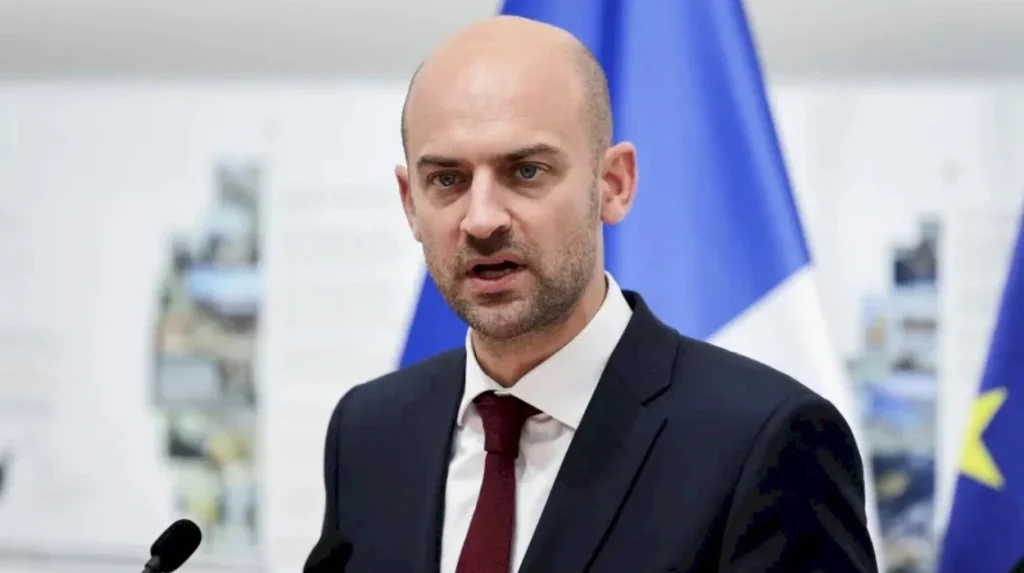
French Foreign Minister Jean-Noel Barrot publicly criticized France in October 2025, stating that American military activities seem to circumvent the multilateral supervision bodies and violate the sovereignty of its neighbors. France insists that the counter-narcotics operations should run based on open international agreements and not on executive orders. Barrot stated that security could not be achieved at the expense of legality, saying that disjointed strikes would jeopardize years of regional arrangements such as the cooperation procedures of the Organization of American States (OAS).
Sovereignty and international norms
The fact that the principles of international law are violated by the operations of France is the basis of the objection of France, who should obtain the consent of the host country or the permission of the United Nations to cross-border or near-territorial operations. Use of the American fighter jets and surveillance drones in close proximity of the sovereign airspace such as French and Venezuelan have been criticized as laying a bad precedent of extra territorial military behavior.
This criticism portrays a wider European unease with the reemerging US interventions on a unilateral basis. The diplomatic stance of France is reminiscent of its previous standpoints in the Sahel and the Persian Gulf, where Paris had proposed coalition-building in its decision-making and adherence to the law in the security activities
Regional security risks and the balance of power
The accumulation has escalated the tensions with Venezuela, which regards the US presence as an outright threat. President Nicolas Maduro has put together coastal defense militias and local militias, making the US action preparatory to an invasion. Venezuelan authorities allege that a number of US planes had flown in their air defense identification zone (ADIZ) in mid-October, which is the reason why more military bases were put on high alert. Such developments are dangerous in leading to miscalculation that may turn to open confrontation.
Responses of other Caribbean states have been mild. Although Trinidad and Tobago and the Dominican Republic have been advocating limited cooperation with the US in narcotics deals, others like Cuba and Suriname have criticized militarization of the area. It also has been given more incentive by the existence of the nuclear-capable bombers such as the B52 Stratofortress to stir fears that the campaign goes beyond counter-narcotics missions to strategic posturing.
Impact on French Caribbean territories
In the case of France, the issue does not only concern legal matters, but also humanitarian and security-oriented matters. Having over a million French people spread within its Caribbean regions, any increase and battle scenarios exposes the civilians to crossfire or displacement. Paris has been strengthening its naval watch around Guadeloupe and Martinique quietly in the pretext of precaution during the continued build-up process. Even unintentional infringement of French maritime frontiers, the French defense analysts caution, might cause a deadlock of bilateral ties with Washington, which has already been nervous following transatlantic disputes on Middle East policy.
The US rationale and operational framework
The US government has positioned the operation as part of its Expanded Maritime Shield program, which targets the narcotics trafficking routes in Colombia and Venezuela. According to the Pentagon, dozens of drug-laden ships have been destroyed, and transnational criminal groups such as the Tren de Aragua of Venezuela and the ELN groups of Colombia have been interrupted through airstrikes and interdictions. The Department of Defense demonstrates that all operations are surgical and legal under the mandate of self-defense and foreign collaboration in counter-narcotics.
Military assets and deployment scale
By November 2025, the Caribbean theater was expected to be equipped with several aircraft squadrons, including F-35 fighter jets, MQ-9 Reaper surveillance drones and advanced radar. The Gerald R. Ford Carrier Strike Group with its escorted destroyers and submarines can be seen as the logistic support of this campaign. Although the US claims that the operation is only transient and confined, its logistical depth is pointing to a semi-permanent military posture making it unclear to both friends and enemies whether the US has any long-term plans in the region.
Diplomatic consequences and international law implications
The criticism by France is an indication of the increasing transatlantic tension in terms of extent of unilateral military action. The French officials have also allegedly brought up the issue in both NATO and the EU security councils and urged Washington to follow the principles of collective decision making. The dispute can also challenge collaboration on larger defense issues such as joint activities in Sahel and shared intelligence systems.
According to Paris, even good security operations should be conducted in accordance with established norms so as not to justify such measures by other world super powers, especially China and Russia. The French position also shows an attempt to redefine the new European Union identity in foreign policies- law emphasis, multilateralism and restraint as opposed to unilateral militarization.
Legal debates on extraterritorial intervention
European legal experts have not been left behind as they have expressed the same fears that France has and remarked that the US campaign is in a grey area. In the absence of express UN Security Council approval or mutual defense alliances with the states concerned the campaign can be seen to violate the principle of sovereignty and non-intervention of the UN Charter. In addition, there are no clear operational delimitation, which makes it hard to hold to accountability, especially in collateral damage or airspace intrusion.
It has been argued by some analysts that the test faced by France will foster a wider discussion in the UN and regional bodies on how to modernize the legal frameworks that would regulate transnational counter-narcotics and counter-terrorism operations. This reform may restructure the manner in which states are coordinating in order to deal with global threats without violating international legal norms.
Prospects for cooperation and regional diplomacy
There are currently attempts to de-escalate the situation with the help of diplomatic tools. The early November had some secret consultations between French and US defense officials which aimed at creating communication channels and defining the scope of operations around French territories. France has suggested a regional task force that is supervised by both OAS and UN to organize the anti-narcotics activities legally and openly.
Meanwhile, Caribbean nations continue to advocate for inclusion in decision-making processes affecting their security. Their growing calls for regional sovereignty underscore a shared resistance to renewed patterns of great-power interventionism. The balance between legitimate security imperatives and adherence to international law will define whether the Caribbean remains stable or slides toward a new era of strategic rivalry.
The unfolding events reveal a fundamental question for global governance in 2025: can the imperatives of security justify unilateral action, or must even urgent threats bow to the rule of law? France’s critique of the US military buildup in the Caribbean may thus prove more than a bilateral dispute, it could mark a defining moment in the evolution of international law and the global order’s response to cross-border threats.