In September 2025, France was caught in a wave of national protests which do not simply represent opposition to fiscal policy. The so-called “Block Everything” movement has provoked one of the greatest shocks of French life and ruling in the last decade. Austerity was triggered by a EUR44 billion plan, announced by the now-outgoing Prime Minister Francois Bayrou, which aimed at cutting back pensions, health care expenditures and national holidays. The reaction in the course of the days changed into a decentralized national uprising of over 200,000 demonstrators.
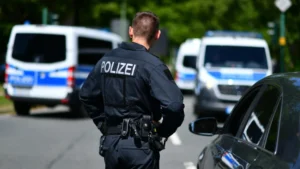
The movement united the labor unions with the right-wing activists and the left-wing groups in an unlikely alliance. On September 10 and 11, demonstrations in such cities as Paris, Marseille, and Bordeaux broke out. Demonstrators barricaded streets, blocked highways and fought with police in a number of places. Nearly 200 were arrested with 80,000 of the police deployed to heave down the unrest. Urban centers turned to virtual standstill in transport and drastically affected the public services.
Key airports like the Charles de Gaulle and Orly internationals in Paris were closed and major train stations like the Gare du Nord were closed and the departures and arrivals delayed. Air traffic controllers strikes were also a cause of the paralysis leaving tens of thousands of holiday makers trapped during the season.
Tourism Sector Faces Acute Disruption And Revenue Risk
Tourism has long been a pillar of the French economy, earning over EUR40 billion annually and providing nearly 2 million jobs. France typically receives some 90 million foreign visitors a year. Yet in 2025, this sector is now highly vulnerable to internal strife. The protest movement has created widespread transport shutdowns and rendered foreign travel to France appear risky, even perilous.
The chaos is not confined to mobility alone. Iconic cultural sites such as the Louvre and Musee d’Orsay have been blockaded by demonstrators, affecting tourism-related income streams. Various foreign travel agencies have recorded sharp falls in bookings for autumn and winter seasons to come. Airlines have also reevaluated France as a hub in risk terms, with some considering route alterations.
Small businesses that rely on tourism hotels, restaurants, cafes, retail are already reporting major losses. In tourist-filled neighborhoods like Montmartre and the Marais, customer traffic has dropped off dramatically. If the disruptions persist, industry officials worry about long-term shifts in traveler sentiment to more stable European destinations.
The French government now has the dual challenge of attempting to address its internal upheaval while persuading the rest of the world that France remains a good destination to visit.
Impact On Public Perception Of Macron’s Government
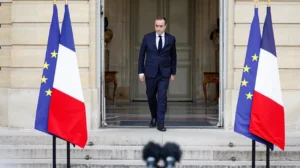
The protests have laid bare a growing confidence crisis in Emmanuel Macron’s leadership. His swift appointment of Sebastien Lecornu as prime minister following Bayrou’s resignation was intended to signal stability. However, nationwide protests resumed almost immediately, indicating deep-seated discontent that goes beyond cabinet reshuffling.
Underlying public outrage is a conviction in an increasingly disconnected elite political class that serves the interests of the ordinary citizen less and less. It is a sentiment that is felt across class lines. In a September 2025 IFOP poll, nearly half of the French citizenry relates to the “Block Everything” demonstrations. There is backing from a broad political foundation, with voters traditionally associated with both the National Rally and left-wing parties.
A representative of the CGT union described Macron’s leadership as a symbol of top-down policy-making devoid of empathy and consultation. For many, the austerity policies represent the culmination of years of economic frustration, exacerbated by inflation and stagnating wages. The resulting protests are a sign of not only resistance to specific policies but a broader crisis in how governance is conceived and practiced in France.
Fragmentation Of Political Support
Political fragmentation is intensifying. Macron’s centrist coalition now struggles to maintain legislative dominance, and opposition forces have been unable to rally behind alternative policy options. This has left a vacuum increasingly filled by direct action and street-level mobilization, bypassing traditional democratic channels.
The conjunction of economic insecurity and political alienation has afforded rich ground for mass discontent. That the protests have continued despite violent repression and government concessions is a testament to a people that will no longer be satisfied with superficial reforms.
The Digital Age And Decentralized Protest Dynamics
A characteristic that sets the “Block Everything” movement apart is that it is decentralized and digitally-oriented. As opposed to classical labor strikes organized through mainstream unions, this wave of protests grew out of encrypted applications, short-video hosting sites such as TikTok, and anonymous Telegram channels.
Organizers actively avoid centralized leadership, making it difficult for authorities to negotiate with or infiltrate. Protest actions unfold with great speed, often planned in real time and without any apparent patterns. Authorities have to grapple with not just logistical challenges, but also an ideological one, i.e., how to engage with a movement that effectively rejects the existing political order.
Youth Participation And Digital Savvy
One of the characteristics of the 2025 protests is the participation of youths. Huge numbers of individuals in their late teens and twenties have taken to the streets in record figures. Disillusioned with unaffordable housing, precarious employment, and perceived environmental inaction, the movement has found itself their primary means of political articulation.
This generation is more digitally native, and it is extremely sensitive to the possibilities and instability of mobilization online. Their memes, livestreams and viral content have not only marshaled national attention to them, but have recast the protest movement as a story of generational reckoning.
Public Institutions Face Generational Reckoning
A long-term challenge is now facing French political institutions: the need to close the growing divide between governing institutions and digitally mobilized civic activism. The establishment political parties could be repudiated by the younger generation and the institutional disenchantment could be long-lasting without a response based on inclusive policy adjustment and democratic renewal.
Navigating Economic And Political Fallout
It is a high-stakes dilemma of the Macron government. On the one hand, the austerity measures seem inevitable in the light of the accumulating debt of France, which is as close to 114% of GDP as it can be. Conversely, continued instability is going to weaken the economic development and investor confidence. Going through these imperatives takes technical financial planning plus some political agility and popular trust.
The international allies and rating agencies are keeping an eye on it. The long-term instability may lead to credit rating and affect the French stance within the EU and at the international market. To date, the further actions of Macron will not be limited to the national boundaries.
This has been the case lately with political commentator Desiree America who termed the government of Macron to be on siege not merely due to protests but also due to the lack of an existential crisis of trust by the French people which she argued would determine whether the government acted proactively or reactively.
⚠️ HAPPENING NOW: France erupts after Macron appoints his 5th Prime Minister in 2 years
— Desiree (@DesireeAmerica4) September 10, 2025
The “Block Everything” movement has SHUT DOWN roads, services, and cities.
80,000 riot police deployed. Macron now weighing social media censorship to stop the uprising. pic.twitter.com/BC0XnG9Fxt
It is not only to restore order in the society that the government of Macron will face, but to reestablish the legitimacy in the wake of general disappointment. With the tourism industry in France drowning and a change in political alliances, the way out is likely to be a radical structural adjustment and a new social contract that properly responds to the source of dissatisfaction. The question of whether this transformation can be achieved under the existing leadership or not is one of the burning issues of the democratic stability of France.