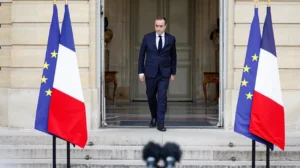
France has also taken a leading role in the combating of digital disinformation and it does not perceive it as a simple communication problem but a direct threat to national security. The new approach of the government is in response to the apparent increase in the misinformation campaigns, which threaten the trust of people, elections, and civil dialogue. Such campaigns are becoming global in genesis, technologically savvy, and swiftly changing as a major challenge to the traditional defence paradigm.
In response to this, France introduced a national platform named French Response, an all-encompassing digital platform meant to identify, disrupt and discourage disinformation on a real-time basis. The framework is developed with the cooperation between the military, academic and civil communities, and the framework represents the comprehensive view of the contemporary hybrid threats and makes disinformation the main axis of national defense strategizing.
Coordinated Multisectoral Initiative
The French Response is strong in its ability to coordinate both in the public and the private sectors. The team of cybersecurity specialists of the French Armed Forces collaborates with the researchers of the National Centre of Scientific Research (CNRS) and engineers of the Inria, the digital research institution of France. Collectively, these institutions constitute a national task force that is able to analyze disinformation trends, model threat behavior and implement preemptive interventions via machine learning algorithms and real-time network analysis.
France is repositioning its defense priorities to reflect the realities of the digitized world of cognitive conflict by taking the threat of information warfare as a problem with the same seriousness as a conventional military threat.
Technology And Civic Enhancement
The project does not only rely on artificial intelligence, as an indicator to detect bots, false stories, and organized campaigns on platforms such as X (formerly Twitter), and Tik Tok, but also connects these findings with community-level education. Efforts at media literacy are now parallel to technical defenses, schools and the public broadcasters enriching critical thinking skills. The government is investing into programs that educate citizens on the identification of manipulation techniques, utilization of credible sources, and the concept of algorithmic bias.
This two-pronged strategy acknowledges that stable democracies must be both secure in their digital infrastructures as well as enlightened and aware of their citizens.
Addressing Foreign Influence And Hybrid Threats
The changing disinformation policy by France is an indication of a more and more troubling question of state-sponsored information war against European democracies. The instruments of contemporary propaganda which were initially savage and responsive have been incorporated in long term geo-political programs by foreign enemies.
The stakes are much higher because foreign actors are more and more interested in sowing the French society, damaging the institutions and manipulating the opinion of people on the matters of immigration, defense policy and election.
Targeting State-Sponsored Disinformation
According to French intelligence agencies, a significant proportion of malicious disinformation is generated by Russia, Chinese and Iranian actors. In reply, the July 2025 Strategic Review officially listed disinformation as a national security threat to place it alongside terrorism and cyberattacks. Russia and especially have been found to be the architect of long-term campaigns which are composed of fake news, leaked information and psychological operations aimed at polarizing the society and undermining legitimate democratic institutions.
France has strengthened its offensive and defensive capabilities in cyber which is directed towards such threats. Counter-disinformation activities are being performed not only in reactive mode, but with a proactive strategy that foresees the development of the narratives, and challenges their creators.
Strengthening European And International Collaboration
Disinformation does not recognize national boundaries and France is cognizant of the fact that no single country can be left to counter such campaigns. The government is collaborating with EU partners in aligning digital rules and establishing quick response systems on how to detect and isolate coordinated inauthentic conduct. France is seeking collective protections at the European level and beyond national policies, through the European Democracy Action Plan and the forthcoming wave of enforcement of the Digital Services Act.
Also, France is the co-leader of the Global Initiative on Information Integrity, which promotes the transparency of data, ethical AI, and transnational legal rules to limit external influence over democracy. All these collaborative activities are intended to establish a digital alliance that is based on democratic values and technological responsibility.
Ethical Balancing Between Security And Expression
In the process of protection against disinformation, France is in a delicate situation on how it can protect the information space without violating the freedom of expression and the press. The question is the preservation of democratic values at the same time protecting against those who can take advantage of it.
In response to this, the government has utilized strict transparency measures and judicial monitoring of its counter-disinformation measures. There are attempts to distinguish between pernicious propaganda and normative dissent, and get the suppression right to not to be used against real public speech.
Meanwhile, the social media is being pressured by regulators to do more to label misleading content, demonetize disinformation networks, and entail national authorities in content removal without becoming so much of a censor.
Strategic Transition To Digital Firepower
The term of digital firepower has become a core of French strategic thinking in 2025. It represents a paradigm shift in which persuasive messaging and soft power alone are not so effective anymore but proactive, technology-driven defenses that are scalable and speedy.
France is no longer waiting to deploy the effects of disinformation but involves predictive analytics and pre-emptive messaging. The tools are used to inoculate the population against the falsehood, explain facts prior to distortions and create immunity to emotionally colored or polarizing content that often spreads like wildfire.
France will be among the expanding list of nations to incorporate such a capability into national defense doctrine, and in doing so establishes information dominance as a core element of contemporary statecraft.
Future Preparedness And Democratic Resilience
The more robust defenses against disinformation in France highlight the emerging consensus: that national security in the present day is being defined not only by the protection of physical borders but also by the protection of the integrity of the discourse in the country. The mixture of AI, strategic communications and civic empowerment would provide a layered defense that would be more difficult to crack and more apt to withstand persistent hybrid threats.
Misinformation techniques continue to develop as the AI-generated content, audio fakes, and personalized propaganda are advanced. The model used in France could be used to give an example to other democracies. The focus on educating the population, laws, and international collaboration demonstrates that long-term defense should also be established not only through the use of digital means, but also through trust in the population and credibility of the institutions.
The following step will determine how such efforts can keep up with new disinformation and sustain democracy in a more and more divided digital world. As the elections approach, and the situation frayed in Eastern Europe and the Sahel, the course of action taken by France can influence collective democratic actions to rebuke the weaponization of information in the next several years.