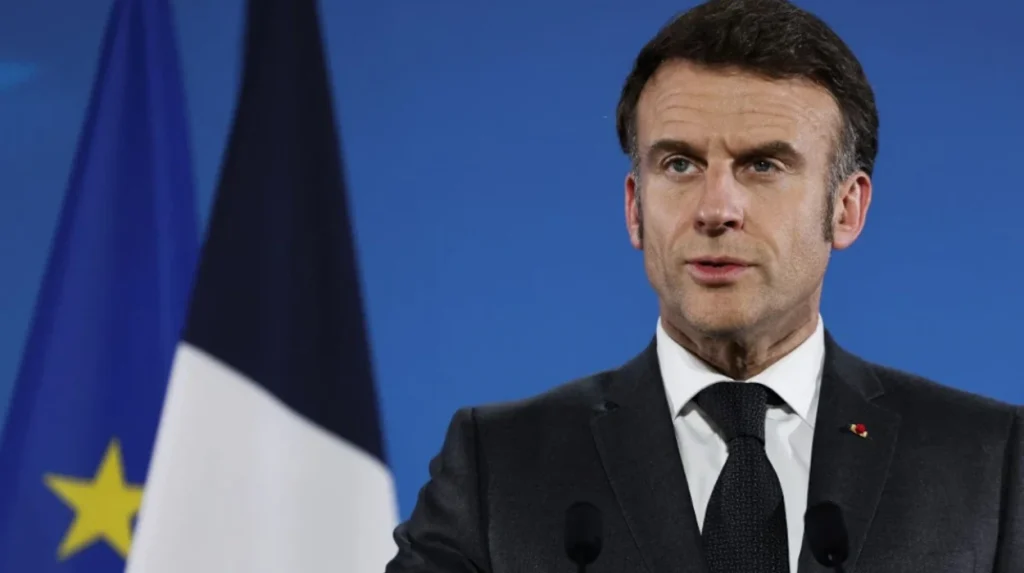
The killing that took place on September 8, 2025, at a bus stop in Ramot Junction, East Jerusalem has elicited severe international reactions, most of them led by French President Emmanuel Macron. The Palestine gunmen attack was successful and took the lives of six and wounded over a dozen other people during the morning rush hour. It was one of the worst single events ever in Jerusalem in recent memory and it only intensified the situation in an area already stretched thin by months of war.
The quick and decisive response demonstrated by Macron is more of a humanitarian response but it also demonstrates the continual diplomatic positioning by France in the Middle East. Due to the escalation of violence, political, security and humanitarian implications of such events are being examined way beyond Israel and Palestine.
The incident and immediate aftermath
Gunshots were fired in the Ramot Junction bus stop, a busy entrance in Jerusalem and in the north eastern part. Civilians were fired on by armed attackers who fired at commuters with volleys and were then neutralized by Israel security forces. One more suspect was arrested and it provoked a massive security operation of the nearby Palestinian areas.
There were at least six civilians who were killed and over a dozen injured, some critically, in the attack. The victims were a combination of both old people, individuals who are at work and the students, which stresses on the randomness of the violence. Israeli medics were on the site within minutes rushing the victims to hospitals and initiating blood donation campaigns as the city came to terms with the shock.
Government and military reactions
Reacting to this Israeli Prime Minister Benjamin Netanyahu positioned the event as an aspect of a war on multiple fronts, noting that national security forces were at maximum efforts in Jerusalem and the West Bank. Military checkpoints were strengthened and the surrounding Palestinian villages were monitored and restricted in their entry.
President of the Palestinian Authority Mahmoud Abbas gave a formal statement that condemned civilian violence, a practice reaffirming an old stand demanding that Palestine have its own state and East Jerusalem as its capital. But the political friction settlement expansion, military incursions, and failed negotiation- all of this was still front and center in the larger discussion.
Macron’s position and broader diplomatic implications
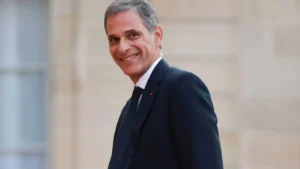
President Emmanuel Macron acted publicly within hours to declare the attack a heinous one that compromised peace and destabilized the efforts being made to seek a resolution. Macron reiterated that France was against terrorism of any kind and the urgent necessity to restart diplomatic activity in the Israeli-Palestinian controversy. He emphasized the continued engagement of France in respect of the adherence to international law and helping to find a two-state solution.
This individual has addressed the issue with the focus on the seriousness of the assault and the response that should be offered by the international community:
France strongly condemns the terrorist attack that has just occurred in East Jerusalem.
— Emmanuel Macron (@EmmanuelMacron) September 8, 2025
I extend my deepest condolences to the families of the victims and to the entire Israeli people.
The spiral of violence must come to an end. Only a political solution will bring back peace…
The remarks by Macron indicate a greater panic by the rest of Europe about the accelerating instability within the region. France has long been a balancing player in the denunciation of terrorism and support of Palestinian rights and international mediation. The recent violence, however, upped the ante of any external power, which would have been interested in the de-escalation of tensions, in a diplomatic manner.
France’s evolving Middle East role
France has also had a strategy of active involvement in Middle East diplomacy under the leadership of Macron. This consists of facilitated ceasefire talks, condemnation of unlawful growth of settlements, and persistence of dialogue with both the Israeli and Palestinian governments.
The balancing act of France is complicated by the attack, however. Macron is under both national and international pressure to both hitch up to counterterrorism operations and at the same time not to estrange pro-Palestinian groups both in the country and internationally.
Rising challenges in Jerusalem and the wider region
What happened at Ramot Junction was not the first shooting this year alone that has been characterized by violent upheavals. All through 2025, Jerusalem has been a flash point. Military incursions by the Israeli troops in the West Bank, bloody clashes with settlers, as well as Palestinian demonstrations have contributed to a flammable situation. Particularly, East Jerusalem has a symbolic and strategic resonance, and, therefore, it has become a frequent victim of both symbolic and targeted violence.
Within this setting, the vulnerability of civilians is increased. Lockdowns and emergency lockdowns, security alerts and panic have become a common aspect of life of residents of any faith and background.
Gaza, West Bank, and regional spillover
Outside Jerusalem, there is the case of Gaza and the region of West Bank that put even more pressure. Strikes in Gaza by Israel have escalated, and they are mostly as a reaction to rocket attacks or planned attacks. Simultaneously, the activities of the West Bank have ever increased, and dozens of arrests and seizure of property have added to the escalation of tensions.
There is a threat of a wider regional war. Neighboring states have called on restraint, diplomatic missions are on the alert. According to international humanitarian organizations, it is getting harder and harder to work in the affected regions due to both logistical and security restrictions.
International and domestic responses to violence
Reactions to the East Jerusalem shooting range in severity, with some governments worldwide maintaining a low-key stance, others emphasizing it more, and some levelling an outright condemnation of the shooting. The U.S. restated the right of Israel to conduct self-defense, whereas the European Union stressed enough reaction and the rule of law. The call by regional powers like Jordan and Egypt has been less emphatic and this is because it is cognizant of their internal stability.
In the UK and other European countries, discussion has escalated on how terrorism is to be defined and reacted to particularly in the face of multifaceted political agonies. Demonstrations in both the support of Israeli security measures and solidarity with Palestinians still have an influence on the minds of the people.
Local trauma and everyday impact
The human cost is still close and lasting to the inhabitants of Jerusalem. The victim families are struggling with loss, and survivors are struggling to recover both physically and psychologically. Security has been enhanced in the open places, be it in schools or shopping malls because the government is preparing in case of retaliatory attacks or copy cat attacks.
The experts in the city who specialize in mental health issues are recording increased levels of stress and consultations related to trauma cases among the civilians and more so among children who have witnessed the repeated violence. Political discourse is growing more polarized but faith leaders of all communities have urged people to calm down and live together.
The shooting in East Jerusalem in September 2025 is not just a personal tragedy of victims and their families, although it is a political and a diplomatic challenge that is felt much further than Israel and Palestine. The condenunciation of Emmanuel Macron gives a prominent European voice to the world outcry of de-escalation and peace, yet the way ahead is unclear. Whether the international community could use this moment of crisis to become the next mobilization of dialogue could define the course of this centuries old conflict and define whether violence in the future can be prevented.