Over 100 retired British and French diplomats have urged France and the United Kingdom to go beyond expressing concerns about the ongoing events and act in concrete ways regarding Israel because of the devastation that the Palestinians are experiencing and the hopelessness in regard to the possibility of an independent state for Palestinians. Over 100 retired diplomats and ambassadors in an open letter published in Le Monde on August 22, 2026, asked French President Emmanuel Macron and British Prime Minister Andy Burnham to utilize their political and diplomatic leverage in Gaza, West Bank, and East Jerusalem.
The signatories said
“Palestine is being erased before our eyes”,
warning that Israel’s military campaign in Gaza, settlement expansion in the occupied West Bank and destruction of Palestinian property were collectively undermining the territorial and political foundations of a future Palestinian state.
The intervention is significant because France and Britain are permanent members of the United Nations Security Council. The former diplomats argued that both countries have a particular responsibility to defend the rules-based international order, especially when they have publicly committed themselves to Palestinian statehood and the two-state solution.
A rare intervention by senior figures
These letters have been signed by 52 former French diplomats as well as by 50 former British ambassadors and high-ranking officials of the British diplomacy. Most of the signatories used to be involved in matters of the Middle East, United Nations and in general the foreign policy issues relating to Israel, Palestine and the broader region.
Among the British signatories are former UN ambassadors Jeremy Greenstock and Emyr Jones Parry and Edward Chaplin, a former director of Foreign Office responsible for matters of the Middle East. As far as the French signatories go, one can mention a former director of the Middle East Patrice Paoli, former diplomat Yves Aubin de la Messuzière, former ambassador Bernard Bajolet, former director of the Middle East Denis Bauchard and former French consul general in Jerusalem Frédéric Desagneaux. The weight of their appeal is much higher than a regular political petition because all of these people worked in the organizations that make and implement foreign policy of the countries concerned.
The diplomats said France and Britain had recognised the State of Palestine in 2025, but argued that recognition would remain largely symbolic unless followed by measures capable of protecting Palestinian self-determination. In their view, recognition without enforcement risks accepting a Palestinian state in principle while allowing the territorial conditions needed for its existence to disappear.
Gaza at the centre of the appeal
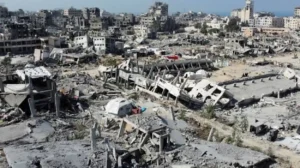
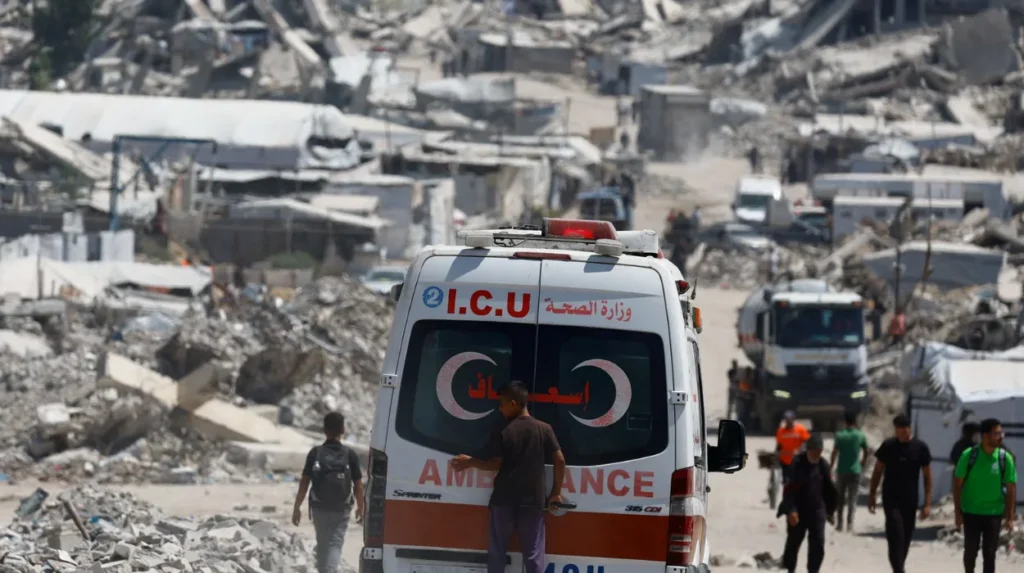
The former diplomats portrayed Gaza as an area wherein about two million Palestinians were restricted to roughly 30 percent of the Strip. They mentioned issues such as famine, shortage of medicine, homelessness and destruction of infrastructure in civilian areas. Figures provided in the letter indicated that more than 1,200 Palestinians had been killed since the ceasefire began in October 2025. These figures were provided by the signatories and require attribution as it has become difficult to verify them due to restrictions on access to Gaza and also difficulty in gathering complete casualty figures.
The diplomats demanded unrestricted access to humanitarian organizations and called for a key role for the United Nations Relief and Works Agency, UN bodies and International NGOs. They also requested governments of France and Britain to punish anyone who tries to obstruct the provision of humanitarian aid. The diplomats also asked for access for the journalists, diplomats and parliamentarians. It has been suggested that international monitoring is important in a situation wherein statements regarding civilian casualties, aid provision, displacement and military behavior is politically contentious. This view is shared by many European governments and humanitarian organizations, who believe that despite the establishment of ceasefires that reduce the intensity of the fighting, destruction of housing, hospitals, schools, roads, water systems and administration can make it impossible for civilians to live.
Accusations over West Bank settlements
The letter links Gaza’s destruction to Israel’s policies in the West Bank and East Jerusalem. The former diplomats accuse Israel of expanding settlements, demolishing Palestinian homes and permitting or supporting settler violence.
They described these policies as actions that amount to “ethnic cleansing”, particularly where Palestinian communities are displaced and their land is subsequently made available for settlement development. This is a highly serious legal and political accusation. The term is not, by itself, a standalone crime under a separate treaty, but it is commonly used to describe the forced removal of an ethnic or national group from a territory through coercion, violence or intimidation.
The former diplomats said Israel’s settlement policy was not merely a dispute over individual buildings or parcels of land. They argued that the cumulative effect was the fragmentation of the West Bank and the removal of the geographic basis for Palestinian sovereignty.
They singled out the proposed E1 settlement project, which reportedly involves approximately 1,200 housing units. The development is strategically important because it would connect Jerusalem with the Ma’ale Adumim settlement area and could create a built-up corridor cutting across the West Bank.
For critics of the project, the E1 plan threatens to separate the northern and southern parts of the West Bank. Such fragmentation would make the creation of a contiguous Palestinian state significantly more difficult and could leave Palestinian communities divided into disconnected enclaves.
E1 and the two-state solution
The recent condemnations of the publication of construction tenders by Israel for E1 project by France, Britain, and nine other countries have been expressed. According to the Foreign Secretary of Britain, Ed Miliband, the E1 project represents a threat to the sustainability of two-state solution and he called on the charges of the Israeli chargé d’affaires in London, Daniela Grudsky Ekstein. The former diplomats urge Paris and London to go beyond the diplomatic protest and warn the firms, investors, and tender bidders that involvement in E1 project and other settlement projects would bring legal, business and reputational risks for them.
It is suggested that settlements construction is not supported solely by government’s actions but also by construction companies, financiers, insurance companies, real estate companies and investors. Consequently, actions towards those connections are aimed at increasing the practical costs of settlement expansion. The Israeli Foreign Minister, Gideon Sa’ar refused all international criticism and stated that Israel will not be passive, arguing that Jews have a right to live anywhere in Israel just like British have a right to live anywhere in UK.
The seven measures requested
The letter suggests a set of measures aimed at turning diplomatic criticisms into policies. First of all, the former diplomats asked France and Britain to comply with the decisions and obligations related to the International Court of Justice and the International Criminal Court. The former diplomats pointed out that such crimes as the alleged war crimes and crimes against humanity require more than political statements. Secondly, the letter calls for the suspension of the EU-Israel Association Agreement and the UK-Israel trade and partnership agreement due to the human rights clauses contained within those agreements. This demand will create some practical difficulties for France since it is a multilateral tool.
France can lobby the suspension and seek support from other member states, but it cannot change the agreement unilaterally as it was a bilateral treaty signed by France. Finally, both countries should suspend the supply of weapons to Israel and to stop any kind of military cooperation with that country. This measure may affect the defense deals, military training, intelligence relations, and export licenses.
Fourth, they called for unrestricted humanitarian access to Gaza, including access for UN agencies, international NGOs, journalists, diplomats and parliamentarians.
Fifth, they demanded a complete ban on trade with Israeli settlements, covering goods, investment, insurance, banking and other financial services.
Sixth, they urged France and Britain to warn businesses and investors against participating in E1 and other settlement-related construction or financing. Finally, they proposed making it an offence for French and British citizens to purchase property in Israeli settlements and called for the removal of charitable status from organisations that finance or support settlement activity.
Condemning Hamas while challenging Israel
The letter does not ignore the October 7, 2023 attacks. The signatories described Hamas’s assault as “heinous crimes”, while arguing that those attacks could not justify Israel’s subsequent “systematic policy of destruction” in Gaza.
This formulation is meant to show that criticizing Israel’s behavior does not mean supporting Hamas. The former diplomats tried to differentiate two different aspects: criminal responsibility of Hamas for attacking Israeli civilians and legal responsibility of Israel being the occupier and warring party. Nevertheless, the letter does not mention any disarmament of Hamas. It is likely to become a cause for criticism for Israel and for other states regarding that they consider Hamas’ military organization as an essential part of the problem.
It was stated before that Israel always claims that any sustainable solution should deny Hamas the ability to attack. The lack of details of the security plan, which is supposed to address the question of governing and securing Gaza, as well as rebuilding it after the war, remains unresolved. Despite this fact, the diplomats still claim that there should be unification of political, administrative and economical aspects of Gaza and West Bank; renewing of democracy in Palestine and elections should take place in all Palestinian territories. They believe that Palestinians have to make sure that the state acknowledged by over two-thirds of the world is democratic and respects the law regardless of the occupation.
Diplomatic pressure on Macron and Burnham
The appeal puts pressure on both Macron and Burnham to show that there are consequences to their acknowledgment of Palestine. France and Britain have criticized the growth of settlements and have warned of a humanitarian crisis, but the former diplomats say that criticism without sanctions has been ineffective against changing Israel’s policy. The dilemmas for the two men are hard. Economic sanctions and weapon bans can lead to a direct conflict with Israel, and cause disputes among their allies. It can also create a split among European countries whether the pressure could encourage negotiations or make them impossible. Those who support the letter will claim that the lack of consequence encourages the construction of settlements and undermines the authority of international law. They will present sanctions as a tool to stop the changes that can’t be undone.
Opponents will argue that unilateral European measures could reduce Western influence, harm Israel’s security and fail to address Hamas’s role. They may also contend that sanctions could harden positions and make future negotiations more difficult.