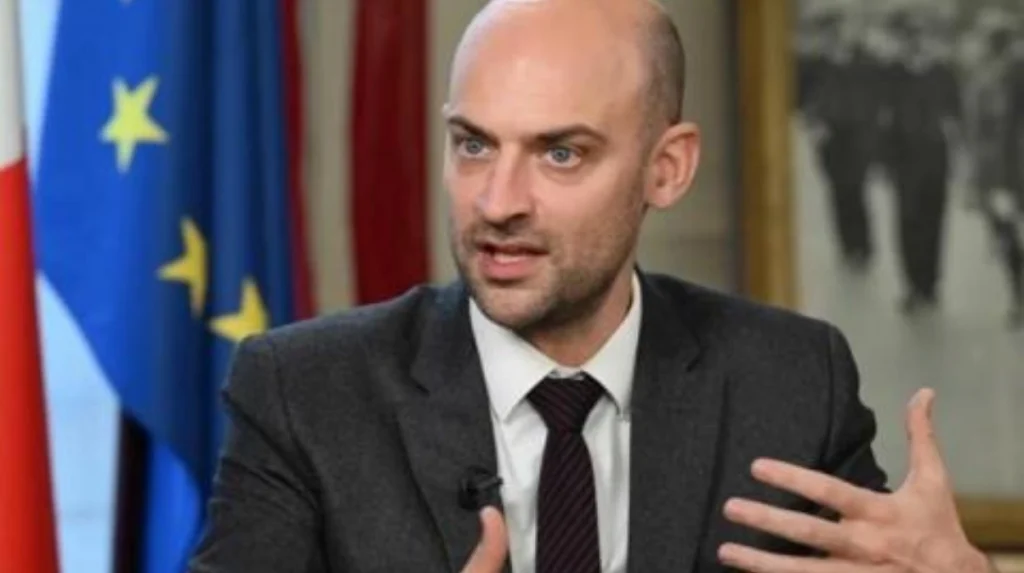
France furthered its diplomatic initiatives in 2025 in order to get closer to the Syrian Democratic Force (SDF), which demonstrated fully its status as an influential player in the tyranny of competing and uneven power across Syria. Led by the Foreign Minister Jean-Noel Barrot, this involvement can be regarded as a continuation of the long-lasting French involvement in stabilizing Syria without violating its territorial integrity and without neglecting the cultural rights of the minorities. In addition to this initiative, the last Paris encounter between Barrot and SDF Commander General Mazloum Abdi highlighted this role of France since it was trying to create neutral ground regarding future political arrangements.
The negotiations had taken place after a trilateral meeting that involved Syrian Foreign Minister Asaad al-Shibani and U.S. Special Envoy on Syria Thomas Barrack with France acting as an intermediary role. France continued its efforts at a political solution to the crisis in Syria which incorporates all elements of Syrian society, including the Kurdish-led SDF, into the general national framework. This is indicative of Paris deliberately taking a middle ground policy: it takes the side of Kurdish representation allowing it to be diplomatically sound with Damascus and other regional powers.
France, by endorsing the role of General Abdi in the future governing structure in Syria, confirms the role of SDF in taking down ISIS and in the securing of vast areas in northeast Syria. But the ambiguous language used by France is also the sign of a worry about the medium-term stability in the region which involves the necessity to avoid Syria breakage on autonomous enclaves.
Supporting Peaceful Political Transition and Kurdish Inclusion
The agenda of the policy of France advocates a March 10, 2025 interim agreement on SDF and the Syrian interim President Ahmed al-Sharaa. This agreement projects the slow integration of SDF forces into Syrian national security structure and political integration of northeastern regions as part of a united Syrian state.
This has resulted in the slow pace of implementation of the agreement which has been fraught with tensions between the Arab and Kurd factions which in turn made France increase its efforts and mediate more to ensure an expedited implementation of the agreement. The diplomatic initiative by Barrot is an indication of an intention to guide this precarious procedure in a favourable way and to establish circumstances under which a reassimilation of the Kurdish actors will take place without causing a wider sectarian or ethnic outcry.
There is another message behind the French approach to the issue that is important to share with the international community: peace in Syria can never be based on ignoring the legitimacy of the SDF. Paris includes the right of the Kurdish people into the discourse and appeases their concerns at the same time dealing with chronic irritation and creating confidence between itself and the SDF leadership at the same time trying to downplay local concerns especially those of Ankara and Tel Aviv.
Managing Regional Rivalries: Navigating Ankara and Tel Aviv
The Turkish Challenge
The fact that Turkey continues its military activities and criticizes the Kurdish autonomy projects severely complicates France’s diplomatic effort in the direction of the SDF. Ankara classifies the SDF as a proxy for the Kurdistan Workers’ Party (PKK), a group it has designated as a terrorist organization, and maintains security deployments in northern Syria to block the SDF’s expansion.
It is amidst this context that the French maneuvering is an urge to maintain a dialogue with the Turkish officials coupled with a move of strengthening the integration of the Kurds in a post war governance system in Syria. According to French diplomatic sources, back-channel talks with Ankara are silent but intended to avoid military escalation of the situation in the wake of Paris involvement with the SDF.
France has the opportunity to provide Turkey with greater guarantees that an unrestricted political empowerment of the SDF will not lead to a de facto Kurdish statehood by highlighting the non-separatist nature of the deals and assisting in ensuring Syria national unity.
Israel’s Security Concerns
The target of interest of Israel in Syria is mostly to counter Iranian-backed paramilitary forces and blocking the delivery of arms to Hezbollah. The SDF, posing no direct threat to Israel, is considered more objectively, but Tel Aviv is keenly aware of the impact changes in the Syrian balance of power would have in the entrenchment of Iran.
It is explained by the fact that the diplomatic calculations of France coincide with the interests of Israel to reduce the Iranian influence in Syria to a certain extent. With the help of diplomatic efforts on the part of Israeli and U.S. administrators, France hopes to sell SDF as a secular and stable force, which could both encompass and support a wider anti-extremism and anti-Iran security framework.
This triangle, that is Paris, Washington and Tel Aviv has been observed over the recent diplomatic activities, which has been concentrating on post conflict governance coordinated strategies, and the restriction or limit of this spillover to the region. In that sense, France has proven by facilitating a political transition that incorporates the SDF that stabilizing the northeastern belt through empowering of hostile parties would directly be counterproductive.
France’s Role as a Mediator and Facilitator
Hosting Negotiations and Building Dialogue
France is serious about playing the role of a credible mediator as it has promised to host reconciliation talks between the Syrian Transitional Government and SDF in Paris. Such negotiations are to verify some of the aspects under the March 10 agreement and therefore some of the critical aspects under the March 10 agreement would include force integration, language rights, administrative decentralization and management of resources.
France is also involved in facilitating intra-Kurdish unity. Equally, Paris, acting in collaboration with Washington, is also behind the provisions of bringing together warring Kurdish political formations such as the Democratic Union Party (PYD) and the Kurdish National Council (KNC) to develop a common position of negotiation. This internal solidity is very important in the development of lasting political structures and decreasing chances of internal divisions to undermine the peacebuilding efforts.
Reinforcing Multilateral Coordination
The French-American coordination of the diplomacy has been stepped up of late months. The July 2025 summit that comprised the participation of Foreign Minister Barrot, U.S. Envoy Barrack, and Minister al-Shibani acted as a platform to coordinate directions towards achievement of political stabilization. The unification of all three players at one platform is just an indication that they are committed to a certain political road map that gives prominence, though not all-inclusive, to the Kurdish constituencies.
Such multilateral engagements represent a sense of layered approach held by France to include diplomatic acknowledgment, humanitarian assistance and political lubrication that will bring long-lasting results. The climbing influence of France has the additional effect of constraining unilateralism by regional players, which can help a more rules-based system of resolution.
Challenges and Prospects on the Syrian Political Horizon
Political Distrust and Security Fragmentation
Persistent distrust between the SDF and the transitional government continues to complicate political integration efforts. The SDF’s strong territorial control and independent security apparatus have created power asymmetries that hinder genuine power-sharing. Damascus fears decentralization could open the door to further regional splintering, while the SDF remains wary of being sidelined or disarmed.
A central point of contention remains the timeline and structure for merging SDF forces into a national military under civilian oversight. France’s push for a phased integration with international monitoring is being considered, but faces resistance from hardline elements on both sides. Moreover, external influences—from Iran’s proxies to Turkish incursions—add volatility to an already unstable mix.
Navigating Humanitarian and Reconstruction Imperatives
Stabilizing northeastern Syria also requires addressing the economic and humanitarian toll of the war. Paris has pledged increased support through the EU for infrastructure rebuilding, education programs, and reintegration projects aimed at former combatants and displaced civilians.
France’s insistence on minority inclusion within post-war administrative frameworks is tied to its understanding that political exclusion often feeds extremism. By promoting inclusive local governance and cultural protections, France seeks to preempt future radicalization and create a viable peace dividend.
This person has spoken on the topic: Expert Mutlu Demirci recently noted that
“France’s role in Syria is a diplomatic tightrope, balancing Kurdish inclusion with regional sensitivities—a masterclass in conflict navigation amidst competing interests.”
France to Host New Syria–SDF Talks in Paris, Reaffirms Support for Kurdish Rights https://t.co/uRbEGbUlO7 pic.twitter.com/fSIjtDsYge
— Mutlu Civiroglu (@mutludc) July 26, 2025
France’s diplomatic balancing act in Syria showcases the intricate challenge of engaging the Syrian Democratic Forces amid a web of regional rivalries and internal divisions. By championing negotiated political solutions and minority rights, Paris navigates the difficult path toward stability and national reconciliation. The evolving dialogue in Paris and beyond will significantly shape Syria’s trajectory in 2025 and the fragile possibilities for peace in the years to come.