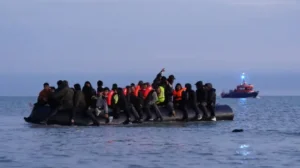
In 2025, immigration would continue to be a characteristic phenomenon in the demographic, economic and social environment of Europe. Although the level of migration flows differs among countries, the query whether a country of the EU accepts the most immigrants per annum points to much more general trends, defined by the course of history, policy, workforce requirements and the humanitarian reaction. This landscape must be looked at in terms of the interaction of asylum intake with legal migration channels, and national policies.
Nations within the European Union have common duties in terms of the emerging legal framework, but the national strategies vary in the tone, magnitude and form. The most popular receiving nations give us a clue on how immigration can contribute to the economic demands without facing the political issues that it brings in.
Leading EU destination for immigrants in 2025
Germany still has the highest number of immigrants in the European Union with the highest number of new arrivals every year. At the beginning of 2025, the European Union Agency on Asylum (EUAA) reported that Germany was still the most popular among asylum seekers and migrants, and this tendency has been maintained since the refugee crisis of 2015. Analysts justify the position of Germany by its good labor market, social welfare and rather comprehensive integration efforts.
It is also important to note that the worst-hit Ukrainians displaced by continued conflict live mostly in Germany, where they enjoy temporary protection status which improves their legal stay and work rights. This influx (together with routine immigration of skilled workers and family reunifications) all added to the immigration leadership in Germany.
Balance between humanitarian and economic pathways
The 2025 projection of the general immigration situation in Germany is characterized by a combination of humanitarian protection, legal labor migration, and mobility of education. Asylum seekers also represent a diverse group of people that represent different regions and countries such as Syria, Afghanistan and sub-Saharan Africa. Meanwhile, Germany keeps on advertising its Skilled Immigration Act and EU Blue Card framework where professionals in medicine, IT, and engineering can get their way in quickly.
Immigration volumes and composition
At the beginning of 2025, the number of irregular border crossings into the EU decreased by 20% at an early stage according to Frontex, but still, it is possible to see national discrepancies. The numbers of new arrivals were large in Germany through the managed schemes as compared to other countries where irregular influxes are more or the controls are stricter.
Immigrants who come to the country legally are labor migrants who fill the gaps in the health care, engineering, and tech fields. The policy focus on immigrants of high skilled level can be reinforced by the fact that Germany has a Blue Card program and expedited visa processing. Concurrently, with the changing world conflict, humanitarian intake proceeds with the diversification of asylum and resettlement of refugees based on country of origin.
Demographic and economic relevance
The demand of the aging population and industrial workforce in Germany is a major factor that has contributed to the immigration policies. Without migration the government projections indicate that the working age population will reduce by more than 3 million by the year 2030. This demographic fact supports the government in its adherence to the stable and controlled migration.
Policy environment and integration efforts
The immigration policy of Germany is a combination of restrictive entry and strong support mechanisms. The longer-term acceptance and economic integration is achieved through language training, vocational education, and welfare integration programs. This practice is indicative of a wider EU position that integration is a key aspect of sustainable migration policy.
Recent changes revolve around optimization of asylum processes, better integration into the labor market and increasing awareness of migrant rights. The legislative representatives of Germany strike a balance between political demands of tightening border control and adherence to humanitarian principles and demographic sustainability on a regular basis.
Emphasis on societal cohesion and workforce inclusion
The central role in the integration process is played by the municipalities, especially the mid-sized cities that have lost reference to population. Local programs are centred on housing, civic education, and employment. The federal government does keep up with pilot programs to connect language education with employment opportunities in other areas such as care work and logistics.
Comparisons with other EU countries
France, Spain and Italy too have influential immigrant populations, usually gathered in the urban and coastal cities with well-established diaspora populations. The Mediterranean ports in France are getting high humanitarian inflows and Spain is registering increased inflows associated with the African migration routes.
On the one hand, Italy is still coping with complicated routes along the Central Mediterranean, with more or less EU assistance. Such nations, though hospitable in terms of numbers, have been found to be crippled with regard to capacity to process and even systems of long term integration.
Varying levels of political support and reform
Other countries, such as Sweden and the Netherlands, focus on the idea of social integration and rights-based immigration, but overall they have lower intake than Germany. The countries in Central and Eastern Europe are still more restrictive which is a manifestation of the differences of policies in the Union.
There was an escalation of policy discussions in EU member countries in recent years as the growing labor and social pressures emerged alongside national political changes that challenge the effects of migration. Social pressures have led to tightening of migrant laws in nine EU countries, which call on reducing irregular migrant entries but have continued to face controversies.
The broader European migration context
There are on-going EU wide initiatives aimed at finding a balance between border control, return policies and humanitarian needs. The Migration and Asylum Pact of the EU (adopted 2024) is meant to unify the standards, enhance the solidarity of the member states as well as external borders.
The agreement involves accelerated asylum, relocation, and a system of responding to future crises. The fact that Germany leads in terms of accepting asylum seekers and offering them integration support is a major factor in the success of the pact.
Regional cooperation and burden sharing
The role of Germany affects the overall EU strategy as their policies provide a standard of equitable distribution and reception patterns. Although some of the member states are resistant to it, coordinated mechanisms like relocation quotas and joint funds are slowly being put in place.
Included in the 2025 migration data is the fact that, although Western Europe is the centre with 4 key destinations to immigrant flows, the migration situation and the migration opportunity is a European project that needs careful consideration of countries’ contexts and coordinated reaction.
Migration as a long-term strategy for European resilience
The debate about who in the EU accepts the most immigrants tells the tale of economic necessity, social policy, humanitarian action, and political determination. The ability of Germany to maintain its leadership is not due to its size and economic power alone but also its ability to adopt complex migration policies that focus on combating demographic loss and providing legal obligations.
With the increasing demographic pressures and continued global displacement, migration continues to be at the center of Europe in its ability to renew the economy and unify the social fabric. The capacity to handle various inflows and to foster the inclusion process will not only mark the level of national achievement but the development of the European project in general.
It is yet to be determined whether other EU countries can follow in the steps of such comprehensive strategies or strike different paths. What comes out clearly though, is that immigration in 2025 is no longer a marginal policy, it has become one of the main pillars of national policy as well as European identity.