Tariff threats have become a defining feature of France’s security and economic landscape entering 2026. The combination of renewed trade friction with the United States and disputes within the European Union over agricultural imports has placed Paris in a complex policy position. Following the 2025 U.S. election cycle, the administration of Donald Trump revived protectionist trade tools targeting European exports, including steel and aluminum shipments tied closely to French industry.
These tariff measures echoed earlier disputes between Washington and Brussels but unfolded in a more volatile geopolitical environment shaped by supply chain disruptions and inflationary pressures that persisted throughout 2025. French exports valued in the billions were exposed to potential retaliation cycles, while policymakers in Paris faced mounting domestic pressure to protect key sectors, particularly agriculture and manufacturing.
Transatlantic Trade Disputes Reemerge
Tariff threats intensified as the United States signaled additional duties on European industrial goods and agricultural exports. Officials within the European Commission warned that escalating tariffs could undermine the fragile recovery in global trade after the disruptions experienced during the previous year.
The European Union responded with its own countermeasures, reflecting the cyclical nature of trade conflicts between major economies. France supported a coordinated EU response while simultaneously pressing for exemptions that would shield sensitive domestic sectors from the harshest economic consequences.
EU Trade Negotiations And Agricultural Anxiety
Tariff threats were compounded by tensions linked to the EU’s trade agreement with the South American bloc Mercosur. The agreement expanded market access for agricultural products, raising fears among French farmers that imports could increase at a time when global trade disputes were already disrupting prices.
These overlapping dynamics created a scenario in which France faced pressure from two directions: external tariff escalation from transatlantic partners and internal trade liberalization within the EU framework.
Strasbourg Protests Reveal Security Dimensions Of Economic Grievances
Tariff threats moved from policy discussions to visible public unrest when protests erupted in Strasbourg, home to the European Parliament. Tractor convoys and coordinated demonstrations signaled the depth of concern among farmers who believed trade policies were undermining domestic production stability.
The protests became a symbolic moment in early 2026, illustrating how economic disputes can quickly evolve into public security challenges. Authorities deployed significant police resources to manage traffic disruptions and protect public institutions, highlighting the intersection between trade policy and internal stability.
Organized Farmer Mobilization
Agricultural unions including FNSEA and Jeunes Agriculteurs played a central role in coordinating demonstrations. Their messaging focused on what leaders described as unfair competition created by trade agreements and tariff exposure.
Digital platforms amplified participation, allowing organizers to mobilize large numbers of farmers across regions. The scale of the demonstrations reflected a broader pattern seen during earlier agricultural protests across Europe in 2024 and 2025.
Logistical And Economic Disruption
Convoys of tractors slowed regional transport corridors and disrupted supply chains feeding into urban centers. Transport unions and logistics firms warned that extended blockades could affect food distribution networks and cross-border commerce.
Security planners viewed the protests not only as demonstrations but also as stress tests for infrastructure resilience in a region that hosts major European institutions.
Public Safety And Crisis Management
Police deployments were designed to prevent escalation while allowing demonstrators to express grievances. Reports indicated only limited clashes, yet the concentration of protesters around key political institutions underscored how trade disputes can translate into public order challenges.
Officials also noted that managing such protests requires balancing civil liberties with maintaining essential transportation and public services.
Interplay Between Trade Wars And Domestic Political Pressure
Tariff threats are increasingly linked with domestic political debates about sovereignty, economic resilience, and the future of globalization. In France, rural communities often interpret trade disputes through the lens of economic security, particularly when agricultural incomes fluctuate due to external policy decisions.
During 2025, government policy papers began describing agriculture as a strategic sector comparable to energy independence. This framing gained traction as global commodity markets became more volatile and supply disruptions highlighted vulnerabilities in food production chains.
Retaliation Cycles In Global Trade
Trade disputes between the United States and the European Union have historically followed patterns of escalation and negotiation. The latest round of tariff threats has revived concerns among economists that retaliatory measures could reduce export competitiveness for multiple sectors simultaneously.
French policymakers therefore face the challenge of supporting EU-level negotiations while protecting domestic industries that could become collateral damage in broader geopolitical economic competition.
Agricultural Imports And Market Sensitivity
The expansion of agricultural imports linked to trade agreements has heightened sensitivity in France’s farming sector. Farmers argue that increased competition coinciding with tariff uncertainty creates unpredictable market conditions.
This issue has become central to political debates about how trade liberalization should be balanced with maintaining domestic production capacity and rural stability.
Regional Security Implications In The Grand Est Region
Tariff threats have had a particularly visible impact in the Grand Est region, where Strasbourg sits at the crossroads of European governance and cross-border trade. The region’s economic structure combines industrial activity with agriculture, making it vulnerable to fluctuations in both trade policy and market demand.
Security analysts note that the convergence of protests, economic uncertainty, and geopolitical tensions can amplify regional vulnerabilities. When economic grievances converge with symbolic political locations, demonstrations tend to attract broader national attention.
Cross-Border Economic Dependencies
Grand Est’s proximity to Germany and other neighboring markets makes it a hub for cross-border commerce. Any disruption linked to protests or trade disputes therefore carries implications beyond local economies.
Transport routes connecting industrial zones and agricultural producers to European markets pass through this area, reinforcing its strategic significance within EU logistics networks.
Political Mobilization And Electoral Context
Regional political leaders have increasingly linked trade policy with local employment concerns. Agricultural issues featured prominently in regional political debates throughout 2025, reflecting growing awareness that trade decisions at the European level can influence local economic stability.
Public opinion surveys during this period showed significant differences between urban and rural perspectives on trade liberalization, suggesting that tariff threats may continue shaping electoral narratives.
National Policy Responses And European Coordination
France’s government has attempted to balance domestic concerns with its commitments within the European Union. Emergency financial support measures for farmers were introduced alongside diplomatic efforts aimed at easing trade tensions and strengthening regulatory safeguards.
Policy discussions in Brussels have also explored mechanisms to ensure that imported goods meet environmental and safety standards comparable to those imposed on European producers. These debates intensified during 2025 as sustainability considerations became central to EU trade policy.
Fiscal Measures And Agricultural Support
Financial assistance programs were designed to stabilize rural economies affected by market volatility. Policymakers emphasized that maintaining agricultural productivity remains essential for both economic and strategic reasons.
At the same time, discussions around the future of the Common Agricultural Policy suggested that subsidy structures might evolve to address the pressures created by global trade competition.
Diplomatic Strategy Within The EU
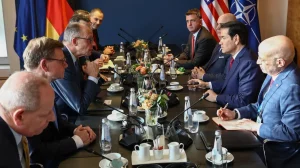
France has worked to build alliances with other member states concerned about trade fairness and market stability. Diplomatic engagement with countries including Germany reflects efforts to shape a coordinated European approach to tariff disputes and trade negotiations.
These efforts highlight the complexity of EU governance, where national interests must be reconciled with collective decision-making processes.
Broader Geopolitical Context Of Tariff Threats
Tariff threats affecting France are unfolding against a backdrop of shifting global economic alignments. Competition over resources, supply chains, and strategic industries intensified throughout 2025, influencing how governments perceive trade policy as part of national security planning.
Food production and agricultural resilience increasingly appear in defense and economic strategy discussions, reflecting lessons drawn from recent disruptions in global markets. Analysts note that these trends suggest trade policy will remain intertwined with security considerations across the coming years.
In France, the convergence of protests, trade negotiations, and geopolitical tension raises broader questions about how modern economies balance openness with protection. The unfolding debate suggests that tariff threats may continue shaping not only diplomatic relations but also domestic stability, leaving policymakers navigating a landscape where economic decisions resonate far beyond traditional trade arenas.