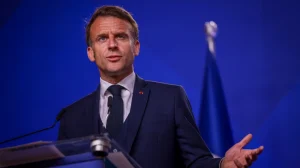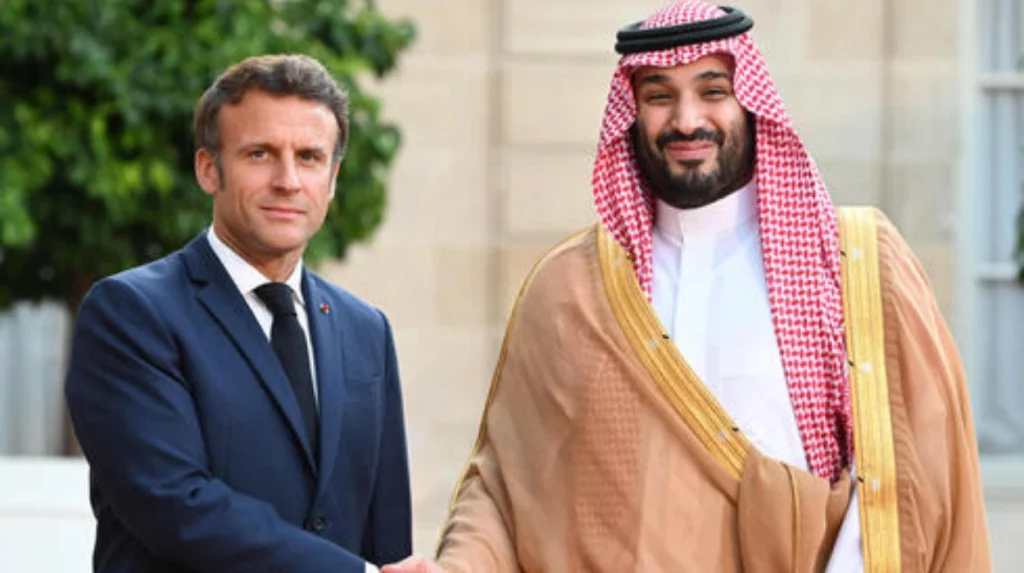
It was with these backgrounds that the France Saudi summit in July in the United Nations was designated as a major effort to inject life back into the waning Israeli Palestinian peace process. The High-Level International Conference for the Peaceful Settlement of the Question of Palestine was held under the co-chairmanship of France and Saudi Arabia against the background of the worsening humanitarian crisis in Gaza and mounting diplomatic exasperation with the stalling of the long-frozen two-state solution.
The main agenda of the summit was to have France promise the recognition of a Palestinian state in the UN general assembly meeting in September 2025. In the event of such realization, France would be the first G7 member to make this unilateral action that may turn to alter the balance of diplomatic efforts and international recognition. At the same time, Saudi Arabia supported more strongly and facilitated the mediation of new conditions of political union and worldwide recognition.
Gaza’s Crisis Driving Urgency and Action
Catastrophic Conditions Fuel Diplomatic Momentum
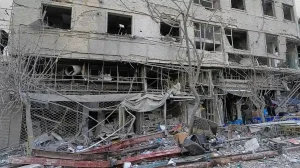
The humanitarian disaster in Gaza has escalated to a new barbaric extent by mid 2025. Humanitarian reports issued by the United Nations have confirmed that more than 500,000 are in the danger of famine. Simple foods such as flour and rice cost 30 to 50 times what they did before conflict and at least 20,000 under-nourished children have been treated since April in hospitals. The recent loss of at least 16 under-five children through hunger since last mid-July brought the world to alarm.
This sharp degradation has transformed the moral imperative that was once a long term concern in the realm of diplomacy. France and Saudi Arabia have both used the urgency of this collapse as an excuse to use a stronger and joint international strategy.
Growing Consensus for Statehood Recognition
Although the French decision was really controversial, it initiated a domino effect on the world of diplomacy. At the end of July 2025, 149 UN member states had recognized Palestine, with Portugal and Chile being the most recent. The United Kingdom and Germany have indicated that they may subsequently recognize it, and both have based their performance on some milestones in terms of governance and demilitarization.
Saudi Arabia, as a host and a geopolitical broker, stressed the unity of the Arab countries. Its minister of foreign affairs Prince Faisal bin Farhan, had said that Palestinian statehood is “non-negotiable” and that regional players should start getting on the same page regarding a clear peace plan. This has been an unprecedented move as some Arab countries are said to have conditionally called on the disarming of Hamas as a way of gaining better support in Europe.
Shifting Dynamics Among Global Powers
Reactions from the United States and Israel
Nonetheless, the summit was severely criticized by the United States and Israel in spite of the increased unity. U.S. officials dismissed the conference as one of diplomatic theatre, saying that viewing unilateral recognitions of Palestine would only extend the unstable condition and will hurt any prospective negotiations. Washington had complained that recognition in the absence of security commitments especially with regard to Hamas is likely to bring a divided power to legitimacy.
Israeli Prime Minister Benjamin Netanyahu even made it more personal, attacking France and their allies as the coauthors of fantasy politics which he said undermines the security of Israel. Israel sticks to the fact that recognition should only be achieved on the bilateral negotiations level and in the framework of the entirely comprehensive peace accords.
Diplomatic Risks and Strategic Calculations
Such criticisms show the geopolitical tightrope actors taking sides on the Palestine statehood question. This choice of France is not in favor of many centuries of Western consensus in 3 aspects: a final-status agreement should precede the recognition. But the advocates respond that such conditions are not possible in the present dynamics due to the long occupation history of Israel, and the expansion of colonies (settlements).
This FranceSaudi 2025 summit therefore reveals a rift within the conventional western alliance, an alliance where instances of humanitarian need are becoming more of a reason to diplomatically bend traditional norms.
Institutional Pathways and Economic Support
European Union and Structural Investment
Alongside diplomatic declarations, the European Union announced a €1.6 billion aid package earmarked for Palestinian governance, civil infrastructure, and institutional reforms for 2025–2027. This support is conditional on transparent oversight and coordinated governance between Gaza and the West Bank, an area that remains politically fragmented.
Palestinian Authority Prime Minister Mohammad Mustafa emphasized that political recognition must be accompanied by international protection and institutional assistance, warning that “paper statehood” without substance will offer little reprieve to Palestinians on the ground.
Governance and Unity Conditions
Efforts to bridge the divide between Fatah-led West Bank governance and Hamas in Gaza remain central. The summit outcome document, co-authored by France, Saudi Arabia, and EU representatives, called for the creation of a transitional unity government backed by UN monitoring and Arab League oversight. However, skepticism remains high over the feasibility of reconciling deeply entrenched rival factions.
While the proposal received verbal support from various states, the details of implementation—including security coordination and resource allocation—remain unresolved. The disarmament condition placed upon Hamas, though strategically appealing to Western audiences, risks complicating intra-Palestinian legitimacy.
Public Perception, Legal Mechanisms, and Global Norms
Role of Legal and Civil Society Voices
Human rights organizations have challenged the summit’s emphasis on recognition, arguing that legal and humanitarian protections must come first. Groups such as Amnesty International and Doctors Without Borders demand an immediate ceasefire, unrestricted humanitarian access, and accountability for war crimes allegedly committed during the ongoing conflict.
The International Court of Justice continues to hear allegations of genocide and forced displacement, further complicating state behavior. Several European legal scholars warn that recognition without resolution of these cases could inadvertently legitimize wartime impunity.
Media and Public Discourse on Symbolism
Public reaction to the summit has been sharply divided. In Europe and the Arab world, many view the France–Saudi initiative as a long-overdue corrective to decades of diplomatic inaction. Yet critics caution that symbolism—absent measurable change in Palestinian conditions—risks discrediting the recognition effort entirely.
This person has spoken on the topic: Journalist Larry Madowo noted that
“the summit’s political choreography may inspire optimism, but its test lies in delivering relief and legitimacy for a people still under siege.”
BREAKING: The first white South African refugees have arrived in the US after the Trump administration expedited their process due to "genocide" claims.
— Larry Madowo (@LarryMadowo) May 12, 2025
President Cyril Ramaphosa told me today that they do not qualify as refugees and he has explained that to Trump pic.twitter.com/ZKZTbP2tPy
Recognition Without Resolution?
The France-Saudi 2025 summit would be a political litmus test and a humanitarian milestone in the decades-long conflict between the Israelis and the Palestinians. It has refocused the attention of the world on the question of Palestinian statehood at the critical point of international crisis and shaken the international stagnation of those members of the international community resistant to disrupting the current diplomatic status quo. A tentative-yet-not-insignificant new era of international interaction has been ushered into being through recognition, financing, and conditional peace architecture.
The question is whether this impetus will be converted either into legally-binding commitments or practical policy reform on the ground or actual diplomatic transformation. Unless there is instant relief efforts, both humanitarian and political solidarity of Palestinians, and practical compromise of Israel and its supporters, the impact of the summit may well be restricted to the walls at the United Nations.
With an increasing number of states pondering their position towards Palestinian sovereignty, the dualism between international iconism and organization is the necessary opposition determining the legacy of the summit. The real test is whether diplomatic recognition is used as a stepping stone on the way towards enduring peace or whether it is one more landmark in the chain of proclamations that do not lead to change.