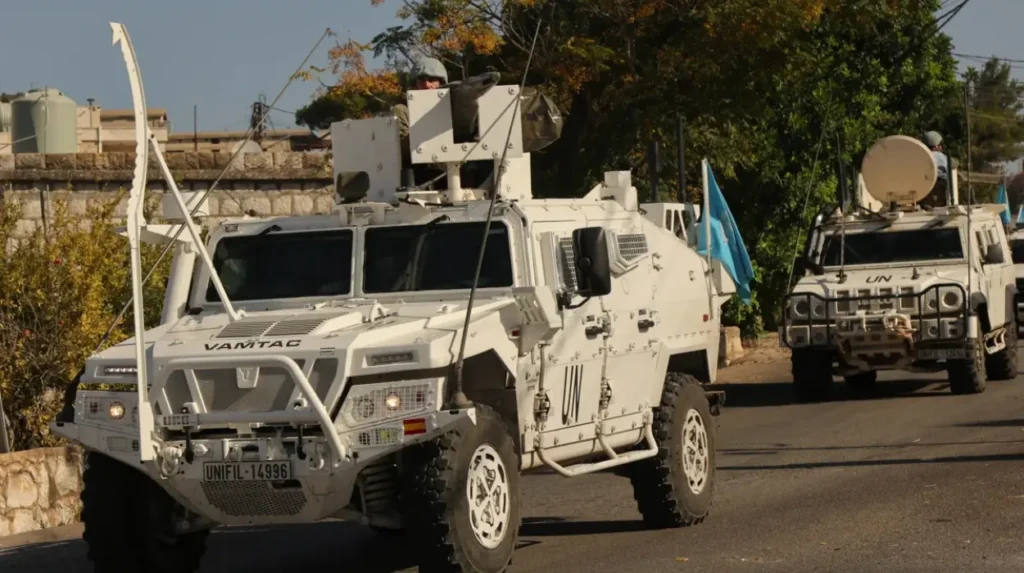
France’s call for an emergency meeting of the United Nations Security Council reflects a significant diplomatic escalation after Israeli military actions reportedly struck positions associated with the United Nations Interim Force in Lebanon (UNIFIL). The incidents over the March 29–30 period resulted in casualties among peacekeepers and heightened alarm within diplomatic circles responsible for monitoring ceasefire arrangements along the Israel-Lebanon frontier.
French Foreign Minister Jean-Noël Barrot described the events as “unacceptable and unjustifiable,” emphasizing that attacks or threats directed at peacekeeping personnel undermine established deconfliction mechanisms meant to prevent such incidents. France’s response underscores its dual role as both a troop-contributing country and a permanent member of the Security Council, placing it at the center of calls for accountability and operational guarantees for UN forces.
The diplomatic reaction also reflects broader concerns about the fragile security environment that has persisted since clashes intensified in late 2025. During that period, repeated exchanges between Israeli forces and Hezbollah raised questions about whether existing arrangements designed to protect UN personnel remain adequate under current operational pressures.
Background of UNIFIL incidents in southern Lebanon
The events that prompted France’s diplomatic intervention occurred near UNIFIL positions where international peacekeepers monitor ceasefire compliance under the framework established after earlier conflicts in Lebanon. Reports from field officials indicate that gunfire and explosions in the vicinity of UN sites led to fatalities among Indonesian personnel and injuries to others, while additional security incidents involved close encounters between Israeli forces and French contingents operating within the mission area.
UNIFIL’s presence south of the Litani River has long been intended to stabilize a region where local tensions can quickly escalate into wider confrontations. The mission’s operational mandate relies heavily on coordination between military actors in the area, making any disruption to those communication channels a source of concern for the United Nations and contributing countries.
Casualties and operational disruption
Peacekeepers stationed near Bani Hayyan and other southern Lebanese locations were caught in what UN officials described as rapidly evolving combat conditions. One Indonesian soldier was reportedly killed by gunfire on March 29, while additional fatalities occurred following an explosion a day later. Several others sustained injuries, prompting medical evacuations and internal reviews of security procedures within the mission.
French forces operating under the UNIFIL command structure also reported incidents involving what diplomats described as intimidation and dangerous maneuvering near their positions. While these encounters did not result in casualties among French personnel, they contributed to the urgency behind France’s decision to pursue formal discussions at the Security Council level.
Patterns linked to developments during 2025
The incidents echo a pattern seen during escalations in late 2025, when strikes and exchanges near UNIFIL observation points injured several peacekeepers from other contributing nations. At the time, the United Nations warned that increasing operational pressure around UN positions risked undermining the mission’s ability to function effectively.
International officials noted then that repeated incidents could erode confidence in deconfliction systems designed to protect peacekeepers. The recurrence of similar situations in early 2026 has reinforced concerns that existing safeguards may no longer be sufficient in a rapidly shifting battlefield environment.
France’s diplomatic strategy within the Security Council
France’s decision to convene an emergency session of the Security Council reflects a calculated attempt to elevate the issue from a bilateral dispute to a multilateral security concern. As one of the council’s permanent members, Paris possesses the procedural authority to bring urgent matters to the agenda, particularly those involving attacks on UN personnel.
By formally summoning Israel’s ambassador and issuing strong diplomatic protests, France aims to signal that incidents affecting peacekeepers represent not only a national concern but a challenge to the credibility of international peacekeeping missions. Officials in Paris have emphasized the importance of ensuring “complete freedom of movement” for UNIFIL forces, linking the issue directly to the obligations outlined in Security Council Resolution 1701.
Building a coalition among troop contributors
France’s initiative is also shaped by its coordination with other countries whose personnel serve within the UN mission. Indonesia’s involvement in the recent casualties has strengthened calls for a collective response, while European partners such as Italy and Ireland have previously expressed concern about operations near UN sites.
Diplomatic coordination among these states reflects a broader effort to ensure that peacekeeping missions remain protected during regional conflicts. This coalition-building approach mirrors similar diplomatic efforts seen during discussions in 2025 when several troop-contributing nations sought clearer guarantees for their forces in volatile environments.
Navigating differences among major powers
Despite broad concern about the safety of UN personnel, France’s push for a Security Council debate may reveal divisions among major powers. The United States has historically emphasized Israel’s right to conduct operations against armed groups such as Hezbollah, particularly when attacks originate near civilian or UN-monitored areas.
These differing perspectives could shape the tone and outcome of the council’s discussions. While many states support investigations into incidents involving peacekeepers, consensus on punitive measures or formal condemnations often depends on the strategic calculations of permanent members.
Legal implications for attacks involving UN peacekeepers
Incidents affecting peacekeepers carry significant legal weight under international agreements governing the safety of United Nations personnel. The 1994 Convention on the Safety of United Nations and Associated Personnel establishes obligations for parties in conflict to protect peacekeeping forces and respect their neutral status within operational zones.
United Nations Secretary-General António Guterres has previously described similar attacks as “grave violations” of international humanitarian law, highlighting the legal expectation that military operations must distinguish between combatants and protected entities. When deconfliction arrangements fail, the responsibility for investigating the circumstances often falls to both the UN mission and member states involved.
Investigations and accountability mechanisms
The UNIFIL command structure has initiated inquiries into the events near Bani Hayyan and surrounding areas to determine how the incidents unfolded. These investigations typically examine communication logs, operational movements, and compliance with coordination protocols established between military actors.
Findings from such inquiries may influence discussions at the Security Council, particularly if evidence suggests repeated failures in safeguarding peacekeepers. France has indicated that it supports transparent fact-finding efforts similar to those advocated after earlier incidents in 2025 involving peacekeeping contingents from other countries.
Broader geopolitical implications for regional stability
The diplomatic confrontation triggered by these incidents extends beyond the immediate issue of peacekeeper safety. Israel’s ongoing operations against Hezbollah form part of a wider security contest along Lebanon’s southern border, where cross-border attacks and retaliatory strikes have intensified since the latter half of 2025.
For Hezbollah, incidents involving UNIFIL can be used to reinforce narratives about Israeli military conduct, while Israel argues that militant activity near civilian and UN-monitored areas complicates operational choices. This environment places UNIFIL in a challenging position as it attempts to maintain neutrality while operating amid active hostilities.
Regional reactions and strategic calculations
Countries across the Middle East and Europe have expressed concern that further incidents could weaken the credibility of peacekeeping missions worldwide. Lebanon’s government, already dealing with internal political and economic pressures, relies heavily on UNIFIL to stabilize the southern border and prevent escalation into a broader regional confrontation.
Diplomatic signals from states including Iran and several European governments suggest a shared interest in preventing the situation from deteriorating further. However, the strategic rivalry underlying the Israel-Hezbollah confrontation continues to influence how each actor interprets the events and the appropriate international response.
Implications for the future of UNIFIL operations
Repeated security incidents involving peacekeepers could prompt discussions about the long-term structure and mandate of the UN mission. Some policymakers have raised questions about whether UNIFIL requires additional resources, revised operational rules, or stronger enforcement mechanisms to function effectively in an environment shaped by hybrid warfare and irregular armed groups.
Such debates are not new, but the current crisis has revived them with renewed urgency. The outcome of the Security Council’s deliberations may therefore shape not only immediate diplomatic responses but also the future role of UN peacekeeping forces in high-risk conflict zones.
A diplomatic test for international peacekeeping norms
France’s initiative places the spotlight on how the international system responds when peacekeeping forces become casualties of escalating conflicts. The emergency session at the Security Council will likely focus on determining responsibility, reinforcing protections for UN personnel, and evaluating whether current coordination mechanisms remain viable in an increasingly complex battlefield.
What unfolds in the coming discussions may reveal more than just the political dynamics surrounding Israel and Lebanon. It could also indicate how major powers interpret the limits of military necessity when international missions are operating nearby. Observers across diplomatic and security communities are watching closely, aware that the debate may shape the credibility of peacekeeping operations and the willingness of countries to continue contributing troops to missions operating under mounting pressure.