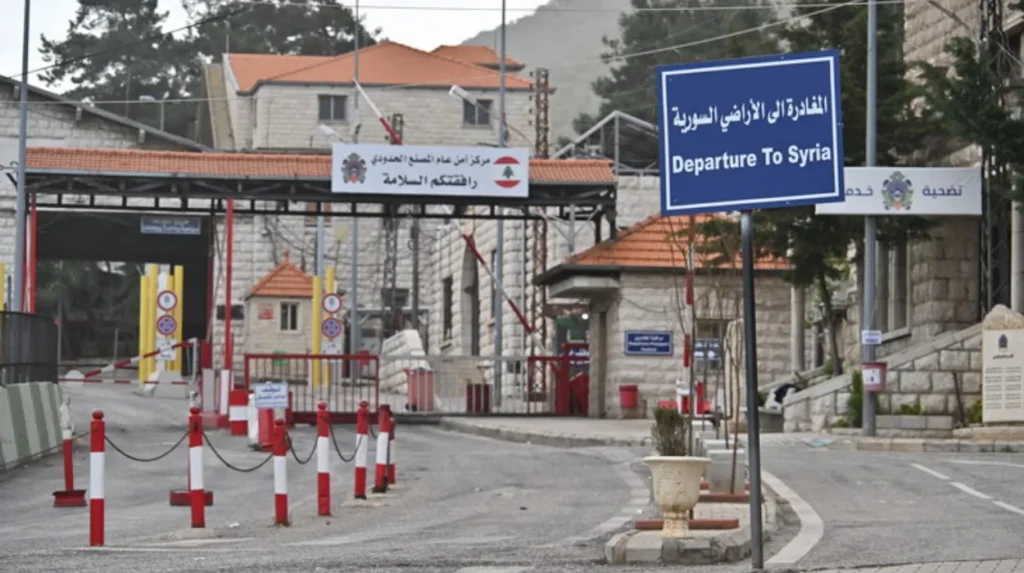
Lebanese President Aoun met with representatives of France recently to address an issue brought up more than a dozen times since the Lebanese and Syrian borders were established nearly a century ago.
During this meeting, which took place in Beirut on May 5, 2026, President Aoun discussed the French-led initiative to use historical equipment from the second half 1920s when France ruled the two nations, to draw the correct boundaries of both countries.
The proposed initiative is an attempt to resolve the territorial disputes that have existed since the breakup of the Austro-Hungarian Empire caused the breakup of the borders of the two countries. The French initiative also highlights France’s continuing commitment to be a peace-broker in its historical region through its ability to use its historical records to clarify boundary disputes where the two nations attempted multiple times to resolve their foundation.
With Lebanon experiencing instability across the Middle East, including combat operations conducted by the Israeli Defense Force in southern Lebanon, the importance of the French initiative becomes increasingly urgent to help establish stability between Lebanon and Israel. By stabilizing the relationship between Lebanon and Israel through the interpretation of international law, it will enable Lebanon to focus more on recovering from the many internal issues it currently faces.
French Initiative Takes Center Stage in Beirut Talks
The discussions between Aoun and Giroud delved deeply into the practicalities of border delineation, with France offering access to mandateera archives that defined the “State of Greater Lebanon” alongside Syria. These documents, originating from the French Mandate for Syria and Lebanon established after World War I, provide a foundational reference for contested areas.
Lebanon’s presidency issued a statement emphasizing the review of this French plan, highlighting its potential to end ambiguities that have hindered economic and security cooperation. Previous joint LebaneseSyrian committees, formed over decades, failed to produce agreements, often due to political sensitivities and shifting regional dynamics. France’s intervention, therefore, represents a neutral arbiter, drawing on its historical stewardship to propose a technically grounded solution.
In mid2025, Lebanon’s Foreign Ministry had already received copies of these archival maps from French authorities, a step that laid groundwork for the current talks. This handover was seen as a goodwill gesture amid broader diplomatic overtures. President Aoun expressed Lebanon’s readiness to proceed, contingent on Syria’s reciprocal commitment.
Historical Roots and Persistent Challenges
The LebanonSyria border’s ambiguities trace back to the 1920 French Mandate, when colonial administrators carved modern states from Ottoman territories. France created Greater Lebanon in 1920, incorporating areas like Bekaa Valley and Tripoli that Syria later claimed. This artificial division sowed seeds of dispute, exemplified by the Shebaa Farms area, a flashpoint involving Lebanon, Syria, and Israel. Postindependence, neither country prioritized demarcation, partly due to shared Arab nationalist sentiments and Baathist influence in Damascus.
Lebanon’s 1975 civil war and Syria’s 1976 intervention further complicated matters, with Syrian troops occupying parts of Lebanon until 2005.
Recent Syrian political transitions have opened a window for resolution, as Damascus seeks to normalize ties with neighbors. Lebanon’s expressions of readiness, voiced since late 2025, align with this shift. In December 2025, Lebanese officials stated their preparedness to demarcate, proposing bilateral mechanisms.
Yet, challenges persist: Syria’s internal consolidations and Lebanon’s economic woes demand swift action, but trust deficits linger. France’s role here is critical, as its archives offer irrefutable evidence, bypassing politicized narratives. The initiative thus embodies French foreign policy’s blend of historical influence and pragmatic diplomacy, aiming to prevent border issues from fueling extremism or smuggling networks.
Broader Regional Tensions Intersect with Border Talks
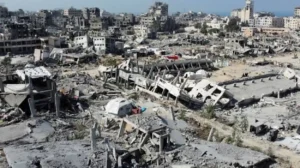
The Beirut meeting extended beyond borders, addressing Israeli operations in southern Lebanon since March 2026. These actions have resulted in over 2,702 deaths, 8,311 injuries, and the displacement of 1.6 million people, exacerbating Lebanon’s humanitarian crisis. Aoun raised concerns over home demolitions and civilian attacks, urging negotiations to alleviate southern residents’ suffering. France, a key stakeholder in Lebanon’s security architecture, pledged support for postwithdrawal arrangements of UNIFIL, the UN Interim Force in Lebanon, anticipated in early 2027.
This multifaceted agenda reflects France’s holistic approach to Lebanese stability. By linking border demarcation with conflict resolution, Paris seeks to create a secure environment conducive to demarcation. President Aoun emphasized the need for a coordinated international effort, noting France’s pivotal position.
The talks also touched on LebaneseSyrian relations broadly, with optimism that resolved borders could enhance trade and refugee returns. In this context, the French initiative emerges not as an isolated proposal but as a cornerstone of broader stabilization efforts.
France’s Strategic Diplomacy in the Levant
France’s involvement stems from its unique historical and contemporary ties to Lebanon. As the former mandatory power, Paris maintains unparalleled access to colonialera records, making it the ideal facilitator. President Macron’s administration has intensified engagement since Lebanon’s 2019 economic collapse, channeling aid and pushing reforms. The border initiative fits this pattern, positioning France as a counterweight to Gulf and Iranian influences. By mediating LebanonSyria ties, France safeguards its interests, including energy exploration in the Eastern Mediterranean and counterterrorism.
Critically, this move bolsters France’s image as a reliable partner amid global multipolarity. The May 2026 talks with Giroud exemplify Paris’s preference for quiet diplomacy over public fanfare. Lebanese officials welcomed the archival support, viewing it as a pathway to sovereignty. Syrian responses remain measured, but recent overtures suggest openness. France’s strategy thus intertwines heritage with realpolitik, ensuring its voice resonates in Beirut and Damascus.
Implications for LebanonSyria Relations
Successful demarcation could transform bilateral dynamics. Economically, clear borders would curb smuggling and enable joint resource management in Bekaa. Securitywise, it reduces pretexts for crossborder militancy. For Lebanon, reclaiming disputed lands affirms national unity, vital after years of Hezbollah dominance in border areas. Syria, stabilizing postAssad era changes, gains legitimacy through normalized frontiers.
Yet, implementation hinges on political will. Lebanon’s caretaker government, pending elections, must secure parliamentary buyin. Syria’s new leadership faces domestic pressures. France’s persistence, however, offers momentum. The initiative’s success would validate Macron’s Mediterranean doctrine, enhancing France’s soft power.
Lebanon’s Stance and Path Forward
President Aoun has consistently affirmed Lebanon’s commitment. In prior statements, he declared,
“We are ready to demarcate borders with Syria”,
echoing positions from December 2025. This readiness persists, with the French plan providing technical viability. Foreign Minister positions reinforce this, calling demarcation “complex but crucial”. Amid Israeli pressures, Aoun prioritizes southern security alongside borders.
Looking ahead, joint technical teams could convene soon, per French suggestions. UNIFIL’s evolution adds synergy, with French troops pivotal. For Lebanon, this dual track—borders and south—charts recovery. France’s facilitation ensures progress, embodying its enduring Levantine stake.
French Political Calculus in Focus
From a French political lens, this initiative sharpens Macron’s foreign policy edge. Domestically, it counters critiques of overreach, showcasing costeffective diplomacy. In Brussels, it aligns with EU border security goals. Paris leverages history strategically, as seen in archival transfers. Giroud’s mission underscores presidential priority, bypassing foreign ministry channels for direct impact.
Critically, France navigates US and Russian influences adeptly. By owning the process, Paris precludes thirdparty spoilers. Success here bolsters Macron’s 2027 reelection narrative on global leadership. Failures, conversely, risk marginalization. Thus, the French Border Demarcation Initiative encapsulates Paris’s blend of legacy and ambition.
In sum, Aoun’s discussions propel a decadesold quest forward. France’s archival diplomacy, intertwined with regional security, positions it centrally. Lebanon eyes closure on borders amid turmoil, with Paris as linchpin. This May 2026 chapter heralds potential transformation, rooted in mandateera maps and contemporary stakes.