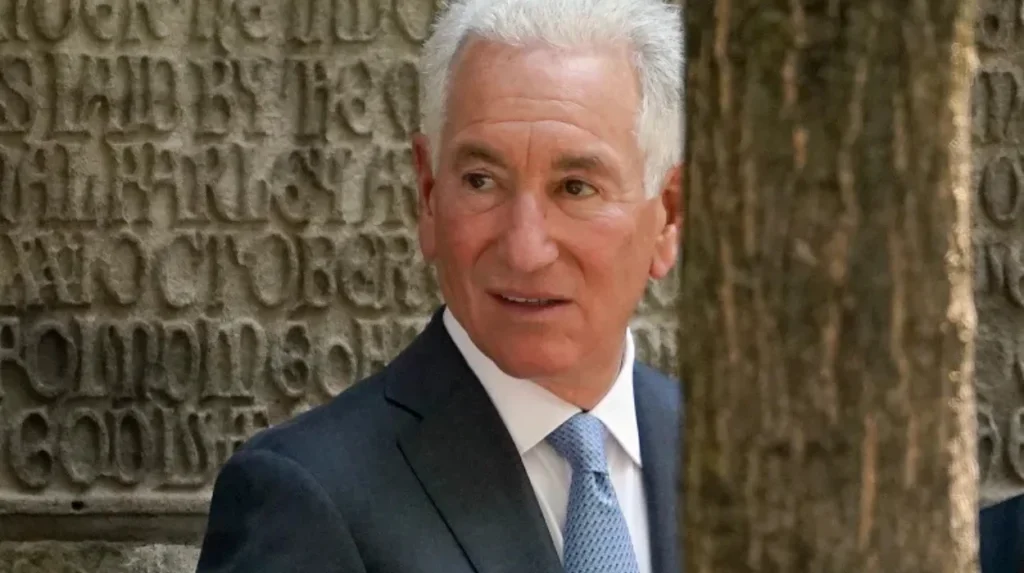
When France decided to limit the direct access of the US Ambassador Charles Kushner it became a major escalation of the bilateral tensions. The decision came after two occasions when Kushner failed to attend on summons by the Foreign Minister Jean-Noel Barrot. The most recent conflict was rooted in a diplomatic social media post by the US condemning what it termed as violent radical leftism in reaction to the riots that followed after a far-right activist was killed in Lyon.
The French authorities described the post as meddling in internal affairs. Although France did not send the ambassador home, it restricted his contact with ministers, maintaining lower-level diplomatic contacts. This measured reaction is an attempt to express disapproval without a formal break.
Protocol Expectations and Diplomatic Norms
In diplomacy, calling upon summonses of ministers is usually construed as an invitation to interest and deference. Barrot placed the limitation in the context of what he perceived as a misinterpretation of the duty of ambassadors and the honor that is attached to the role of representative. Kushner did not meet the expectations of Paris by dispatching deputies instead of showing up by himself.
The French reaction highlights the emphasis given to procedural symbolism of high-level diplomacy. Direct attendance at an official summons is generally perceived to be vital in de-escalation though the ambassadors perform their routine role of defending the positions of their home governments.
Managed Restriction Rather Than Expulsion
The action of France went as far as the persona non grata declaration of Kushner, which would have initiated an official diplomatic break. Rather, the government maintained working relations in the Ministry of Foreign Affairs so that routine co-operation could be maintained. This is a strategy that implies the aim to limit the conflict within specific parameters.
The move is an exercise in compromise: just enough disapproval but not so much as to cause permanent injury to a relationship based on long-term alliances.
Broader Context in Franco-US Relations
The episode is organized on a backdrop of developing transatlantic friction. The current US administration has experienced differences since the commencement of the current administration regarding the trade policy, responsibilities towards European security, and communication of the population concerning domestic political issues. France has been focusing more on strategic independence in Europe, and Washington has become more aggressive in its bilateral diplomatic stance.
These forces have sparked regular disputes on message and priorities. Social media use by the ambassador increased the feelings of sensitivity given the fact that the French were fond of promoting internal sovereignty during such politically tense times.
Trade Disputes and Strategic Divergence
The diplomatic environment has been strained due to economic tensions. The recent US tariff actions against the European industrial industries were met by counter threats by the French leaders. These conflicts have strengthened the views in Paris of the necessity to defend the national interests in a changing global trade system.
The security issues also play a part. Although France and the United States have a strong relationship in counterterrorism and sharing of intelligence information, there have been instances where friction on burden-sharing in NATO and policies towards regional conflicts has become evident in the public eye. It is these differences in policy which provide the wider background upon which the ambassadorial conflict took place.
Social Media and Diplomatic Tone
Public digital messaging has become the new reality to modern diplomatic communication and can make statements even more prominent than the traditional ones. The complaint by France focused on the image that an account with the government had made comments on the delicate issues within the internal politics of the country.
Placing the discussion in the context of politicization and not policy disagreement, the French authorities made an ominous statement regarding the tone and timing. This is indicative of a greater European nervousness to external criticism at times of domestic political upheaval.
Implications for Alliance Management
Nevertheless, between the two governments there exist large institutional relationships despite the tensions. The cooperation in defense, coordination of intelligence and multilateral interaction remains in the form of set-ups. The existing limitation can thus be seen as a reevaluation of participation and not a structural break.
Nonetheless, the long-term restrictions to the upper levels may reduce speed in coordinating immediate issues. The efficiency of diplomacy is usually based on one-on-one ministry communication especially in cases of crisis or policy formulation.
Communication Channels and Operational Continuity
France has shown that diplomatic traffic would still be possible by means of regular ministry. This implies that it is aimed at preventing administrative inconveniences like security partnership and consular services.
However, the transition can extend decision making processes and make them more dependent on the intermediary officials. Responsiveness may be affected by procedural delays in the fast-changing geopolitical landscapes.
Domestic Political Dimensions
The time of the conflict coincides with the political situation in France. There is still ideological polarization, public safety, and extremism debate in the public. Outsourcing criticism that tends to force sides on them can easily attain symbolic value.
French authorities might also be strengthening national demands when it comes to sovereignty and respect on an institutional level by responding strongly. In this regard, the diplomatic adjustment has got foreign policy connotations and internal politics.
Historical Patterns of Transatlantic Friction
Conflicts between Paris and Washington have happened in intervals over short periods of decades. The conflicts around intervening in the military, trade-related disagreements, and autonomy of strategy have emerged since multiple administrations. But these occasions have generally been handled in more comprehensive alliance systems.
The ongoing conflict is also differentiated in how it is centered on diplomatic protocol, as opposed to particular policy consequences. France has opted to limit access rather than complete expulsion, thus instead opting to signal moderately.
Alliance Resilience Mechanisms
There are institutional arrangements like NATO co-ordination, intelligence co-ordination, and economic forums which are continuity enabling in spite of bilateral tension. These institutions tend to receive political differences without compromising on operation co-operation.
The strength of such structures will probably dictate whether the incumbent episode is contained. Where communication by other channels is still effective, it can be only friction on a symbolic level.
Envoy Selection and Representation Style
Ambassadors background would have an effect in host nations. The appointment of Kushner by the current administration of the US is an extension of an overall trend of appointing envoys that are strongly associated with the presidential agenda. These appointments can reinforce the conformity to Washington and may also increase the examination in foreign countries.
Within the diplomatic settings, which place premium on the conventional norms, the unorthodox behavior in an engagement situation may easily degenerate into institutional conflicts.
Strategic Outlook and Unresolved Questions
The direct course of the conflict will be determined by the possibility of renewing direct contact or its limitation. The two governments still have incentives to stabilize the relations since the governments have common interest in security issues in Europe, economic integration and in managing global crises.
Meanwhile, the episode shows how digital diplomacy and political commentary can overlap formal protocol in a manner that increases tension. With the increase in the role of public communication in the foreign policy discourse, tone and timing control might as well be as significant as the alignment of policy content.
As France enforces its restrictions and Washington evaluates its response, the broader question centers on whether this episode represents an isolated protocol dispute or an early indicator of sustained recalibration in transatlantic engagement. The next steps taken in backchannel diplomacy, public messaging, and ministerial coordination will reveal whether the relationship settles into cautious equilibrium or enters a more persistent phase of institutional distance.