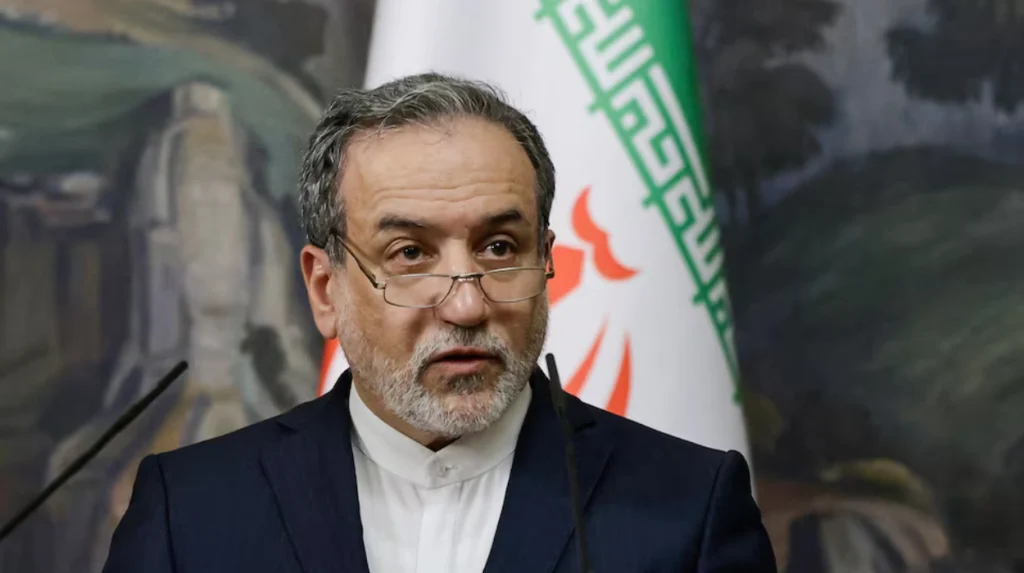
Iran’s Foreign Minister Abbas Araqchi stated he was willing to go to Europe to negotiate about Iran’s nuclear program, while Paris said that EU nations also stood prepared to negotiate if Iran demonstrated it was thoughtfully committed.
Tehran is seeking to capitalise on the impetus of nuclear talks with the US resuming in Oman on Saturday and following negotiations with Moscow and Beijing earlier this week. Its approach to the European powers signatory to a 2015 nuclear accord indicates that Iran is holding its options open.
Since last September, Iran and the three European nations, or the E3, have already conducted a number of rounds of talks regarding their relations and the nuclear question. The latest in March were at a technical grade, examining the terms of a prospective agreement to win a rollback of the nuclear program in interaction with the removal of restrictive measures.
European diplomats indicated they were looking for a new engagement with Tehran. Nonetheless, this initiative seemed to be stalled when Iran initiated indirect discussions regarding its nuclear program with U.S. President Donald Trump’s government earlier this month.
Trump, who withdrew from the 2015 agreement between Iran and major nations in 2018 during his first term, has warned of potential military action against Tehran unless a new agreement is quickly established to halt its nuclear weapon development. The next round of negotiations is scheduled for Saturday in Oman.
“Iran’s relations with the E3 … have experienced ups and downs in recent history. Like it or not, they are currently down,” Araqchi said. “I once again propose diplomacy. After my recent consultations in Moscow & Beijing, I am ready to take the first step with visits to Paris, Berlin & London … The ball is now in the E3’s court.”
European nations, expressing worries about coordinating with Washington, have experienced declining relations with Tehran due to various issues, such as its ballistic missile program, the arrest of foreign nationals, and its backing for Moscow in the Ukraine conflict.
The threat of renewed sanctions
When referring to Araqchi’s statements, Christophe Lemoine, the spokesperson for France’s foreign ministry, emphasised that the E3 supports dialogue but is looking for evidence of Iran’s sincerity. He stated, “The only solution is a diplomatic solution, and Iran must resolutely engage in this path and it’s a proposal the E3 have put forward many times, so we will continue dialogue with the Iranians,” during a news discussion.
Before Trump announced the nuclear talks in Oman, the United States did not inform European countries, despite their crucial role in potentially reimposing U.N. sanctions on Iran.
But two EU diplomats insist that the American charge technical negotiator, Michael Anton, reported E3 diplomats in France on April 17, indicating collaboration has been enhanced. The West accuses Tehran of seeking nuclear weapons, which Iran rejected. The threat of fresh sanctions is designed to push Tehran to make submissions, thus making explicit conversations about the approach between the US and EU crucial, diplomats argue.
Because America exited the 2015 nuclear deal with Tehran, it cannot develop its means for reinstating sanctions, named snapback, at the United Nations Security Council. This means that the UK, Germany and France, referred to as the E3, are the only participants in the deal who are both capable and curious in seeking snapback.
The E3 diplomats, according to diplomats, are now aiming to initiate snapback by August instead of before the June deadline if there is no significant deal to be discovered by then. That window closes on October 18, when the 2015 agreement lapses.