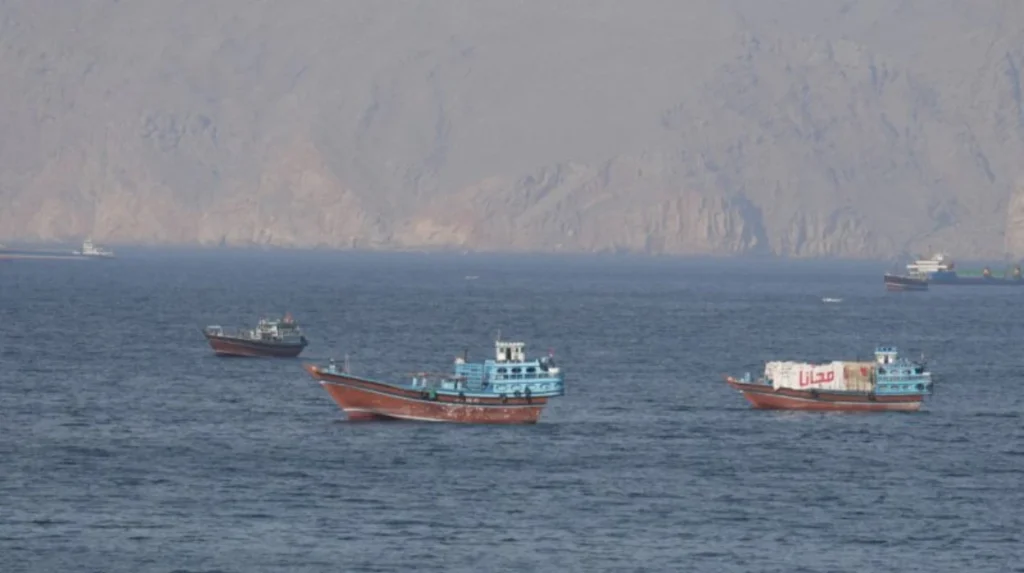
The long-term free and active foreign policy doctrine of Indonesia is going through a phase of increased scrutiny with the escalation of geopolitical tensions between the maritime chokepoints. The decision not to participate in the France-UK naval mission in the Strait of Hormuz is an indication that Jakarta still insists on non-alignment, despite global security relations becoming more polarized. This was a doctrine based on post-independence foreign policy which stressed independent decision-making and non-intervention in great-power conflicts.
These pressures were greatly enhanced by the events of 2025. The Gulf is escalating their confrontations, which, together with the disruption of international shipping lanes, has compelled most middle powers to reevaluate their strategic positions. Indonesia has however, been a steady country, diplomatically neutral in its operations rather than operational. The statement of the Foreign Minister, Sugiono, that becoming part of it would be a violation of our neutral position, is one more step to realize the depth of this doctrine in the foreign outlook of Indonesia.
Historical Roots Of Non Alignment
The neutrality of Indonesia is not an offensive stance, but a principle that was established in 1955 during the Bandung Conference. Such a legacy still influences Jakarta to not fit into security blocs, be it Western or not. Hormuz’s decision demonstrates consistency and not divergence, despite the increased global attention.
2025–2026 Pressures On Strategic Autonomy
The evolving geopolitical environment, especially following the increased hostility between the United States and Iran in 2025, has challenged the strength of neutral doctrines across the globe. The position of Indonesia proves that although there have been growing pressures, strategic independence has not been compromised as pressures mount to join hands in the military front.
France And Uk Maritime Initiative In Hormuz
The France-UK naval operation is a larger European effort to establish a stabilizing presence in key shipping routes. The initiative was announced after a 49-country summit and is designed to protect commercial shipping and guarantee freedom of navigation through one of the most crucial energy routes in the world. Paris and London have also stressed the defensive character of the mission and presented it as a means of escort and surveillance and not of confrontation.
This program is based on the progress made during the year 2025, when disruptions in the Strait of Hormuz revealed fragilities in world trade systems. With economic and security repercussions, European forces gravitated towards institutionalizing maritime protection structures that may or may not involve direct U.S. leadership.
Operational Scope And Strategic Messaging
France has intricately framed the mission as non-belligerent, trying to prevent the perceptions of escalation. The initiative seeks to balance deterrence and diplomatic restraint by concentrating on coordination and protection as opposed to direct involvement. Non-aligned states, however, even limited participation can be symbolic.
European Autonomy In Security Architecture
The mission also indicates the general aspiration of Europe to have its own security mechanisms. After facing uncertainty in transatlantic coordination amid the 2025 crises, France and the UK have tried to exhibit leadership in protecting global commons, especially in areas where the European economic interests have strong relations.
Indonesia’s Commercial Stakes Versus Political Calculus
The physical vulnerability of Indonesia to Hormuz shocks complicates its neutrality. The direct economic impacts of instability are emphasized by reports of Indonesian-flagged tankers drifting in the Gulf and taking long time to be rescued. Increasing insurance premiums and logistical setbacks have highlighted the practical advantages that maritime security cooperation has the potential to provide.
Nevertheless, Jakarta has put more emphasis on political stability rather than short term economic alleviation. This choice is indicative of a larger calculus that its involvement in a mission led by the West would undermine the credibility of Indonesia as a neutral maritime actor, especially in its own waters.
Maritime Identity And Legal Consistency
The fact that Indonesia is an archipelagic state by the United Nations Convention on the Law of the Sea is another reason why it has a strong focus on open and non-militarized sea lanes. The non-participation in Hormuz is aimed at ensuring that Jakarta has a steady legal and diplomatic position that it can extend to its own strategic waterways such as the Strait of Malacca.
Economic Trade-Offs And Strategic Signaling
The choice to remain outside the mission signals that Indonesia values long-term strategic positioning over short-term economic gains. While participation might have eased immediate shipping challenges, it could also have redefined Indonesia’s role in global security alignments, a shift Jakarta appears unwilling to make.
Bilateral Dynamics Between France And Indonesia
The refusal of Indonesia injects some undertones in the relations between Indonesia and France, despite the fact that the two nations are cooperating in terms of defense and trade. Paris has positioned the Hormuz project as an inclusive and open plan but the move of Jakarta indicates the extent of the inclusivity when it is faced with the deeply entrenched non-aligned values.
During the year 2025, France increased its reach to the Indo-Pacific allies making it a dominant player in the security arena outside of Europe. The reaction of Indonesia implies that this kind of outreach faces structural limitations in dealing with states that believe in being neutral rather than aligning.
Diverging Interpretations Of Maritime Security
France sees the mission as a donation to a rules based order and Indonesia sees it through the prism of bloc politics. This is a divergence that encompasses wider differences between European strategic approaches and Global South views of security cooperation.
Limits Of Coalition Building
The failure to find the participation of the Indonesians is an uproar of the problems Europe may encounter when attempting to establish genuinely global alliances. Even well-calibrated projects might not be able to find partners who see them as geopolitical transactional extensions of current rivalries.
Regional And Global Implications Of Jakarta’s Decision
The position of Indonesia has more than bilateral relations. As one of the most vocal representatives of ASEAN and the rest of the Global South, the decision of Jakarta can be taken as an example by other states that have to cope with similar dilemmas. The decision of Indonesia to remain neutral without necessarily saying no to cooperation can be used by countries contemplating involvement in the Hormuz mission as a guide on how to be neutral without being too vocal to be a cooperative partner.
The ruling also adds to the growing disunity of maritime security. There are several overlapping projects, spearheaded by various coalitions, which threaten to develop parallel systems, which have different political goals and command lines.
Influence On Non Aligned States
The explicit articulation of the non-alignment as a point of principle by Indonesia reinforces the validity of non-alignment in modern geopolitics. Such language may be picked up by other states to cover their own positions, and strengthen a general unwillingness to participate in bloc-based missions.
Fragmentation Of Maritime Governance
The rise of distinct U.S., European and regional maritime strategies is indicative of a larger tendency towards decentralization in global security governance. Though this can increase the flexibility, it also brings up the question of coordination and functionality in a crisis situation.
Strategic Outlook For Indonesia’s Neutrality Path
Indonesia’s neutrality test in the France-UK Hormuz naval mission highlights the enduring relevance of non-aligned strategies in a rapidly evolving geopolitical environment. The decision underscores Jakarta’s commitment to preserving strategic autonomy, even as economic and security pressures intensify.
Looking ahead, Indonesia is likely to continue balancing its diplomatic engagement across competing blocs while reinforcing its role as a mediator and advocate for multilateral solutions. The challenge will lie in sustaining this balance as geopolitical rivalries deepen and demands for alignment grow more pronounced.
The broader question remains how long such neutrality can be maintained in an environment where maritime security, economic stability, and geopolitical competition are increasingly intertwined, leaving open whether Jakarta’s calibrated distance will continue to provide leverage or gradually narrow its strategic options.